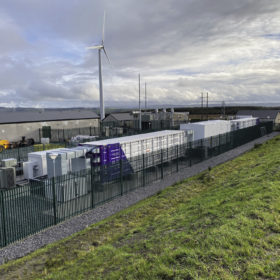
The long read: Whipping up inertia
Once a natural phenomenon – a fortuitous byproduct of thermal generation – the weaning off of coal has made the emulation of inertia a priority for grid operators. It will be a few more years in most markets before a solution becomes needed with any great urgency. However, some markets have needed to come up with solutions – are they a portal into the future of grids dominated by renewables and power electronics?
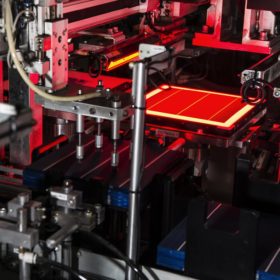
Cabinet approves INR22600-crore budget for solar module and advanced battery manufacture
An ambitious, INR146,000 crore, five-year expansion of a previous domestic industry spending program includes money to attract investment into the sustainable energy and transport technologies.
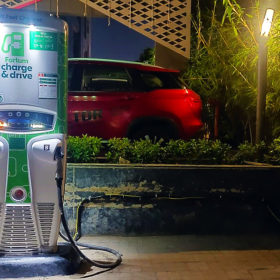
Fortum gets Finnfund to accelerate EV charging infrastructure
The clean energy major has raised investment from Finnish impact investor Finnfund in its public charging point operator business Fortum Charge and Drive India.
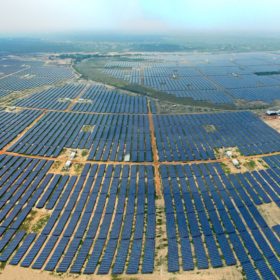
Adani Group has the opportunity to lead India’s energy strategy
The Group’s renewable energy business (Adani Green Energy) has a market value of US$15.6 billion, which is 40% more than India’s largest thermal power generator NTPC—a company with 22 times as much capacity. The RE business is of serious global investor interest, but also materially exposed to the wider Group’s environmental, social and governance (ESG) standing. By committing to phased closure of coal plants, Adani Group could lower the risk to global capital access while aligning with the government’s vision for energy independence through fast-growing reliance on renewables.
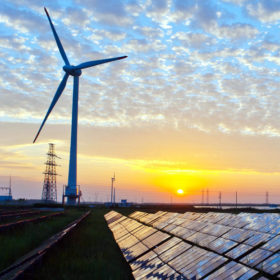
Driving a just clean energy transition
Climate Policy Initiative and REConnect Energy have developed an innovative mechanism called Garuda to retire old, inefficient thermal plants with equivalent renewable capacity. The scheme proposes a blended tariff that would include the normal tariff for the new renewable energy plant plus the cost of decommissioning the old fossil fuel plant, while making the provision for green bonds to finance RE.

World could add more than 900 GW of solar by 2025 if politicians grasp the nettle – IEA
With the International Energy Agency publishing its latest five-year clean energy forecast today, pv magazine takes a look at the solar content of the 162-page document.
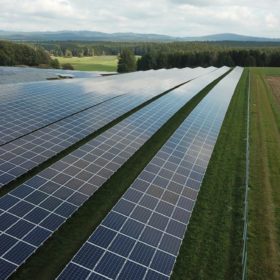
Evolving risks could dampen solar investment flow
Indian solar sector remained buoyant even amid Covid pandemic as 15.3 GW of solar capacity (including solar-wind hybrid) was sanctioned in the current year’s first half itself. However, returns expectations from equity investments rose from around 14% in the first half of 2019 to 16-17%, indicating heightened risk perceptions among investors.
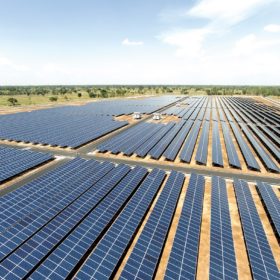
Sterling and Wilson Solar opens European headquarter in Spain
Led by Vikas Bansal, the Seville-based office will target Europe’s growing solar market in countries like Portugal, Spain, Italy and Poland.
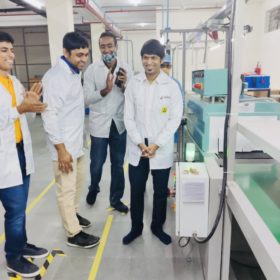
Inverted Energy opens 100 MWh lithium battery plant
The lithium battery assembly facility at Okhla, New Delhi, would initially produce batteries for energy storage in residential, commercial and industrial sectors, and for electric mobility applications. The plan is to eventually cater to critical applications like telecom and healthcare as well.
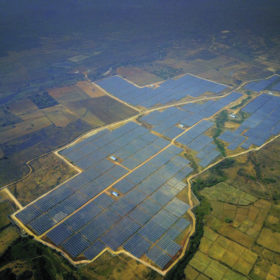
The long read: India’s tender prices tumble, despite Discom delays
India’s state-owned electricity distribution companies (Discoms) are in dire financial straits, as they owe some $16 billion to generators, according to the Institute for Energy Economics and Financial Analysis (IEEFA). Despite this, national PV auctions have been oversubscribed and are setting record low tariffs in the country, indicating strong interest from developers – if the Discom challenge can be overcome.