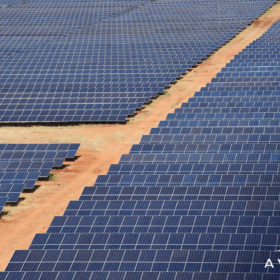
Avaada Energy raises US$192 million through green bonds
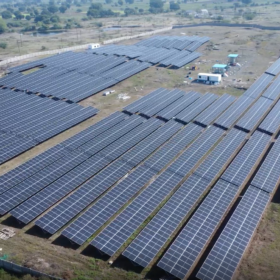
Avaada Energy is issuing green bonds for INR 1440 crore (US$192 million) at 6.75%, making it India’s largest AAA-rated green bond by any renewable energy developer.

Goldi Solar to solarize an entire village in Gujarat
The Gujarat-based solar panel manufacturer and EPC services provider has been chosen by Shree Ramkrishna Knowledge Foundation to set up 450kW of solar rooftop projects to power around 350 houses and public areas in the village of Dudhala.

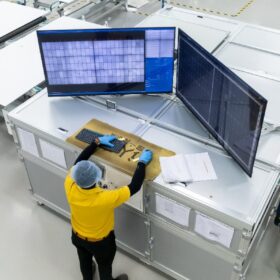
Bluebird Solar expands module manufacturing capacity to 300MW
The Delhi based manufacturer has added a new fully automatic manufacturing line equipped with the latest mono-Perc, half-cut multi-busbar cells technology.

India installed 10 GW of solar in 2021
India recorded the highest ever annual solar installation in 2021 despite a rise in component costs.
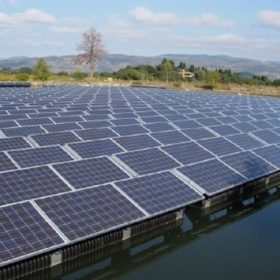
SJVN secures 15MW floating solar project
The State-owned hydropower producer has landed a 15MW grid-connected floating solar PV power project in the Bilaspur district of Himachal Pradesh. It has also received the Ministry of New and Renewable Energy’s approval to develop a 400MW solar park in the Kinnaur district of the State.
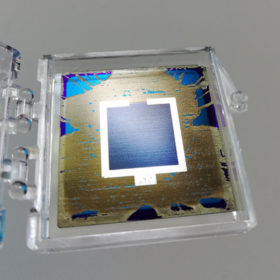
First attempt to build tandem perovskite-PERC/POLO solar cells achieves 21.3% efficiency
The tandem cell was fabricated by German scientists through a process flow that is compatible with industrial, mainstream PERC technologies. According to its creators, the device has the potential to exceed efficiencies of over 29% with adjustments in the perovskite thickness and bandgap.

The long read: Standards to unlock V2G
Mass adoption of electric vehicles presents opportunities for significant battery deployment to support our grid and power our homes. Developing and adopting standards for vehicle-to-grid bidirectional technology is needed to accelerate the path to these opportunities, reports pv magazine USA’s Tim Sylvia.
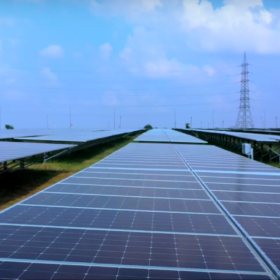
ReNew Power announces third-quarter and nine-month results for FY2021-22
The developer reported a widening of net loss for nine months ending December with the increase in expenses.
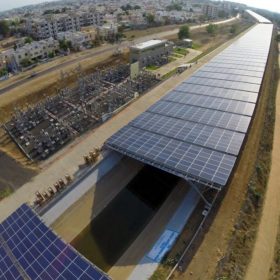
Jharkhand mulling MW-scale canal-top solar at three sites
Jharkhand Renewable Energy Development Agency (JREDA) has invited bids to prepare feasibility-cum-detailed project report for megawatt-scale canal-top solar power capacity at three sites in the State.
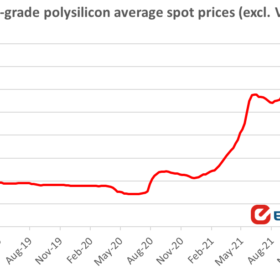
Polysilicon price fluctuations expected to continue until late 2023
Two industry experts have provided analyses of the current polysilicon price scenario in a chat with pv magazine and both agreed that polysilicon demand is still growing faster than supply. The price may decrease starting from the second quarter and reach more reasonable levels by the end of the year.