Cobalt-free, solid-state, lithium-ion battery plant opens in Silicon Valley
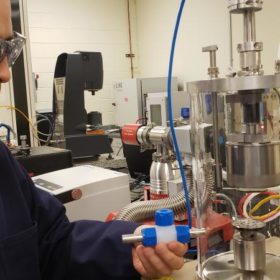
U.S-based solid-state battery start-up Sparks has opened a pilot plant for its patented lithium battery technology based on zero cobalt cathodes. The company wants to challenge China’s dominance in next-gen battery development.
Union Budget targets domestic production with 40% solar import duty and boost to manufacturing-linked incentive
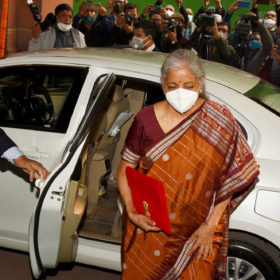
The budget presented today by finance minister Nirmala Sitharaman allocates an extra INR19,500 crore (US$2,602 million) to the production-linked incentive scheme for solar and notifies basic customs duty of 40% on foreign-made solar modules and 25% on cells, from April.
Govt may delicense setting up of standalone energy storage systems
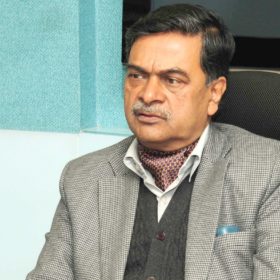
Power minister RK Singh recently met with renewable energy developers and industry representatives to discuss the draft Policy on energy storage systems. He informed the participants the government is looking to delicense the setting up of energy storage systems not co-located with renewable energy generation facilities.
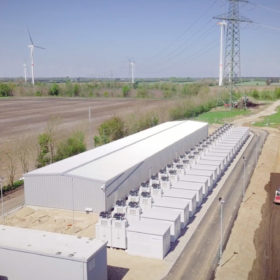
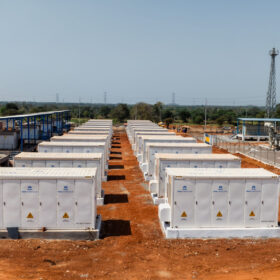
NTPC renewable arm tenders 500 MW/3,000 MWh energy storage projects
Global bids are invited to develop a cumulative 500 MW of energy storage system facilities on a ‘build-own-operate’ basis anywhere in India. The proposed plants can be set up in sizes ranging from 100 MW rising to 500 MW, with the capacity to store at least six hours of electricity—for example, a 500 MW project with a minimum energy storage capacity of 3,000 MWh. Bidding closes on March 11.
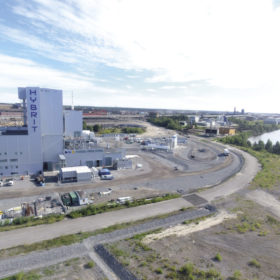
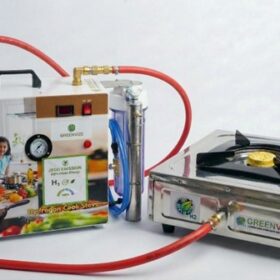
Making cheaper H2
The hype surrounding green hydrogen is real, but does the cost-reduction outlook for its production technologies live up to it? Christian Roselund looks at the technology, transportation, application and enabling policies behind the promising green energy carrier.
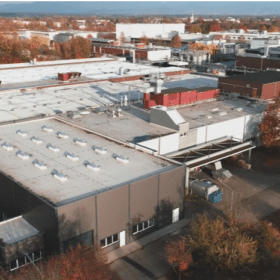
Exide infuses US$2.68 million into lithium battery JV with Leclanché
Exide Leclanche Energy Private Limited, the joint venture with Swiss energy storage specialist Leclanché, has a lithium battery pack and module assembly factory in Gujarat.
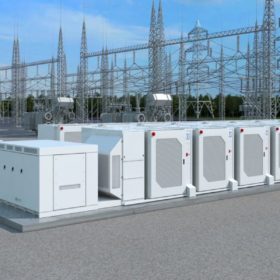
Fluence, ReNew to set up energy storage joint venture
The Fluence and ReNew Power joint venture will serve a diversified customer base in India by localizing and integrating Fluence’s energy storage products and packages for the local market. ReNew will become its first customer by procuring a 150 MWh battery-based energy storage system for its 300 MW peak power project in Karnataka.
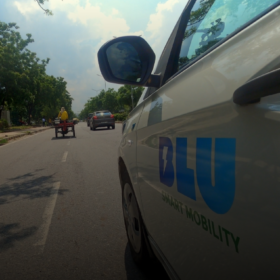
Green mobility: IREDA launches scheme to finance battery storage, green hydrogen and fuel cell technologies
The State-controlled renewable energy and energy efficiency lender has launched a scheme to finance new and emerging technologies that promote and increase the usage of renewable energy in the transport sector.

Asia Pacific solar supply chain trouble to ease this year, according to analyst
Wood Mackenzie has predicted solar equipment cost increases will ease back after last year saw the average cost of solar electricity rise for the first time in the Asia-Pacific region.
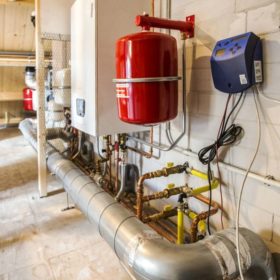
Residential building fully reliant on hydrogen for space heating, hot water
The campus of the Delft University of Technology (TU Delft) in the Netherlands is currently hosting a retrofitted existing building provided with heating by an H2 heating boiler in the attic. The boiler is linked to an underground hydrogen system.