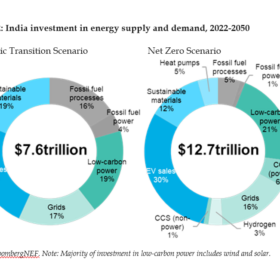
India’s transition to net-zero emissions presents $12.7 trillion investment opportunity
India’s energy system requires investments totaling $12.7 trillion between 2022 and 2050 to reach net-zero emissions by mid-century.
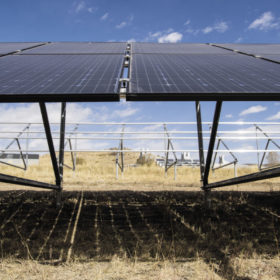
NHPC, APGENCO partner on pumped storage and renewable energy projects in Andhra Pradesh
NHPC and APGENCO will initially develop 1,950 MW of pumped hydro storage projects (950 MW in Kamlapadu and 1,000 MW in Yaganti) through a joint venture.

Exide seeks land for additional 6 GWh lithium battery cell capacity
Exide Energy Solutions, which is building a 6 GWh lithium-ion cell manufacturing facility in Karnataka, has sought additional 40 acres of land for expansion to 12 GWh in the state.
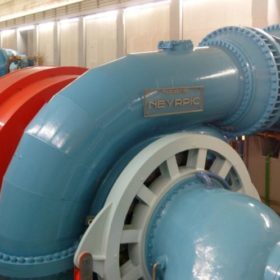
“Pumped hydro storage is the most emerging opportunity in power sector”: NHPC chairman
RK Vishnoi, chairman and managing director of NHPC, said pumped storage will be the mainstay for NHPC in the near future. The state-owned power producer has already signed MoUs to develop multiple gigawatts of pumped storage projects in Andhra Pradesh, Gujarat, Maharashtra, and Odisha.

Driving renewable energy adoption: Challenges and opportunities
India’s robust economic growth translates to rising demand for energy. This demand provides a substantial market for renewable energy investments, encouraging firms to venture into this sector. However, as the nation marches ahead in RE adoption, it needs to overcome challenges like high capital costs and inadequate grid infrastructure.
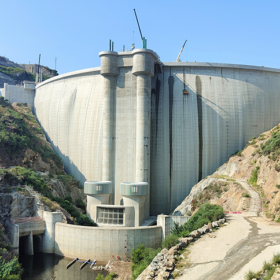
Iberdrola starts filling Portugal’s largest pumping station
Iberdrola has started filling the reservoir for the Alto Tâmega reservoir, which is part of the largest pumped hydroelectric storage project in Portugal.
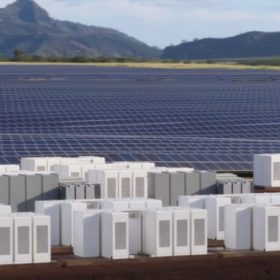
SECI tenders 800 MW of renewables storage
Solar Energy Corp. of India (SECI) has launched a tender to select developers for 800 MW of firm and dispatchable power from renewable power projects with energy storage systems. Bidding closes on Sept. 29.
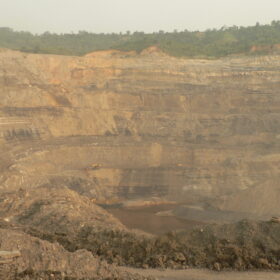
Combining PV with pumped hydro storage in open-cast coal mines
Indian scientists have suggested building pumped-hydro storage systems connected to solar plants using mines as the lower reservoir and nearby rivers as the upper reservoir. They claim that the proposed combination may reach a levelized cost of energy of $0.2693/kWh.
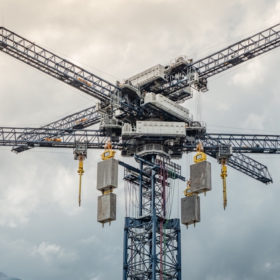
NTPC to pilot solid gravity energy storage
NTPC has invited an expression of interest to supply, design, install and commission a mechanical energy storage system at its Talcher Thermal Power station in Odisha. The project is intended for demonstration purposes.
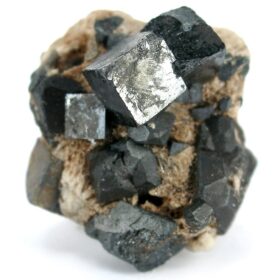
The Hydrogen Stream: Perovskites-based photoanodes for photoelectrochemical (PEC) water splitting
A research team has developed OHP-based photoanodes for photoelectrochemical (PEC) water splitting, minimizing the usual limitations. Meanwhile, China released its first hydrogen guideline, and Germany announced €18.6 billion for the hydrogen industry. Finally, a German company finds out that hydrogen trains are more expensive than battery-operated vehicles.