Jakson Green hits INR 5,000 crore renewable order book within a year
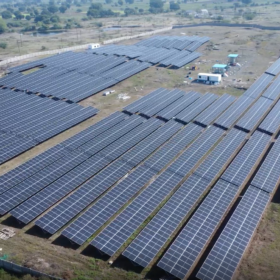
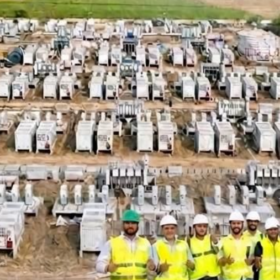
Jakson Green has won utility-scale renewable EPC projects in West African, the Gulf Cooperation Council (GCC), and Commonwealth of Independent States (CIS) countries, in addition to significant solar contracts in Madhya Pradesh and Gujarat.

Government considering viability gap funding, ALMM mandate for battery storage projects
The Indian government is considering financial incentives such as viability gap funding and green finance to encourage the adoption of energy storage systems in the country. It may also issue an Approved List of Models and Manufacturers (ALMM) mandate for battery storage systems for power sector applications.
The Hydrogen Stream: Gulf nations moving forward with tech cooperation
Acwa Power and Eni have signed a hydrogen development deal, while AFC Energy has signed an agreement with Tamgo to sell hydrogen generators.
Global flow battery market to grow at 22.8% annually
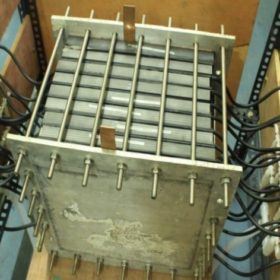
The global flow battery market will expand from $289 million in 2023 to $805 million by 2028, driven by increasing investments in renewable energy and flow batteries’ advantages over conventional products.
Ayana to develop 330 MW of renewable energy capacity for Hindalco
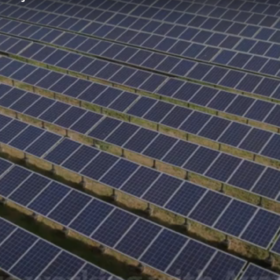
Ayana Renewable Power has signed an agreement with aluminum and copper manufacturer Hindalco for a round-the-clock supply of 100 MW RE power. It will develop 330 MW of solar and wind power generation capacity, backed with pumped hydro storage solutions from Greenko Energies, to supply carbon-free power to Hindalco.
Andhra Pradesh requires $10-15 billion to achieve green hydrogen capacity of 500 ktpa by 2030
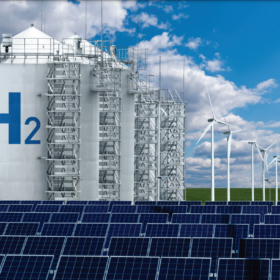
Andhra Pradesh requires an estimated $10-15 billion to achieve 500 ktpa green hydrogen capacity by 2030. Around 70% of this investment will be needed to create renewable energy infrastructure such as solar and wind power generation plants, with the balance for electrolyzer capacity additions.
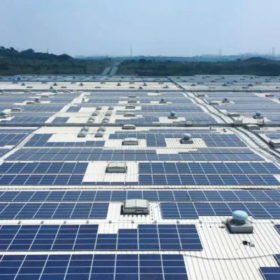
India expected to add a record 4 GW of rooftop solar in fiscal 2024
Despite major roadblocks, rooftop solar capacity additions in the country are growing fast, with nearly 2 GW already added in the four months ending July 31, 2023.

USA, India launch renewable energy technology action platform
The renewable energy technology action platform will initially focus on green and clean hydrogen, wind energy, long-duration energy storage, and exploration of geothermal energy, ocean/tidal energy and other emerging technologies.
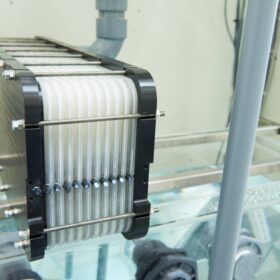
Redesigned zinc-air batteries ‘better’ than lithium, say Australian researchers
Researchers at Edith Cowan University in Australia have redesigned zinc-air batteries and have found the technology to be preferable to lithium-ion batteries – even for electric vehicles.

Fimer’s battery storage compatible inverters to fulfil Capgemini’s 100% renewable power obligation
Fimer recently supplied its 2 MVA inverters for battery energy storage systems (BESS) deployed at IT major Capgemini’s campuses in Mumbai and Noida.