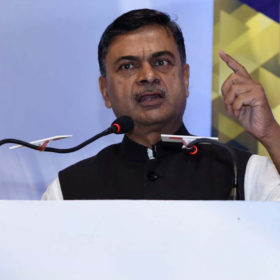
India to hike import tariff on solar equipment: Power minister
Tariffs will be hiked down the value chain in order to encourage domestic solar manufacturing, which currently stands at just 3.2 GW for solar cells and 8.5 GW for solar modules.
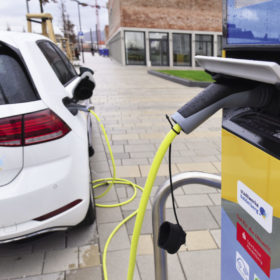
3rd International Electric Vehicle Conclave to kick off tomorrow at Manesar
Jointly organised by India Energy Storage Alliance (IESA) and The International Centre for Automotive Technology (ICAT), the conclave on EV and charging infrastructure will take place on August 9, 2019 at ICAT’s Manesar Campus in Gurugram with over a hundred participating companies.

Visaka’s solar roofing to power Air India SATS’ walkways
Air India SATS has introduced new aircraft-boarding walkways that use integrated solar roofing panels from Visaka Industries to run two air-conditioners for up to six hours.
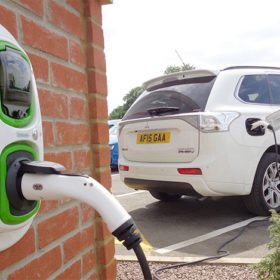
Tata Power partners Tata Motors to install 300 EV charging stations across India
The charging stations—to be installed in five metro cities—will come up at strategic locations frequented by potential electric vehicle owners such as Tata Motors dealerships, certain Tata Group retail outlets and other public locations.

The long read: Battery recycling is possible
A gloomy atmosphere currently hangs over the lithium-ion supply chain. Stationary battery storage equipment and electromobility offer tremendous opportunities. Yet many experts have concerns about the raw material supply and recycling situation. Christian Hagelüken, the Director of EU government affairs at Umicore, a major recycler and supplier of cobalt, explains his view of the situation.
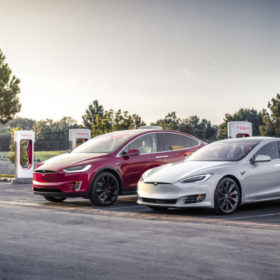
Lead-acid battery market primed for growth with EVs?
“Lead-acid batteries are comparatively cheaper than other battery types such as Ni-MH and Li-ion. Moreover, these have the highest recyclability percentage of any product, and are therefore likely to find more takers owing to their reduced cost of production,” according to industry participants at the International Lead Conference held in Spain.
FAME II: Proposals invited for deployment of 1000 EV charging stations
The charging stations should preferably be connected with grid-connected solar power plants of required capacity as per MNRE guidelines. The deadline for submission of the proposals is August 20.
Vakrangee to set up EV charging infrastructure across India
The Mumbai-headquartered rural banking services provider will set up the electric vehicle charging infrastructure across its huge network of Nextgen outlets, which it plans to increase from current 3504 to 300,000 by FY 2024-25.
Lithium-ion recycling rates far higher than some statistics suggest
While it is often stated only 5% of lithium-ion batteries are recycled, a review of research into the second life and recycling of lithium-ion batteries suggests that is a gross understatement. A new study found almost 100,000 tons of waste batteries were recycled last year – about half of what reached end-of-life.
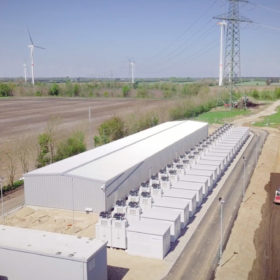
The long read: The dawn of megastorage
Plummeting costs, industry maturity, and the ever-increasing penetration of global renewables are expanding the use cases for battery storage technology. Over the past year and a half, storage projects are increasing significantly in both scope and capacity.