




India’s clean energy transition is often discussed in terms of ambitious capacity targets and rapid solar deployment. However, an equally significant transformation is taking place in the background — the evolution of financing mechanisms that are making solar energy more accessible and economically viable across consumer segments.
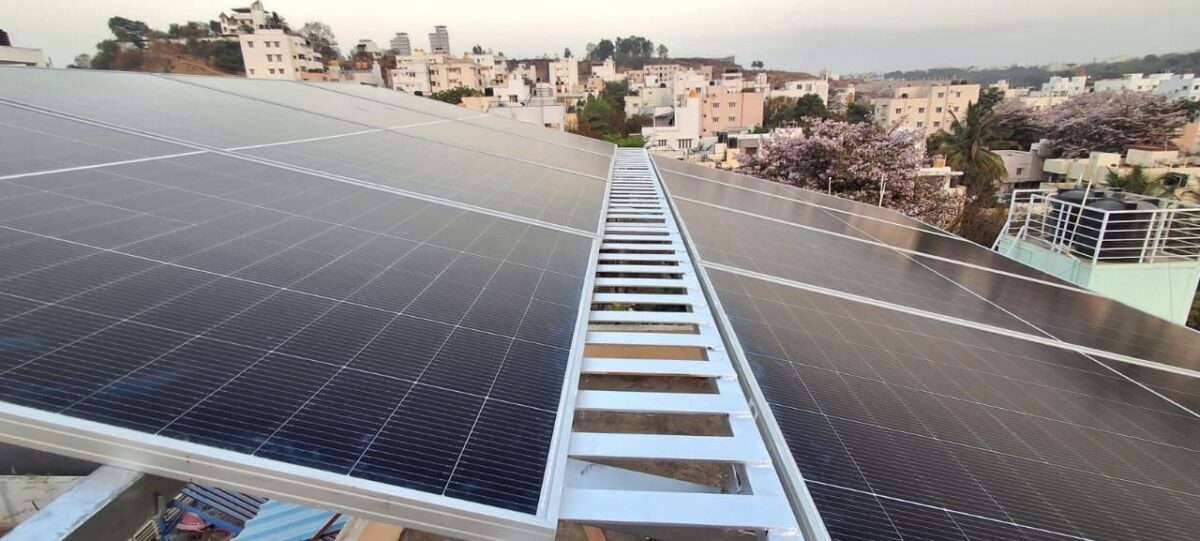
Over the past decade, India’s installed solar capacity has grown to approximately 85–90 GW, positioning the country among the world’s leading solar markets. Within this, rooftop solar installations account for an estimated 11–13 GW. While this growth has been substantial, it represents only a fraction of the country’s long-term ambition.
India has set a target of achieving 500 GW of non-fossil fuel capacity by 2030, with solar energy expected to contribute around 280–300 GW. Achieving this scale will require not only continued policy support and technological advancement but also a robust and inclusive financing ecosystem capable of supporting widespread adoption.
From Capital Barrier to Financing Opportunity
Historically, one of the primary barriers to solar adoption has been the high upfront cost. Residential rooftop systems typically require an investment ranging from INR 2 lakh to INR 5 lakh, making them inaccessible to a large section of households and small businesses.
As a result, adoption has been skewed toward the commercial and industrial (C&I) segment, which accounts for nearly 70–75% of rooftop installations. These consumers possess the financial capacity to make long-term investments and benefit from energy cost savings over time. However, this concentration has also highlighted the need for more inclusive financing solutions.
Policy Support and Government Initiatives
Government intervention has played an important role in improving affordability. The PM Surya Ghar: Muft Bijli Yojana, launched to accelerate residential rooftop adoption, offers subsidies of up to 40% for eligible systems and aims to benefit nearly one crore households. The scheme has a total outlay of approximately ₹75,000 crore, reflecting the scale of policy commitment toward distributed solar.
While such initiatives reduce upfront costs, subsidies alone are insufficient to unlock mass adoption. The broader shift is being driven by innovative financing models that address the affordability challenge more directly.
Emergence of Flexible Financing Models
In recent years, the Indian solar market has witnessed the rapid adoption of alternative financing structures:
OPEX and Pay-as-you-go Models: These allow consumers to avoid upfront investment by paying only for the electricity generated. Third-party developers own and operate the systems, making this model particularly effective for commercial users.
RESCO (Renewable Energy Service Company) Model: Under this framework, developers install and own the solar asset while selling power at a pre-agreed tariff. This provides consumers with predictable savings and minimal operational responsibility.
Solar Loans and EMI-Based Financing: Banks, non-banking financial companies (NBFCs), and fintech platforms are increasingly offering tailored loan products for solar installations. In many cases, monthly EMI payments are comparable to or lower than existing electricity bills.
Leasing and Subscription Models: These models enable users to access solar systems without ownership, reducing financial risk and simplifying adoption, particularly in urban markets.
Digital Financing Platforms: Technology-driven platforms are streamlining the financing process by integrating system design, loan approval, and installation services, thereby reducing timelines and improving transparency.
Impact on Market Adoption
The growing availability of financing options has had a visible impact on solar adoption. States with well-developed financing ecosystems and supportive policies have recorded significantly higher growth in rooftop installations. In some regions, adoption rates have increased multiple times within a short period.
Moreover, solar energy is increasingly being perceived not merely as an expense but as a long-term investment. With payback periods typically ranging between four and six years, consumers are able to recover their initial investment relatively quickly, after which electricity generation effectively becomes cost-free.
Persistent Challenges
Despite these advances, several challenges continue to constrain the full potential of solar financing in India. These include limited consumer awareness regarding available financing options, complex documentation processes, perceived credit risks — particularly in the MSME segment — and delays in subsidy disbursement. Additionally, a lack of standardization across states and financing institutions creates inconsistencies in implementation.
Addressing these issues will be critical to ensuring sustained growth, particularly in rural and semi-urban markets where adoption remains relatively low.
The Road Ahead
India’s solar financing landscape is expected to evolve further as the market matures. Emerging trends such as embedded finance, AI-driven credit assessment, and integrated financing solutions for solar-plus-storage systems are likely to shape the next phase of growth.
Industry estimates suggest that the solar financing opportunity in India could reach INR 8–10 trillion over time, underlining the scale of untapped demand.
Ultimately, the success of India’s solar transition will depend not only on how much capacity is installed but also on how easily consumers can access and finance that capacity. Financing, therefore, is no longer a supporting component of the solar ecosystem — it is becoming one of its central pillars.
As innovative financing models continue to lower entry barriers and expand access, solar energy is steadily moving from being an alternative energy source to becoming a mainstream solution for India’s power needs.
The views and opinions expressed in this article are the author’s own, and do not necessarily reflect those held by pv magazine.
This content is protected by copyright and may not be reused. If you want to cooperate with us and would like to reuse some of our content, please contact: editors@pv-magazine.com.





By submitting this form you agree to pv magazine using your data for the purposes of publishing your comment.
Your personal data will only be disclosed or otherwise transmitted to third parties for the purposes of spam filtering or if this is necessary for technical maintenance of the website. Any other transfer to third parties will not take place unless this is justified on the basis of applicable data protection regulations or if pv magazine is legally obliged to do so.
You may revoke this consent at any time with effect for the future, in which case your personal data will be deleted immediately. Otherwise, your data will be deleted if pv magazine has processed your request or the purpose of data storage is fulfilled.
Further information on data privacy can be found in our Data Protection Policy.