





The global green hydrogen and green ammonia industry has entered a decisive phase in 2026. What began as a cluster of pioneering pilot projects and policy ambitions has matured into a fully mobilised industrial programme, one that demands execution sophistication, multi-disciplinary engineering depth, and a systems-level understanding of the complex interfaces. The sector’s leading EPC contractors are translating ambitious decarbonisation targets into bankable, operating assets across the world’s most demanding project environments.
The urgency of this transition is unmistakable. Electrolyzer costs have declined sharply, renewable power has become the most affordable source of electricity in history, and the policy frameworks needed to mobilise large-scale capital have taken shape simultaneously across Europe, the Americas, the Middle East, and Asia.
The EPC challenge: From announcement to operating asset
Green ammonia production facilities are among the most complex process plants that the chemical engineering profession has ever been asked to deliver at scale. The integration of gigawatt-scale renewable power generation, alkaline or PEM electrolysis systems, hydrogen compression and buffer storage, cryogenic air separation for nitrogen, refrigerated ammonia storage, and marine loading infrastructure all within a single coherent operating system presents engineering and project management challenges that are genuinely without precedent in their combination.
Leading EPC contractors bring integrated engineering capabilities across each of these process domains, supported by modular fabrication infrastructure that allows significant portions of green ammonia facilities to be completed in controlled factory environments before deployment to site. Engineering teams must be experienced in the full spectrum of high-hazard chemical plant disciplines: HAZOP studies, SIL-rated Safety Instrumented Systems (SIS), emergency shutdown systems, and consequence modelling.
Execution models span both greenfield and brownfield (retrofit) projects, recognising that the path to industrial decarbonisation is not uniform. Project success also depends on early technology choices, including electrolyzer type (alkaline vs PEM), nitrogen generation method, and a standardised ammonia synthesis loop which ensure predictable performance and faster execution.
Equally important are bankability factors such as renewable cost assumptions, electrolyzer replacement intervals, and export-linked ammonia pricing, all of which shape long-term project viability and determine investor confidence.
Integrating renewable energy with hydrogen production
One of the most technically demanding aspects of green ammonia project execution is the integration of variable renewable energy sources with continuous chemical production processes. By their nature, these are intermittent, introducing power fluctuations that, without careful management, can reduce electrolyzer performance, accelerate degradation, and ultimately compromise production economics.
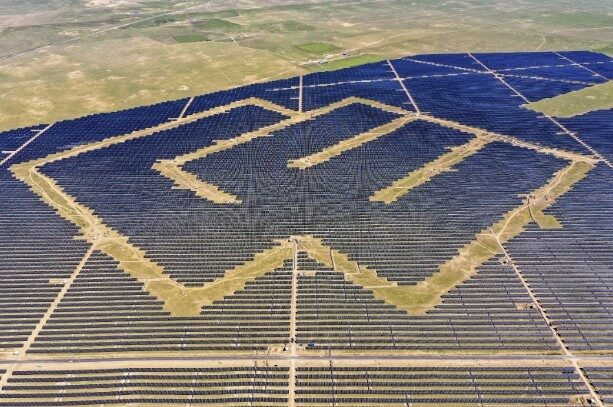
This challenge is addressed through advanced power conditioning and energy management architectures that buffer renewable variability and deliver stable operating conditions to the electrolyzer stack. Hybrid renewable configurations combining solar and wind assets with complementary generation profiles achieve higher capacity factors and more consistent power supply than either source alone could provide. Given that many projects are located in deserts or remote coastal zones, EPC contractors must also engineer for harsh climates, long logistics routes, and high-temperature operations to ensure reliability from day one.
A full-spectrum clean energy value chain spanning Balance of System (BoS) for renewable integration, green hydrogen, green ammonia, green methanol, compressed biogas, and mobility infrastructure underpins the development of integrated Green Industrial Superclusters in which multiple production processes share infrastructure and exchange energy and material streams, creating powerful economies of scale.
Scalable solutions for hydrogen hubs and industrial clusters
Green Industrial Superclusters have integrated complexes where green hydrogen, green ammonia, green methanol, and other clean molecules are produced in close proximity and with shared infrastructure. These hubs offer compelling advantages in land utilisation, infrastructure cost sharing, renewable energy optimisation, and operational synergy.
Scalable project frameworks are now specifically designed for hub-scale development. A modular engineering approach allows facilities to be commissioned in phases typically beginning with initial production capacity and expanding systematically as offtake volumes, financing, and infrastructure mature.
Storage, transportation, and fuelling ecosystem development are integral components of hub infrastructure planning. Hydrogen infrastructure, including compressed gaseous storage, liquid hydrogen systems, and ammonia-based hydrogen carriers, requires specialised engineering expertise drawn from industrial gas and cryogenic systems. Hydrogen value chains connecting production assets to end users, whether through pipeline distribution, marine export, or road transport, demand this cross-disciplinary depth. This also requires trained operators familiar with hydrogen safety, ammonia handling, and high-voltage systems, making workforce development an essential pillar of project readiness.
Alignment with India’s green hydrogen mission and global policy frameworks
India’s National Green Hydrogen Mission, and specifically the SIGHT programme, has created one of the most comprehensive and ambitious policy frameworks for clean hydrogen in the developing world. The simultaneous incentivisation of electrolyzer manufacturing capacity and green hydrogen production is building a domestic supply chain ecosystem that will reduce India’s dependence on imported equipment.
Active engagement with the Green Energy Corridor programme and the broader policy architecture supporting grid integration for large-scale renewable capacity is essential for project developers operating in India.
Globally, the parallel deployment of clean hydrogen support mechanisms across the European Union’s Hydrogen Bank, the United States’ Inflation Reduction Act production tax credits, and multiple Middle Eastern and South Asian national programmes is creating the conditions for a genuinely global green molecule market. The Green Trade Corridors being established between India, the Middle East, and Europe represent the foundational architecture of this market. International project delivery experience across these geographies is becoming a prerequisite for EPC contractors seeking to serve clients navigating this emerging global ecosystem.
Decarbonising hard-to-abate sectors
Green ammonia is particularly significant for the fertilizer industry, where conventional ammonia production is one of the most carbon-intensive processes in the chemical sector. By replacing grey ammonia with green ammonia produced from renewable-powered electrolysis rather than steam methane reforming, fertilizer manufacturers can dramatically reduce their Scope 1 emissions while maintaining production volumes.
In refining and petrochemicals, green hydrogen offers a direct route to decarbonising hydrotreating, hydrocracking, and other hydrogen-intensive refinery operations. Integration of green hydrogen supply systems into existing refinery hydrogen networks — including compression, purification, and pipeline infrastructure — requires delivery at the specifications and pressures required by process licensors.
Digital tools and lifecycle efficiency
Operational performance over the full lifecycle of a green ammonia facility is as important as construction delivery.
Digital tools for process optimisation, real-time monitoring, and predictive maintenance are now integrated into project designs from the front-end engineering phase. Digital twin models of production facilities provide operators with a continuously updated virtual representation of their assets, enabling scenario analysis, operational optimisation, and training in a risk-free environment.
Water management, especially critical in the arid and semi-arid geographies where many of the world’s best renewable resources are located, is addressed through seawater desalination, closed-loop water recycling systems, and careful site selection to avoid competition with agricultural and municipal water supplies. Land use efficiency, community engagement, and local content maximisation must be embedded in project development methodology — the social licence to operate is as essential to project success as engineering performance.
Green ammonia as a global export commodity
One of the most strategically significant dimensions of the green ammonia opportunity is its role as an exportable clean energy carrier. Green ammonia can be stored, shipped, and traded as a commodity using infrastructure that is substantially analogous to conventional anhydrous ammonia, a product that global shipping and port infrastructure has handled safely for decades.
Export-oriented green ammonia projects must be designed from inception to deliver into these international trade flows. Experience in marine export infrastructure, jetty design, loading arms, refrigerated storage, and vapour management systems required for safe ammonia handling is directly relevant to the port and terminal infrastructure that will underpin the green ammonia trade.
The strategic mandate: Execution over aspiration
The shift underway in 2026 is unmistakable: the global clean molecule industry has moved beyond declarations and policy signposts. The real measure of progress now lies in commissioning milestones, grid synchronisations, first hydrogen production, and consistent ammonia output under real-world renewable conditions. This is the phase where engineering depth, supply chain discipline, and project execution capability matter far more than theoretical pathways.
Green ammonia has rapidly evolved into one of the most strategic building blocks of the emerging energy economy. It is no longer positioned as a niche alternative — it is becoming the dominant vector for global hydrogen trade, industrial decarbonisation, and long-distance energy transport. The countries and companies that develop scalable export infrastructure, build modular and replicable project frameworks, and master the complexities of renewables–hydrogen–ammonia integration will set the competitive landscape for the next two decades.
For EPC leaders, this moment demands more than incremental capability. It requires a systems-engineering mindset that looks beyond plant boundaries to entire green industrial ecosystems — renewable corridors, hydrogen hubs, ammonia bunkering networks, and integrated chemical clusters. It requires the ability to align design innovation with construction predictability, digital intelligence with operational reliability, and global standards with local execution realities.
The mandate is clear: the next generation of green ammonia facilities must not only operate safely and efficiently, but must demonstrate to the world that large-scale green molecules can be produced, stored, transported, and traded with the same confidence as their fossil counterparts. The organisations that rise to this challenge will not simply contribute to the energy transition — they will define the architecture of a decarbonised industrial future.
The views and opinions expressed in this article are the author’s own, and do not necessarily reflect those held by pv magazine.
This content is protected by copyright and may not be reused. If you want to cooperate with us and would like to reuse some of our content, please contact: editors@pv-magazine.com.


By submitting this form you agree to pv magazine using your data for the purposes of publishing your comment.
Your personal data will only be disclosed or otherwise transmitted to third parties for the purposes of spam filtering or if this is necessary for technical maintenance of the website. Any other transfer to third parties will not take place unless this is justified on the basis of applicable data protection regulations or if pv magazine is legally obliged to do so.
You may revoke this consent at any time with effect for the future, in which case your personal data will be deleted immediately. Otherwise, your data will be deleted if pv magazine has processed your request or the purpose of data storage is fulfilled.
Further information on data privacy can be found in our Data Protection Policy.