




From ESS News
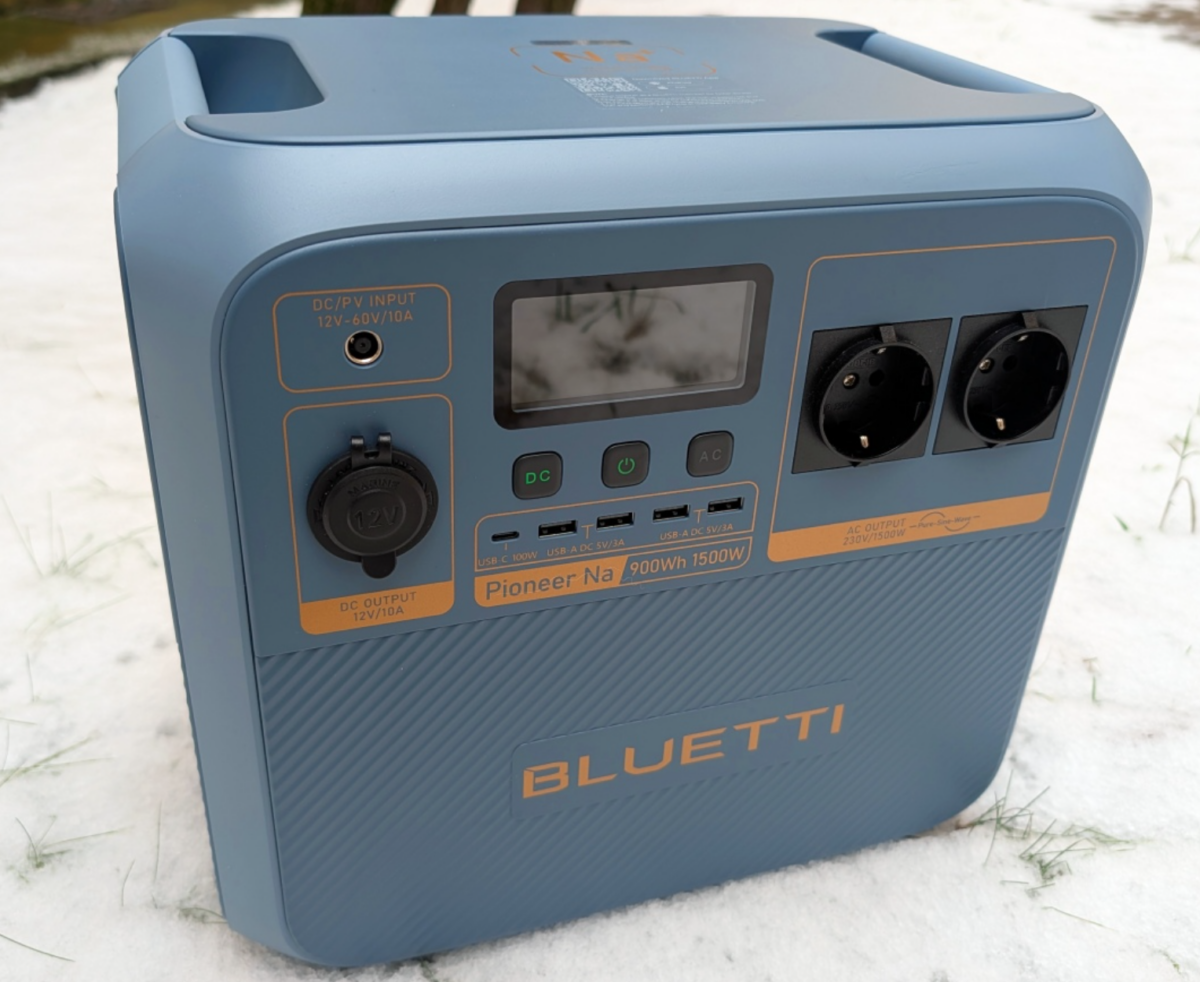
Portable power station manufacturers have been making mature products for some years now. Innovations around lithium products have reached a maturity, and new ideas are coming using other chemistries. Popular Chinese battery maker Bluetti has turned to a sodium-ion basis for its Pioneer Na portable power station, and ESS News had time with the device in cold weather conditions to test it out.
The move to embrace sodium-ion is an interesting one, and the new and very blue power station is an alternative to lithium-ion via its sodium-ion cells.
Bluetti made the choice for the Pioneer Na to go with a NaFeMnO₂ cell, or a layered sodium manganese oxide used as a cathode material in Na-ion batteries. Over on the anode, a hard carbon is used.
Why sodium and what are the tradeoffs?
The use of sodium instead of lithium means a less volatile chemical compound in use. With sodium there is less risk of thermal runaway compared to some lithium chemistries.
But the advantages are more than just relative saftey, and Bluetti is focusing more on the other advantages of sodium in their product descriptions. The company noted that the Pioneer Na has a much wider operating temperate range, which it can charge even down to –15 °C, and discharge (provide power) further down to –25 °C. Compared to conventional lithium iron phosphate-based (LFP) power stations, these cannot be charged at all below 0°C in standard operation and may use heaters to keep warm for operation, which can drain energy from the power station before it is used by the owner.
Bluetti also claims greater thermal stability, and a greener supply chain without the use of cobalt or lithium in the chemistry.
There are one or two caveats though: At -25℃, the Pioneer Na offers 80% discharge capacity with full output, and below -10°C, it can recharge up to 60% SoC.
To continue reading, please visit our ESS News website.
This content is protected by copyright and may not be reused. If you want to cooperate with us and would like to reuse some of our content, please contact: editors@pv-magazine.com.






By submitting this form you agree to pv magazine using your data for the purposes of publishing your comment.
Your personal data will only be disclosed or otherwise transmitted to third parties for the purposes of spam filtering or if this is necessary for technical maintenance of the website. Any other transfer to third parties will not take place unless this is justified on the basis of applicable data protection regulations or if pv magazine is legally obliged to do so.
You may revoke this consent at any time with effect for the future, in which case your personal data will be deleted immediately. Otherwise, your data will be deleted if pv magazine has processed your request or the purpose of data storage is fulfilled.
Further information on data privacy can be found in our Data Protection Policy.