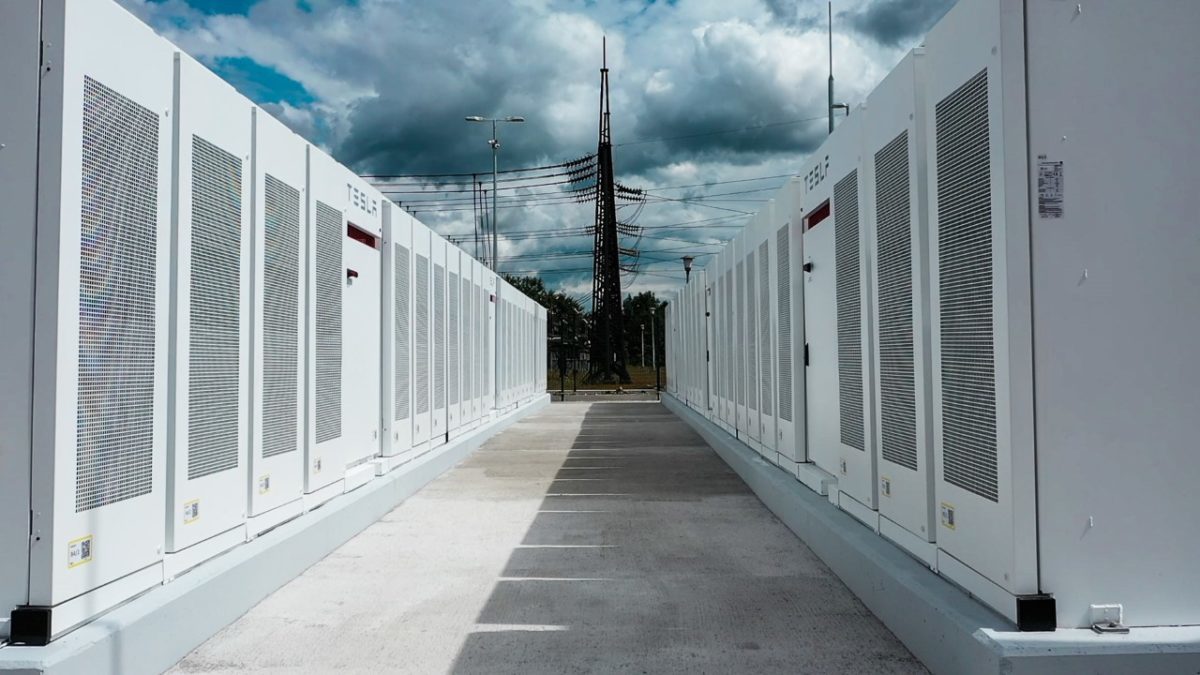





A new report by the India Energy Storage Alliance (IESA) reveals that 2026 will mark a critical inflection point as India’s energy storage system (ESS) industry transitions from tendering to execution. As of Dec. 31, 2025, a total of 224 GWh of ESS capacity—comprising 92 GWh of battery energy storage systems (BESS) and 132 GWh of pumped hydro storage—has been tendered. Of this, 95 GWh is in various stages of execution, 80 GWh remains in the tendering process, and 47 GWh worth of tenders have been cancelled.
While 2025 was defined by unprecedented ESS tendering activity—with 69 tenders totaling 102 GWh, nearly equal to all tenders issued between 2018 and 2024 combined—2026 will be the year the industry proves itself operationally. This will be driven by the wave of tenders awarded since mid-2023 materializing into commissioned assets, in line with typical project timelines of 18–24 months.
“All eyes will remain on whether the performance of these projects is in line with what was committed,” said Debmalya Sen, President of IESA. “2026 will be the year when a number of projects enter the operational phase. The next challenge is financing these projects, especially those with low tariffs.”
The report notes that as of 2025, only 0.7 GWh of BESS capacity was operational, with an additional 2 GWh expected to come online by December 2026.
One of the most dramatic developments of 2025 was the collapse in tariffs to levels that stunned the industry. Standalone 2-hour BESS tariffs fell from INR 2.21 lakh/MW/month in early 2025 to just INR 1.48 lakh/MW/month by year-end in APTRANSCO’s tender. Solar-plus-4-hour BESS projects saw tariffs drop to INR 2.70–2.76/kWh, with more than 50 new bidders entering the market and intensifying competition.
However, aggressive pricing has raised persistent concerns around project viability. “At present, only a few projects from the plethora of tenders have secured financing,” Sen added. “Whether all projects will see the light of day will remain a question until they are delivered.”
IESA highlighted March 2026 as a crucial test, when Adani is expected to commission one of the world’s largest single-location BESS projects—a 1,126 MW/3,530 MWh facility in Gujarat. January will see Rajasthan’s tender for India’s largest solar-plus-BESS project at Pugal Solar Park, while the commercial and industrial (C&I) segment is beginning to emerge following Juniper Green Energy’s pioneering 60 MWh merchant BESS installation in December.
“The transition from tendering to execution in 2026 represents a watershed moment for India’s energy storage sector,” said Vinayak Walimbe, Managing Director of Customized Energy Solutions. “While the aggressive tariff compression we witnessed in 2025 demonstrates market confidence, the real test lies in delivering these projects at promised price points amid battery cost uncertainties and financing constraints. Success in 2026 will require not just competitive bidding, but operational excellence, innovative financing structures, and supply chain resilience. The industry must now prove that India can execute at scale what it has successfully tendered.”
The government provided crucial backing through the second tranche of Viability Gap Funding worth INR 5,400 crores, supporting 30 GWh of standalone BESS, while mandating 20% domestic value addition for VGF projects. Interstate Transmission System charge waivers were extended until 2028 for pumped storage and solar-plus-BESS projects. States accelerated commitments with Rajasthan mandating 5% energy storage for renewable projects above 5 MW and Bihar targeting 6.1 GWh by 2030.
However, IESA identified critical uncertainties ahead. China’s tightening trade policies and export restrictions on battery materials threaten the cost assumptions underlying ultra-low tariffs. In an environment where China has been slowly tightening trade and implementing ways of stopping the cost drop of batteries, the question remains: will the assumptions taken for the ultra-low tariff projects be valid?
This content is protected by copyright and may not be reused. If you want to cooperate with us and would like to reuse some of our content, please contact: editors@pv-magazine.com.




2 comments
By submitting this form you agree to pv magazine using your data for the purposes of publishing your comment.
Your personal data will only be disclosed or otherwise transmitted to third parties for the purposes of spam filtering or if this is necessary for technical maintenance of the website. Any other transfer to third parties will not take place unless this is justified on the basis of applicable data protection regulations or if pv magazine is legally obliged to do so.
You may revoke this consent at any time with effect for the future, in which case your personal data will be deleted immediately. Otherwise, your data will be deleted if pv magazine has processed your request or the purpose of data storage is fulfilled.
Further information on data privacy can be found in our Data Protection Policy.