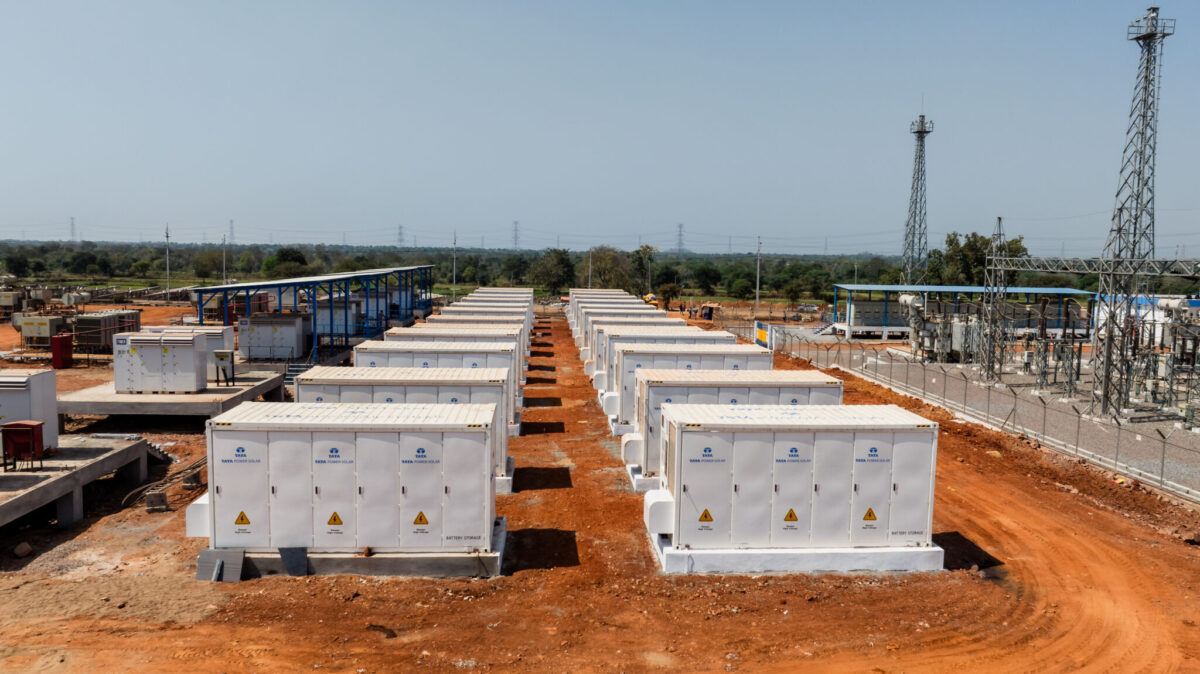





As India advances toward its ambitious 500 GW non-fossil capacity target by 2030, energy storage is emerging as a critical enabler of grid stability, flexibility and round-the-clock reliability alongside capacity addition.
Speaking at the Indian Power & Energy Storage Conference 2025, organised by the Federation of Indian Chambers of Commerce & Industry (FICCI), Bhupinder Singh Bhalla, Former Secretary, Ministry of New & Renewable Energy (MNRE), noted that India has already achieved 254 GW of renewable energy capacity, crossing 50% non-fossil share in overall installed power capacity. He highlighted that renewables now account for 26% of total electricity generation, with a historic peak of 51% renewable generation on a single day this year.
With peak demand expected to approach 300 GW in the coming years and electricity demand growing at 6–7% annually, Bhalla said India would require nearly 230 GWh of energy storage capacity by 2030 to ensure grid stability, flexibility and reliability.
The conference brought together policymakers, regulators and industry executives to chart a roadmap for a sector grappling with the complexities of renewable integration amidst managing thermal assets. The conference was supported by the Ministry of Power, Ministry of New & Renewable Energy and Central Electricity Authority.
Speaking on technology, markets and manufacturing, R. P. V. Prasad, managing director, Envision Energy India emphasized that India is entering a decisive phase of high battery and energy storage penetration aligned with the 500 GW renewable energy target by 2030. “India is at a tipping point where falling battery prices, fast-charging ecosystems and strong policy support can enable storage to move from a balancing tool to a core grid resource that delivers resilience and flexibility at scale,” added Prasad.
Prasad cautioned against ultra-low bidding and weak technical standards, calling for robust safety frameworks, global best practices and diversified use-cases. “To truly support a renewables-dominated grid, storage must be allowed to stack revenues across grid services, demand response and ancillary markets, while longer-duration solutions evolve to deliver baseload-like reliability,” he said.
Ashish Mittal, Director, Energy & Commodities, CRISIL noted that energy storage has emerged as the defining theme of India’s power sector, with over 212 GWh of storage capacity already tendered in just five to six years. “Energy storage has moved from concept to execution, but this is only the beginning; achieving India’s 500 GW non-fossil target will require a cohesive national and state-level regulatory framework that gives investors long-term confidence,” said Mittal. He highlighted the need for innovative funding structures. “Cap-and-floor mechanisms, viability gap funding and storage-as-a-service models will be critical to de-risk investments and unlock private capital at the scale India now needs.”
Ashok Sharma, Deputy Managing Director, State Bank of India, said that storage projects demand a fundamental shift in how risks are assessed and capital is deployed. “Energy storage is capital-intensive, with batteries forming a majority of project costs, and financing frameworks must evolve to reflect the unique risk and revenue profiles of these assets.”
Sharma underscored the importance of domestic manufacturing and technology diversity. “India must pursue storage manufacturing with urgency while remaining technology-agnostic, leveraging batteries, pumped storage and emerging solutions to build long-term, resilient infrastructure.”
This content is protected by copyright and may not be reused. If you want to cooperate with us and would like to reuse some of our content, please contact: editors@pv-magazine.com.



3 comments
By submitting this form you agree to pv magazine using your data for the purposes of publishing your comment.
Your personal data will only be disclosed or otherwise transmitted to third parties for the purposes of spam filtering or if this is necessary for technical maintenance of the website. Any other transfer to third parties will not take place unless this is justified on the basis of applicable data protection regulations or if pv magazine is legally obliged to do so.
You may revoke this consent at any time with effect for the future, in which case your personal data will be deleted immediately. Otherwise, your data will be deleted if pv magazine has processed your request or the purpose of data storage is fulfilled.
Further information on data privacy can be found in our Data Protection Policy.