Australia betting on new ‘strategic reserve’ to loosen China’s grip on critical minerals
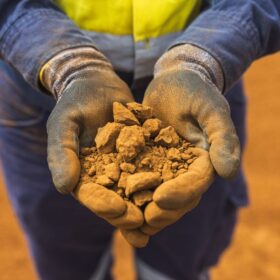
The federal government has unveiled new details of its plan to create a $1.2 billion critical mineral reserve. Three minerals will initially be the focus: antimony, gallium and rare earths (a group of 17 different elements).
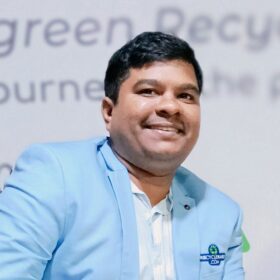
Why rare earth and advanced materials are critical to India’s next manufacturing leap
Every additional EV, wind turbine, transmission line, or storage system intensifies pressure on supply chains that are already concentrated and geopolitically sensitive. Competing solely on mining is neither sufficient nor sustainable.
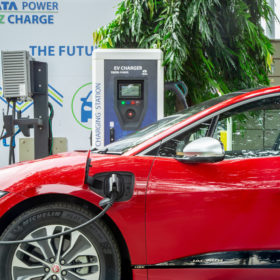
New report charts path to securing raw material supply chains for India’s EV growth
A new report by KPMG outlines strategies to enhance resilience and competitiveness in India’s electric vehicle (EV) ecosystem amid sharply rising demand for critical raw materials such as lithium, nickel, cobalt, and rare earth elements.
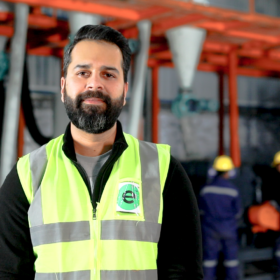
From trash to treasure: Is India ready for battery recycling revolution?
Given the demand and the unavailability of Lithium, Nickel, Cobalt, Manganese, and Rare Earth Elements (REEs) in sufficient quantities, as a nation, we may be staring at a scenario we had with crude.
India needs to diversify its supply chain for critical minerals: IEEFA
India should invest in resource-rich, friendly nations for sourcing of critical minerals such lithium, cobalt and nickel. The nation should minimise its reliance on imports, especially from countries with a potential trade risk in the future.
Stepping up critical mineral production remains crucial for India’s energy security: ICRA
Advancement in mineral processing and beneficiation technology remains critical for commercialisation of domestic critical mineral resources.

Building a circular economy for India’s self-reliance in battery materials
India is investing in facilities and infrastructure to recycle batteries and recover valuable materials like lithium, cobalt, and nickel. By doing this, we can reduce our need for new materials and minimize the environmental impact of battery production.
RecycleKaro invests INR 100 crore to set up nickel metal facility in Maharashtra
Maharashtra-based RecycleKaro will set up a plant to produce nickel metal from scrap lithium-ion batteries and nickel hydroxide. The plant is set for commissioning by December end and is expected to produce 1,200 tonnes of nickel metal annually.

EV sales to grow at slower-than-expected pace
Sales growth in India’s electric vehicle market will moderate to 75% per year over the next three years, as supply constraints drive up prices of key raw materials for batteries.
Metastable opens innovation center for metal extraction from dead lithium batteries
The urban mining startup has set up an R&D and innovation center focused on improving the efficiency and yield of its chemical-free technology for extracting valuable materials from dead lithium batteries. It will ramp up the facility to double it up as a fully operational metal extraction unit by the end of December.