Solar 2.0: India’s solar revolution moves beyond gigawatts
India’s first solar decade was about speed and volume. The next will be about intelligence and performance. High-efficiency modules, bifacial panels, agrivoltaic systems, advanced power electronics, and integrated battery storage are no longer emerging technologies — they are the infrastructure of Solar 2.0.
From panels to complete energy systems: The evolution of India’s rooftop solar market
Rooftop solar is moving from being a supplementary solution to becoming a central component of India’s energy architecture. The next phase of growth will not be defined by panel installations alone but by how effectively generation is integrated with storage, digital intelligence, and grid infrastructure.
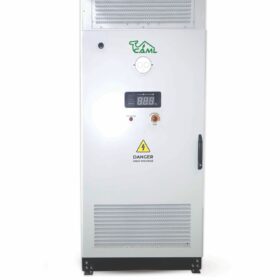
Loom Solar launches 125 kW/261 kWh BESS for C&I applications
Indian solar manufacturer Loom Solar has launched a 125 kW/261 kWh CAML battery energy storage system (BESS) for commercial and industrial (C&I) applications. The BESS is scalable up to 1 MWh.
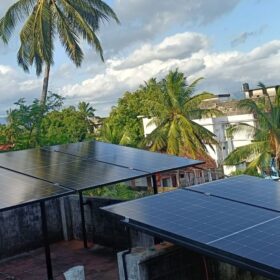
Energy storage for homes: Why hybrid inverter systems will lead the next phase of solar growth
Energy storage for homes—anchored by hybrid inverter systems—will lead the next phase of solar growth in India. Not as an upgrade, but as a necessity for a nation building toward energy independence by 2047.

The real question for India: Should we chase the next technology or optimize global best practices?
By combining proven global practices with solutions designed for Indian conditions, offering choices for different customer needs, and continuing to invest in meaningful innovation, India can build a solar ecosystem that is resilient and inclusive.

Loom Solar showcases 730 Wp modules at REI 2025, announces 1.2 GW module factory in Uttar Pradesh
Loom Solar showcased its TOPCon and HJT PV modules up to 730 Wp, battery energy storage systems ranging from 1 kWh to 5 MWh, and made-in-India PV inverters from 3 kW to 50 kW. The company also announced plans to set up a 1.2 GW module factory in Uttar Pradesh.
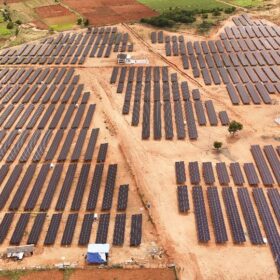
Loom Solar announces strategic expansion into utility-scale solar plus battery storage projects
Loom Solar has unveiled its strategy to expand into the deployment of large-scale solar power plants, supported by battery energy storage systems (BESS) to ensure grid stability.
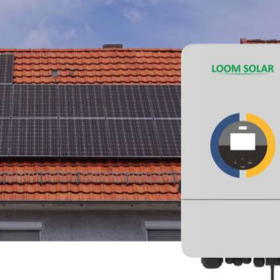
Loom Solar launches 10 kW three-phase hybrid inverter for C&I solar
Loom Solar has introduced the Fusion 103H three-phase 10kW/48V hybrid inverter combining the functions of a traditional solar inverter and a battery inverter in a single device. The inverter is designed for both on-grid and off-grid use and is suitable for larger homes, commercial buildings, and industries.
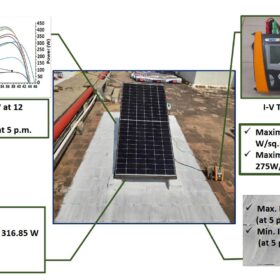
Optimal tilt angle for bifacial PV deployed on white-painted ground surfaces
Scientists in India have analyzed the performance of a bifacial PV module installed on a white-painted ground surface and have found a 30-degree tilt angle outperforms all other inclinations angles in terms of power output.
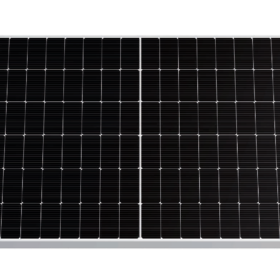
TOPCon solar module production hits cells bottleneck
The Indian solar industry’s transition to TOPCon and HJT underscores the need for technological upgrades and increased investment in cell manufacturing capabilities.