Transforming the energy storage market
Ensuring pragmatic energy storage transformation is proportional to tweaking the current battery storage chemistry. Zinc battery technology is gaining traction, changing the prevailing energy storage dynamics.

Lithium battery recycling in India
Nitin Gupta, chief executive officer and co-founder, Attero Recycling, speaks to pv magazine about the supply chain concerns for lithium battery storage manufacturing in India, current battery recycling scenario and Attero’s capacity.

Fire incidents highlight ‘burning’ issues in India’s EV ecosystem
Although we may have just about commenced our run in the electric vehicle (EV) race, it is critical that we jump-start the pace of adoption by enhancing the overall perception of EVs from a safety and longevity standpoint.

Vedanta acquires nickel and cobalt producer Nicomet
The Mumbai-headquartered natural resources company has acquired Goa-based Nicomet, a producer of cobalt, nickel, and their derivates in India, as it looks to capitalize on the electric vehicles and energy storage boom.

Sustaining the battery storage supply chain
Noida-headquartered Lohum plans to expand its integrated lithium-ion battery manufacturing and recycling facility in India to 3 GWh and expand into the US with its first facility. Co-founder Justin Lemmon speaks to pv magazine about how their operations in India will solve the battery supply chain and cost challenge for the nation’s electric mobility and renewable energy ambitions.

IEA highlights solar’s dependence on Chinese copper processing
The sheer volume of new power lines which will be required to accommodate the rising tide of solar installations ensures copper has been included by the International Energy Agency on its list of minerals which must keep flowing if the energy transition is to stay on course. And it’s not production that’s the potential bottleneck.
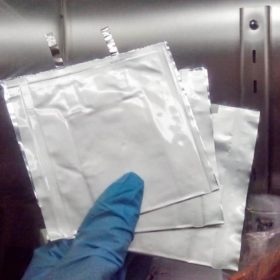
Lithium saturation to make old batteries new
Scientists investigating the aging mechanisms affecting today’s lithium-ion batteries observed that the loss of lithium over time is one of the main causes of performance loss. With this in mind, they developed and tested a “relithiation” process that promises to eliminate much of the cost and complexity from recycling battery components and materials.
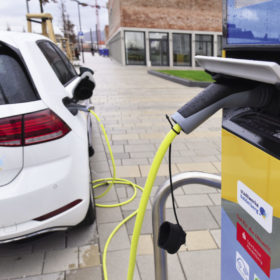
India’s 2030 electric vehicle ambition could create INR 85,900-crore battery opportunity
A new report says that the nation would require an estimated annual battery capacity of 158 GWh to realize its 2030 electric vehicle (EV) adoption target. Meeting this potential demand would require investments exceeding INR 85,900 crore (US$ 12.3 billion) in case battery manufacturing is 100% indigenized.
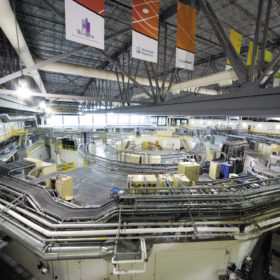
The long read: A highly promising cobalt-free battery for electric vehicles
We increasingly need safe, affordable, and powerful batteries as we move to greener technologies. Battery-powered electric cars, for example, have much higher safety standards than our phones, and for such vehicles to travel long distances, lighter batteries with higher energy density and rapid-charging capabilities would make a world of difference. Majid Rasool, a postdoctoral fellow at McGill University, discusses a potential solution.
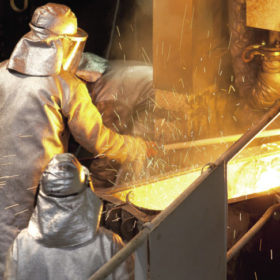
Lithium batteries – 12 lakh tons ready for recycling by 2030
The recycling market will experience a tenfold expansion between last year and 2030, driven by EV battery usage and portable electronics. Retrieving valuable metals and minerals is becoming a high priority and several dozen companies are already in position for the first big wave of end-of-life batteries.