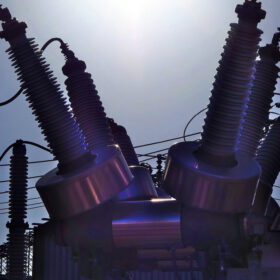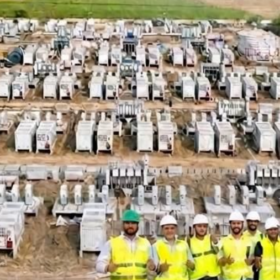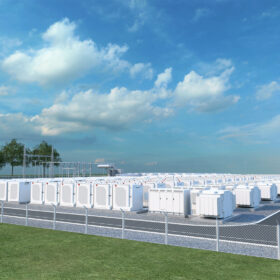
Breakthrough research boosts Li-ion battery stability, efficiency and density
South Korean scientists have developed a breakthrough lithium-ion battery technology by modifying the LNMO cathodes that enhances stability and efficiency, boosts battery lifespan, and energy density of Li-ion batteries.
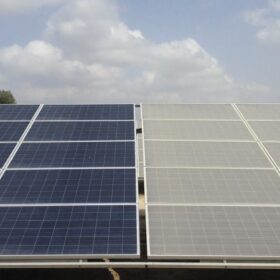
Pressurized water cleaning can improve PV generation efficiency by 10%
Researchers in China have investigated the dust-scaling process and various water-based cleaning methods to optimize maintenance strategies for enhanced safety and efficiency in PV systems.

Meeting sustainability goals: How overlooking EPR responsibilities can lead to costly consequences
Many countries require companies to show that they comply with environmental standards before accepting imports. The EU’s Packaging and Packaging Waste Directive sets the strictest recycling and waste disposal requirements, making non-compliance an obstacle to entry into the market. Companies that don’t adhere to these standards could struggle to grow internationally.

NTPC secures PPA with Indian Army for solar-hydrogen based microgrid project
NTPC has secured a power purchase agreement (PPA) with Indian Army for sale of power from its solar-hydrogen based microgrid project at Chushul (Ladakh).
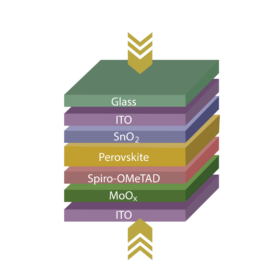
Chinese researchers build 4T perovskite-CIGS tandem solar cell with 29.36% efficiency
Scientists in China built a four-terminal perovskite-CIGS tandem solar cell based on a top semi-transparent perovskite device with an efficiency of 21.26% and a high bifaciality factor of 92.2%. They used a solvent-annealing strategy to produce a perovskite film with full coverage, larger grains, superior crystallinity and free of detectable lead iodide impurity.
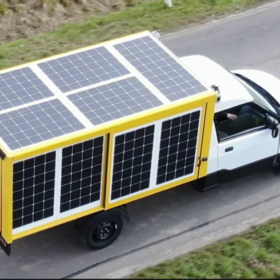
PV-powered electric vehicles can have up to 30% higher range
A European research team has installed solar panels on a light commercial electric vehicle and has tested their performance for four months. The vehicle was able to extend the range by 530 km, although not all panels contributed equally. System efficiency was measured at up to 66%.

Australian study shows pumped hydro and batteries can meet energy storage needs
A new Australian National University study says long-duration pumped hydro on non-river sites, combined with batteries, can meet global energy storage needs.
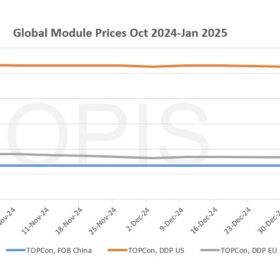
Global solar module prices mixed on differing demand outlook
In a new weekly update for pv magazine, OPIS, a Dow Jones company, provides a quick look at the main price trends in the global PV industry.
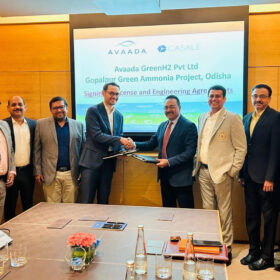
The Hydrogen Stream: Avaada partners Switzerland’s Casale to develop 1,500 tpd green ammonia plant in Odisha
Avaada Group has collaborated with Switzerland-headquartered ammonia technology specialist Casale to develop a 1,500 tons per day (tpd) green ammonia plant in Gopalpur, Odisha.
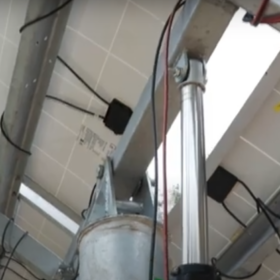
A budget boost for solar power could reshape india’s energy and agricultural landscape
Central Government’s Pradhan Mantri Kisan Urja Suraksha Evam Utthaan Mahabhiyan (PM-KUSUM) scheme holds transformative potential for both India’s agricultural and energy sectors. Decisive financial boosts in the 2025 budgets will harness the growing winds of interest and pave the way for widespread adoption.