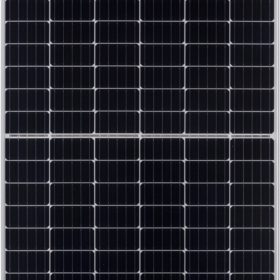
Half-cut modules from Sharp
The Japanese electronics giant has unveiled three monocrystalline half-cut cell modules said to provide 2-3% better performance than standard, full cell panels. The claimed efficiency of the modules exceeds 19.5% and Sharp says power output ranges from 330-395 W.

Stretching exercises for crystalline silicon solar cells
Researchers from Saudi Arabia’s King Abdullah University of Science and Technology have created flexible solar cells made of crystalline silicon. They claim to have stretched a crystalline silicon cell’s surface by around 95% while maintaining conversion efficiency of around 19%.
The long read: Quality management and our new robot overlords
When talking about processes to ensure quality in renewable energy – whether in the production of materials or the operation of a power plant – it can be a struggle to avoid excessive jargon and keep things simple enough to translate into effective improvements on the ground. Experienced project manager Nabeel Ismeer decrypts some of the geekspeak from the world of quality.

‘India will add 14 GW of solar this year’
The annual global outlook report for solar published by IHS Markit notes there was no real uptick in the amount of new capacity added last year, compared with the returns seen in 2018. That is likely to kill any hope India has of overtaking the U.S. as the world’s second biggest solar market in 2020.

100% renewables means 95% less water consumption for conventional power generation
According to a new study by Finland’s LUT University, solar PV consumes between 2% and 15% of the water that coal and nuclear power plants use to produce just 1 MWh of output; for wind, this percentage ranges from 0.1% to 14%. Under the researchers’ best policy scenario, water consumption could be reduced by 75.1% by 2030, compared to 2015 levels.
COP25: India calls for speedier expansion of International Solar Alliance
Launched in November 2015, the alliance aims to collectively address key challenges to the scaling up of solar energy in member countries that fall between Tropic of Cancer and Tropic of Capricorn. Out of 121 prospective member countries, over 83 have already joined it in a period of just four years.

Coupling pumped hydro with renewables and other storage technologies
The combination of pumped hydro with other storage technologies can increase renewables penetration, improve operational safety and reduce maintenance costs at large-scale hydropower plants, according to new research. The study also focuses on techniques to determine the optimal size of renewables-based pumped hydro storage systems. Costs for hybrid solar-pumped hydro projects currently range from $0.098/kWh to $1.36/kWh.

BHEL seeks 231,200 quantities of minimum 330W solar modules
Global bids are invited for manufacturing and supply of multicrystalline PV modules with peak power output of minimum 330 Wp, for the state-owned engineering major’s projects in Gujarat. Bidding closes on December 11.

Assessing metal leaching from PV modules dumped in landfill
An Indian Institute of Technology research team analyzed around 300 studies about PV panel waste containing carcinogenic metals. The researchers said solar module recycling is not economically profitable and policy support is necessary to avoid panels being dumped in landfill.
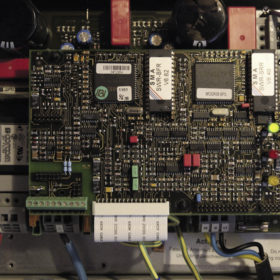
The long read: How large of a problem is thermal derating?
In its Inverter Scorecard, PV Evolution Labs examines thermal derating, a long-known problem among experts. With the data the lab collects, it provides insights as to how different devices behave when exposed to high temperatures.