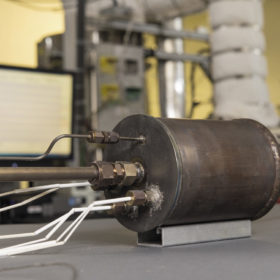
The long read: Scientists at Argonne develop new kind of thermal battery
Scientists at the U.S. Department of Energy’s (DOE) Argonne National Laboratory have developed a new kind of thermal battery that can greatly increase the energy efficiency and cost-effectiveness of many industrial processes and shows great promise for use in the solar industry. Liz Thompson reports that Argonne’s Thermal Energy Storage System (TESS) can rapidly capture and store surplus heat so that it can be used as needed. With its pioneering modular design and material advancements resulting in greater efficiency, TESS is a big step forward in thermal battery technology.

There’s something fishy about this flow battery innovation
Scientists led by MIT have suggested chitin, a carbon and nitrogen-rich material made from waste shrimp shells, could produce sustainable electrodes for vanadium redox flow batteries and other energy storage technologies.
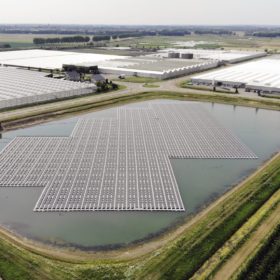
The long read: Shadow boxing
The amount of non-uniform shading an array will experience determines the technology choices that can be made. However, it can be complicated to formulate more general rules for when to use what type of technology. Most would agree that module-level power electronics are better at handling non-uniform shading, but how do they handle the sun? A recently promoted study brought the discussion into sharp relief.
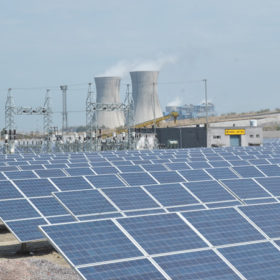
NTPC seeks to empanel vendors for bulk solar module procurement
The state-owned power generator plans to procure around 1 GW of crystalline solar modules in the current financial year. The requirement will increase to 2-2.5 GW capacities per year in subsequent years.
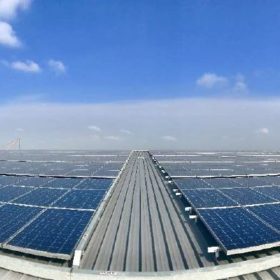
Singapore’s Cleantech Solar secures US$75 million green loan from ING Bank
The commercial and industrial solar developer, which commands a significant share in the Indian market, will use the amount to fund rooftop PV installations for corporates across Southeast Asia.

Energy and Economy: Rewriting the Indian story for the World
India is running the world’s largest renewable energy expansion program with a mind-boggling target of 450 GW by 2030. Can the country with a growing energy demand do more than this? Can it do what developed countries should have done years ago?

The long read: Sink or swim
The impressive progress made by offshore wind arrays may be attracting a new group of PV developers looking to leave the constraints of the roof and free field behind. And while saltwater, wind and waves are no friend of PV, progress is being made in proving the potential applications.
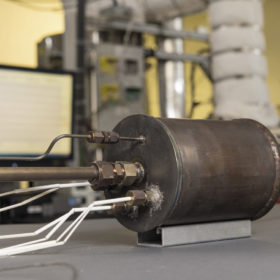
The long read: Scientists at Argonne develop new kind of thermal battery
Scientists at the U.S. Department of Energy’s (DOE) Argonne National Laboratory have developed a new kind of thermal battery that can greatly increase the energy efficiency and cost-effectiveness of many industrial processes and shows great promise for use in the solar industry. Liz Thompson reports that Argonne’s Thermal Energy Storage System (TESS) can rapidly capture and store surplus heat so that it can be used as needed. With its pioneering modular design and material advancements resulting in greater efficiency, TESS is a big step forward in thermal battery technology.

Supply chain concerns will drive EV battery recycling policies
With electric vehicles starting to gain traction, the International Energy Agency’s updated, ten-year e-mobility forecast has suggested geopolitical and economic concerns will trump environmental niceties when it comes to encouraging recycling. But what price ever-cheaper batteries?
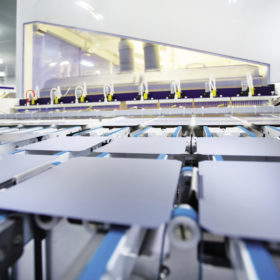
The long read: Criteria and implications for gallium-doping
As a remedy for light-induced degradation (LID) in crystalline silicon cells, gallium-doped wafers are showing considerable promise. With reports that ingot growth productivity can rival that of boron doping, it seems that gallium doping may now be able to meet the cost, integration and performance criteria that have informed solar manufacturing technology adoption, writes Alex Barrows, senior research analyst at U.K.-based consultancy Exawatt.