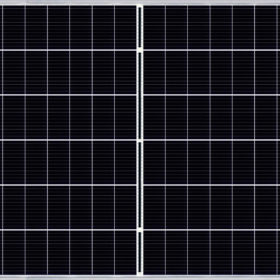
Canadian Solar begins production of 640-665 W panel series
The panel was unveiled in October and is the most powerful product the company has brought to the market to date. The Chinese-Canadian manufacturer expects to reach, for this product, a 10 GW capacity by the end of the year.

Fraunhofer ISE develops front/back solar cell with 26.0% efficiency
The cell showed open-circuit voltage values of up to 732 mV. It was fabricated with a back junction (BJ) design with a full-area p-n-junction at the back surface.

Nickel-salen for a battery that charges in 10 seconds
Scientists in Russia introduce a promising new material for battery energy storage, the product of more than three years of research. Incorporating a nickel-salen polymer into the cathode, the group demonstrated a battery that can charge and discharge ten times faster than today’s lithium-ion batteries. And though the battery still lags in terms of overall capacity, the group is confident that its discovery will lead to big improvements for lithium batteries.
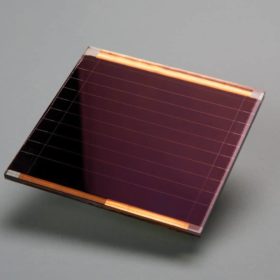
UNIST, EPFL claim 25.6% efficiency world record for perovskite solar cell
Scientists have set a new efficiency record for a single-junction perovskite solar cell at 25.6%. The cell additionally showed operational stability for 450 hours, and intense electroluminescence with external quantum efficiencies of more than 10%.
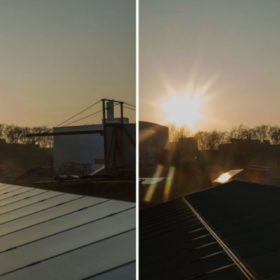
German start-up develops anti-reflective film claimed to improve PV module performance by 10%
German start-up Phytonics has developed the film by taking inspiration from nanostructures in plants. In solar cells, the film enables a broader absorption spectrum and a higher angle of light-incidence tolerance.

The long read: Bifacial drives encapsulant switch
Suppliers of encapsulant materials – plastic sheets that are heated to laminate together the components in PV module stacks – are rapidly expanding to keep pace with module manufacturing in Asia and other parts of the world. Ethylene-vinyl acetate (EVA) continues to dominate the market, but new developments in module technology are driving a slow shift to more costly polyolefins.
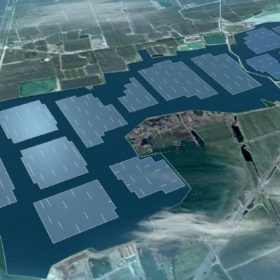
DNV publishes guidelines for proper deployment of floating PV
The Recommended Practice guide, on top of describing the most common requirements for building a floating PV array, provides a series of technical guidelines for electrical safety, anchoring and mooring issues, operation and maintenance, and specific plant design that can withstand site-specific environmental conditions.
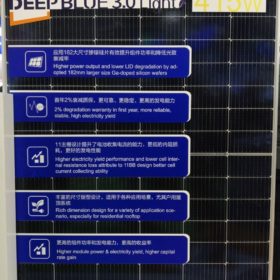
JA Solar unveils 415 W solar module with 21.3% efficiency
The module can be used for residential and commercial PV projects. It is available in five versions with power outputs claimed by the company of 390-415 W and reported efficiencies of 20.0-21.3%.
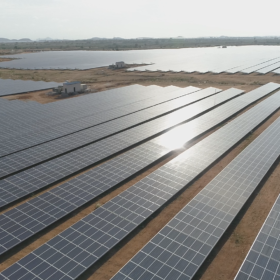
IHS Markit forecasts 181 GW of new PV capacity for this year
The U.K.-based analyst has raised its outlook for new PV additions in 2021 by around 23 GW. Due to strong demand, leading module manufacturers are sold out for the first half of the year.
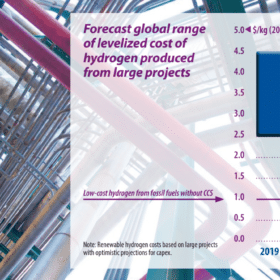
The long read: Green hydrogen more than just a pipe dream
When coupled to gigawatt-scale solar and wind generation, green hydrogen could be the clean fuel to unlock hard-to-electrify sectors of the economy. But first it must be transported cost-effectively to where it’s needed.