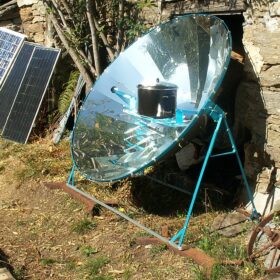
Efficient solar PV cooking with sand-based thermal energy storage
Scientists in Ghana have developed a device that combines a conventional solar PV-powered steam cooker with sand-based thermal energy storage. The system can achieve a thermal efficiency of 38.9% and has a payback period of 4.5 years.
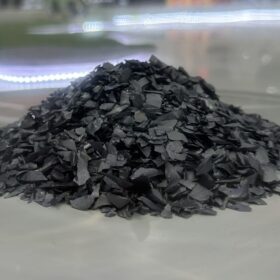
China dominates global polysilicon capacity, says Bernreuter Research
Bernreuter Research says nine of the world’s ten largest polysilicon manufacturers are based in China, with Tongwei, GCL Technology, Daqo New Energy and Xinte Energy holding a combined 65 percent share of global output in 2024.

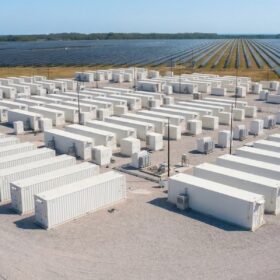
Oscal releases 2 kWh battery for home, off-grid, on-grid use
The Chinese company said its 2,016 Wh portable LiFePO₄ energy-storage system is expandable to 22,176 Wh with additional battery modules. It delivers 2,400 W output, offers 16 ports, app-based control, and includes built-in audio and lighting features for home, travel, and off-grid use.
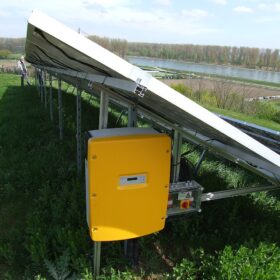
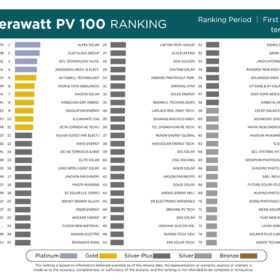
Sinovoltaics releases new PV inverter manufacturer financial stability ranking
The quality assurance firm updated its inverter manufacturer financial stability ranking with Kstar Science and Technology, APSystems and Delta Electronics in the top three spots. It reported 19 manufacturers showing “strong financial resilience” based on Altman-Z scores.
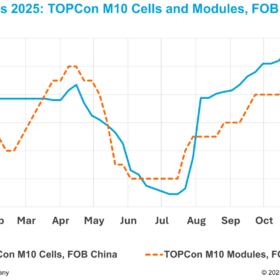
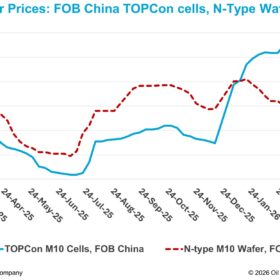
China’s TOPCon solar cell prices extend four-week slide as rebate concerns ease
In a new weekly update for pv magazine, OPIS, a Dow Jones company, provides a quick look at the main price trends in the global PV industry.
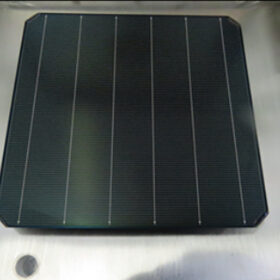
Longi reveals details of world’s most efficient silicon solar cell
In a new scientific paper, the Chinese solar manufacturer explained that the 27.81%-efficient hybrid interdigitated back-contact cell it unveiled in April is based on passivated tunneling contacts and dielectric passivation layers, while also incorporating both n-type and p-type contacts.

‘It’s not a matter of sodium versus lithium, we need both’
A US research team has developed all-solid-state sodium batteries that retain performance down to subzero temperatures. The systems utilize a special chloride-based solid-electrolyte-coated cathode.
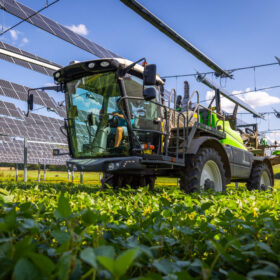
France agrivoltaics trials show early crop and livestock gains
Data from agrivoltaic canopy trials in France, developed by energy producer TSE and the French National Research Institute for Agriculture, Food and the Environment (INRAE), indicate measurable temperature, water-balance, and yield effects that reinforce the role of managed agrivoltaics in farm-level climate adaptation.
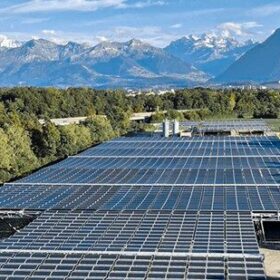
World’s largest foldable rooftop PV system comes online in Switzerland
A wastewater treatment plant in the canton of Bern has been inaugurated with what dhp Technology claims is the world’s largest foldable rooftop solar installation to date. The 3.6 MW array spans several treatment basins, allowing the existing site to serve dual purposes: wastewater treatment at ground level and solar power generation overhead.
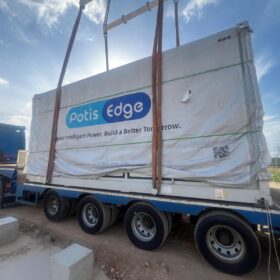
A late but decisive move to ESS: LONGi takes majority control of PotisEdge
China’s largest solar manufacturer seeks to escape shrinking margins by securing 62% voting control of a fast-rising storage integrator.