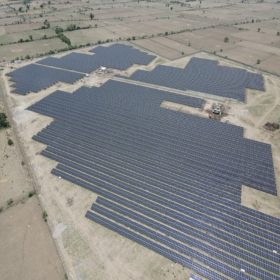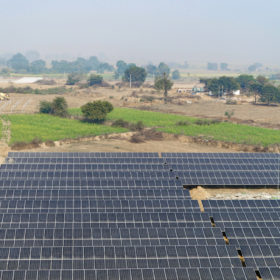
IRENA calls for investment in small island nations
The International Renewable Energy Agency (IRENA) discussed the financing landscape for small island developing states (SIDS) and mechanisms to accelerate the energy transition at the United Nations 4th International Conference on Small Island Developing States.
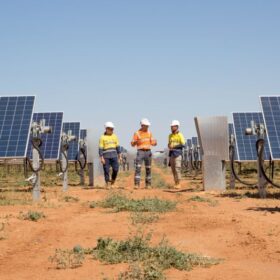
RWE green lights Australian first eight-hour big battery
Australia’s first eight-hour battery energy storage system is set to go ahead with German energy major RWE announcing it has taken the investment decision and signed key contracts for the Limondale battery project being developed in southwest New South Wales.
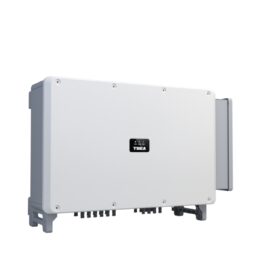
TBEA launches inverters for C&I projects
TBEA has developed new products with nominal power ratings of 75 kW to 110 kW and efficiencies of 98.6%. Their European efficiency rating is 98.4%.
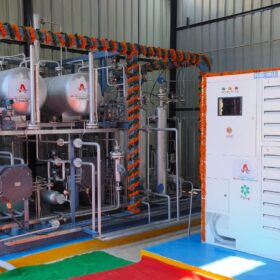
The Hydrogen Stream: Airox Nigen commissions indigenously built electrolyzer, fuel cell for SJVN’s multi-purpose green hydrogen project
Airox Nigen Equipments has commissioned its indigenously built alkaline electrolyzer and fuel cell for SJVN’s multi-purpose green hydrogen pilot project in Jhakri, Himachal Pradesh.

Clean hydrogen boom by 2030, but targets remain elusive
The clean hydrogen market must navigate technological, political, and economic uncertainties to realise its full potential.
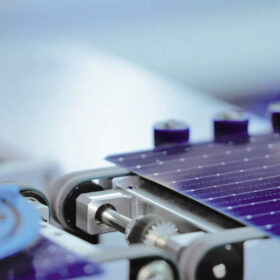
JinkoSolar claims 33.24% efficiency for perovskite-silicon tandem solar cells
JinkoSolar says it has achieved a 33.24% efficiency rating for its perovskite-silicon tandem solar cells, confirmed by the Shanghai Institute of Microsystem and Information Technology under the Chinese Academy of Sciences (CAS).

Longi introduces 630 W HPBC photovoltaic modules with 23.3% efficiency
The Chinese manufacturer said its new Hi-MO X6 Scientist series has a temperature coefficient of -0.28%/C and a power output ranging from 620 W to 630 W. They rely on the company’s proprietary hybrid passivated back contact (HPBC) cell technology.
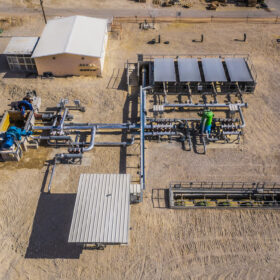
Long-duration energy storage poised to outcompete lithium-ion batteries
While most long-duration energy storage (LDES) technologies are still early-stage and costly compared to lithium-ion batteries, some have already or are set to achieve lower costs for longer durations, finds BloombergNEF.
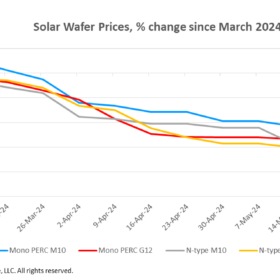
Solar wafer prices continue to soften, complex international trade situation sparks concerns
In a new weekly update for pv magazine, OPIS, a Dow Jones company, provides a quick look at the main price trends in the global PV industry.
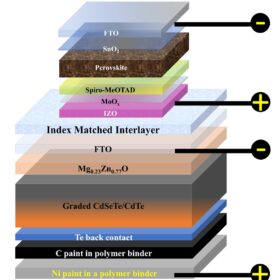
Perovskite-cadmium telluride tandem solar cell based on special electrode achieves 24.2% efficiency
An Indian-US research team has fabricated a four-terminal perovskite-cadmium telluride tandem solar cell by utilizing a highly conductive and sputtered transparent electrode to increase the current density of the bottom cell. The tandem device combines a 18.3%-efficient top perovskite cell and a 19.53%-efficient cadmium telluride bottom device.