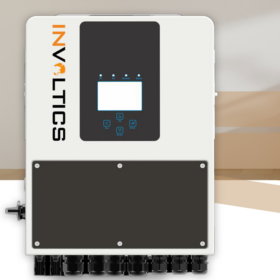
Involtics launches single-phase hybrid inverter for residential solar
Noida-based Involtics has launched the GTSI series of single-phase hybrid inverters (3 kW/3.6 kW/5 kW/6 kW) for residential solar applications. The inverters work seamlessly with solar panels, batteries (lead-acid and lithium-ion), and the grid to deliver continuous power for household loads.
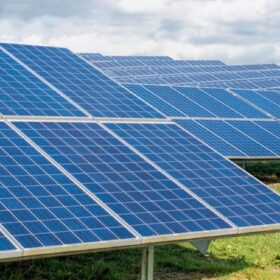
NTPC Green announces 250 MW Kadapa solar project in Andhra Pradesh fully operational
The 250 MW solar project in Kadapa district of Andhra Pradesh is now fully operational following the commercial operation of the remaining 91.6 MW capacity.
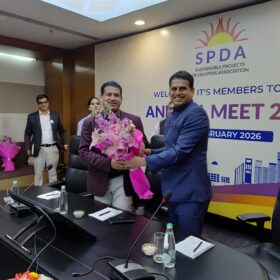
“Multi-dimensional renewable energy growth key to India’s long-term development and energy security”
India’s renewable energy expansion will extend beyond utility-scale projects to distributed renewable energy, green open access and emerging prosumer models enabled by digital platforms and the India Energy Stack as the nation advances toward its vision of becoming a developed nation by 2047.

ABB invests further $75 million to expand manufacturing and R&D footprint in India
ABB will invest a further $75 million in India during 2026 to significantly expand its manufacturing and research and development (R&D) capabilities for critical electrification and automation solutions.
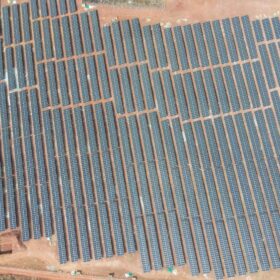
The strategic turn in industrial energy procurement
Industrial energy procurement has broadened in scope. Tariffs remain an important part of the decision, alongside a wider set of considerations. Buyers now weigh reliability, predictability, sustainability, and long-term exposure alongside price.
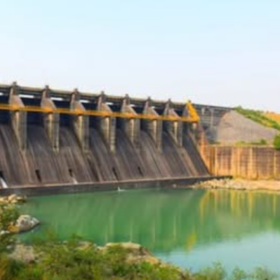
Oriana Power secures EPC contract for 234 MW floating solar plant in Jharkhand
Oriana Power has secured an INR 1,180.53 crore contract for the supply of plant and equipment, EPC, and long-term operation and maintenance of a 234 MW grid-tied floating solar PV plant at the Maithon Dam Reservoir.
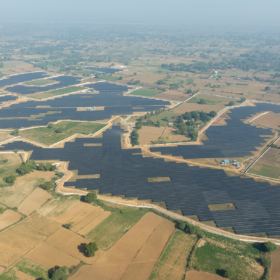
Sunsure signs solar PPAs with Daeseung Autoparts, Ilgahng Automotive
Sunsure Energy has secured 8 MWp of solar power agreements to supply clean energy to the Tamil Nadu facilities of South Korean automotive companies.
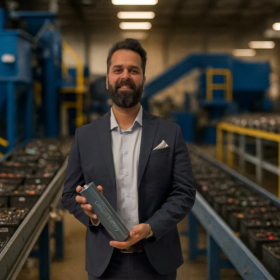
Why tech-enabled, solar-compatible BESS will power the next energy boom
The next clean-energy boom will be driven not only by renewable generation but by intelligent storage. Tech-enabled, solar-compatible battery energy storage systems (BESS) will make clean energy predictable, resilient, and commercially viable at scale.
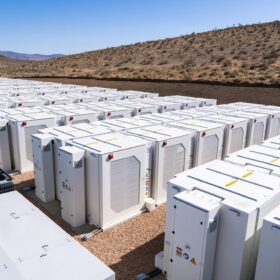
Rajesh Power signs BESPA with GUVNL for 65 MW/130 MWh battery storage project in Gujarat
Rajesh Power Projects has signed a battery energy storage purchase agreement (BESPA) with state-run Gujarat Urja Vikas Nigam Ltd (GUVNL) for the development of a 65 MW/130 MWh standalone battery energy storage system (BESS) project at Virpore in Gujarat.
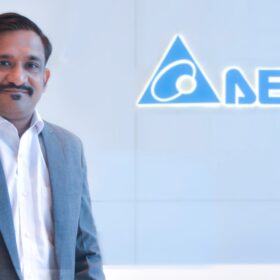
Silent bottleneck in India’s EV transition: Roadmap for localization, talent and better user experience
Several EV and charging components such as rectifiers, power modules, semiconductors, battery cells and PCBs are still largely imported. These create ecosystem-wide challenges including supply volatility, cost exposure, limited local integration, and scaling constraints. However, these gaps also represent one of India’s biggest opportunities.