Union minister visits AMPIN Energy Transition’s 5 MW solar plant at BHEL facility in Haridwar
Over 35 GW RE capacity at risk of grid curtailment in fiscal 2027: Crisil Ratings
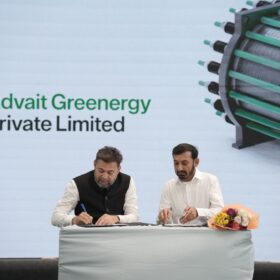
Advait Greenergy signs MoUs spanning green hydrogen, solar, and battery storage
Out now - pv magazine Global March Issue
The new pv magazine Global issue is out now!
Available in print and digital – get your copy today!

Your monthly PV industry update
pv magazine’s global monthly edition offers authoritative reporting, market-driven analysis, and expert perspectives on the technologies, policies, and investments transforming global power systems. Essential reading for professionals navigating a fast-changing energy landscape.
Available in print and digital

Battery Business & Development Forum 2026
Connect with Europe’s energy storage leaders at the Battery Business & Development Forum 2026 in Frankfurt (March 31–April 1) and gain insights into evolving business models, financing strategies, and market trends

SunRise Arabia Clean Energy Conference 2026
Join the 3rd SunRise Arabia Clean Energy Conference on April 22, 2026, in Riyadh to explore how solar PV and energy storage are powering the Kingdom’s growing digital economy — including data centers. Secure your spot at the early-bird rate.

Join our ticketed webinar on April 29, we will unpack the incident in detail and offer practical strategies to prevent the cyberattack.
Regular price: 99.00 EUR net.

pv magazine Webinar
pv magazine Webinar

Media Kit 2025
Make your order for 2025 to reach your audience the right way.

Amplify your brand presence with the leading trade media platform for the solar and storage industry.
Sunsure Energy secures INR 606 crore debt financing to support over 242 MWp of C&I solar projects
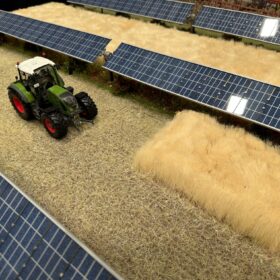
Increased spacing between solar module rows boosts agrivoltaics viability
RenewSys inaugurates 3 GW solar module manufacturing facility in Maharashtra
Clean Max Enviro acquires Kintech Solarbikaner for INR 38 crore
Arctech presents dry cleaning robot weighing just 38 kg
Markets & Policy
Featured
7 reasons AI is the missing link in the energy transition
ReNew secures $95 million equity investment for commercial & industrial renewable energy portfolio
LeapFrog leads with $50 million, joined by co‑investors Emerging Market Climate Action Fund and Carlyle AlpInvest.
Global solar capacity to reach 6 TW by 2031, says GlobalData
GlobalData says global renewable capacity will more than double to 8.4 TW by 2031, with PV reaching nearly 6 TW, a 13% compound annual growth rate from 2025 levels of 4.1 TW.
Why Gujarat continues to attract large-scale renewable energy investment
As India’s clean energy ambitions scale, investment will increasingly follow regions that can deliver outcomes, not just intent. Gujarat’s experience suggests that long-term renewable growth depends as much on institutional preparedness and grid integration as it does on natural resources.
China polysilicon prices fall over 13% year-to-date as below-cost selling persists
In a new weekly update for pv magazine, OPIS, a Dow Jones company, provides a quick look at the main price trends in the global PV industry.
New simulation platform lets energy operators train against realistic cyberattacks
Researchers at Germany’s Fraunhofer FKIE institute developed PowerRange, a virtual simulation platform that helps power grid operators safely test cybersecurity measures and respond to realistic cyberattacks. The platform supports both traditional and renewable grids, offering immersive training across IT, OT, and control systems while highlighting the importance of coordination, communication, and practical defense strategies.
Installations
Featured
Reliance Industries signs long-term green ammonia offtake agreement with Samsung C&T
OXMIQ, AM Intelligence Labs partner for renewable-powered AI compute platform in India
OXMIQ Labs will provide data center and system infrastructure advisory for AMI Labs’ upcoming gigawatt-scale AI computing facility powered by renewable energy in India.
Kärcher targets closed-loop cleaning ecosystem for India’s solar sector
Kärcher aims to build a closed-loop cleaning ecosystem for India’s solar industry, covering both PV manufacturing environments and the long-term maintenance of PV plants.
From 132kV to 765kV: How higher voltage levels are redefining grid efficiency
Ultra high voltage transmission corridors, including 765kV networks, are increasingly becoming the backbone of this energy transition. These corridors enable bulk power transfer across long distances while maintaining system availability. By consolidating large volumes of electricity onto fewer transmission lines, they also reduce the need for extensive land acquisition and infrastructure duplication, which are often major constraints in transmission expansion.
NanoMalaysia unveils sodium-ion prototype surpassing 300 Wh/kg
The new prototype ranks among the most advanced sodium‑ion battery systems reported worldwide.
Unlocking the next phase of C&I solar growth
As India’s renewable ecosystem continues to mature, open access solar is set to become a cornerstone of corporate energy strategy—delivering both financial savings and sustainability gains. Policy clarity, improved transmission infrastructure, and incentives for storage integration will be critical to unlocking the next phase of growth
Technology
Featured
Japanese researchers achieve world record efficiency of 12.28% for copper gallium selenide solar cell
Design-led innovation: Enabling widespread and reliable solar PV adoption
Energy requirements evolve over time, and solar systems must be designed with adaptability in mind. Design-led innovation supports scalability through modular architectures that allow systems to expand or integrate complementary technologies such as energy storage.
ABB invests further $75 million to expand manufacturing and R&D footprint in India
ABB will invest a further $75 million in India during 2026 to significantly expand its manufacturing and research and development (R&D) capabilities for critical electrification and automation solutions.
The limits to growth: The Malaysian way of navigating the data centre boom
Malaysia’s rising power demand, driven by industrial growth and data centers, is exposing grid and capacity constraints, prompting policies like Corporate Renewable Energy Supply Scheme (CRESS) to enable corporate renewable procurement while maintaining system cost recovery. A key factor is the System Access Charge (SAC), whose uncertain future trajectory affects long-term solar PPAs and investment decisions, making scenario-based modelling crucial for assessing project bankability.
Delta Electronics India, TNSDC launch a Centre of Excellence in Robotics & PLC Automation
Delta Electronics India, in collaboration with the Tamil Nadu Skill Development Corp. (TNSDC), has inaugurated a Centre of Excellence (CoE) in Robotics and PLC Automation at the College of Engineering, Bargur, in Krishnagiri district, Tamil Nadu.
The Hydrogen Stream: India launches Hydrogen Valley Innovation Cluster under National Green Hydrogen Mission
India has launched the Hydrogen Valley Innovation Cluster under the National Green Hydrogen Mission to accelerate the transition of green hydrogen technologies from laboratory research to industrial deployment.
Manufacturing
Featured
Intertek forecasts higher US solar module prices through 2027
RWE, Peak Energy to deploy first sodium-ion battery in US grid
Peak Energy says it will deploy the first sodium-ion battery in the Midcontinent Independent System Operator (MISO) service area with RWE Americas in eastern Wisconsin, using passively cooled grid-scale storage that cuts auxiliary power use by 90% and lowers lifetime storage costs by $70/kWh.
P3C Technology and Solutions launches perovskite module validation platform
P3C Technology and Solutions has launched an industry-focused perovskite validation platform to help manufacturers and technology developers test and validate perovskite modules.
Waaree Energies breaks ground on 10 GW integrated solar ingot and wafer manufacturing facility in Maharashtra
Waaree Energies Ltd has begun construction of an integrated solar ingot and wafer manufacturing facility in Butibori, Nagpur. The facility will have an annual production capacity of 10 GW each for solar ingots and wafers, making it India’s largest integrated ingot and wafer manufacturing complex.
Advait Greenergy opens 30 MW alkaline electrolyser assembly facility in Gujarat
The facility is designed as a scalable platform, with a roadmap to expand from 30 MW to 100 MW by the end of 2026, 300 MW by 2027, and ultimately 1 GW of annual manufacturing capacity.
Saatvik Green sets up energy storage subsidiary
Saatvik Green Energy has incorporated a wholly owned subsidiary, Saatvik Power Storage Solutions. The newly formed entity will focus on the development and deployment of battery energy storage systems for utility-scale, commercial & industrial, residential and distributed renewable energy applications.
Energy Storage
Featured
ACME Solar commissions 143 MW/481 MWh battery energy storage system in Rajasthan
Vikram Solar’s PowerHive launches lithium battery range for electric mobility and residential power backup
PowerHive, the battery and energy storage arm of Vikram Solar, has launched its VION lithium battery product range, marking the company’s entry into distributed battery storage for electric mobility and residential energy backup.
Ashok Leyland breaks ground on EV battery pack manufacturing facility in Tamil Nadu
Ashok Leyland, a Hinduja Group-owned commercial vehicle manufacturer, has begun the construction of a greenfield EV battery pack manufacturing facility at Pillaipakkam near Chennai. The project would entail an investment of INR 400-500 crore.
China commissions first urban underground vanadium flow battery system
China has deployed its first 1.25 MW urban vanadium flow battery (VFB), supporting peak AC loads and offering a safer alternative amid tighter lithium-ion storage regulations in dense urban environments.
ACME Solar signs PPAs for 450 MW/1,800 MWh assured peak power project
Under the PPAs, ACME Solar Holdings will supply 1,800 MWh of assured peak power (450 MW × 4 hours) during non-solar hours from interstate transmission system (ISTS)-connected renewable energy projects in India, with 90% availability on both a monthly and annual basis.
SECI seeks developers for 1 GW round-the-clock renewable power supply
Solar Energy Corp. of India (SECI) has invited bids from developers to set up renewable energy projects on a build-own-operate (BOO) basis to supply 1 GW of power on a round-the-clock (RTC) basis. Energy storage systems (ESS) will be a mandatory component of the projects.
Opinion & Analysis
Featured
Lightweight PV modules could unlock more than 85 GW of untapped rooftop potential in Europe
The strategic turn in industrial energy procurement
Industrial energy procurement has broadened in scope. Tariffs remain an important part of the decision, alongside a wider set of considerations. Buyers now weigh reliability, predictability, sustainability, and long-term exposure alongside price.
China TOPCon module prices edge higher as March cargoes clear
In a new weekly update for pv magazine, OPIS, a Dow Jones company, provides a quick look at the main price trends in the global PV industry.
Why tech-enabled, solar-compatible BESS will power the next energy boom
The next clean-energy boom will be driven not only by renewable generation but by intelligent storage. Tech-enabled, solar-compatible battery energy storage systems (BESS) will make clean energy predictable, resilient, and commercially viable at scale.
Silent bottleneck in India’s EV transition: Roadmap for localization, talent and better user experience
Several EV and charging components such as rectifiers, power modules, semiconductors, battery cells and PCBs are still largely imported. These create ecosystem-wide challenges including supply volatility, cost exposure, limited local integration, and scaling constraints. However, these gaps also represent one of India’s biggest opportunities.
Beyond the panels: How India’s solar growth and PM-KUSUM are redefining the grid
While policy discussions focus on solar tariffs and farmer incentives, we see a different challenge emerging on the factory floor: Infrastructure Redefinition. The humble transformer is being asked to do things it was never originally designed to do.