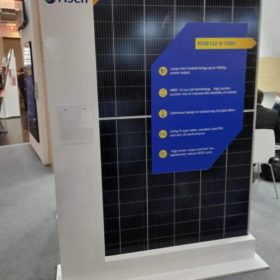
Risen showcases n-type solar panel with output of 700 W
The 210 mm module can reach a power output of up to 703.6 W and a power conversion efficiency of 23.08%. The result was confirmed by Germany’s TÜV SÜD.
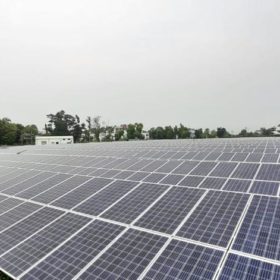
Kolkata Port Trust gets 1 MW solar plant for self-consumption
The ground-mounted, captive solar plant, commissioned by Vikram Solar, is expected to generate 1.4 million units of electricity per year.

The long read: First Solar – ‘India presents a big market opportunity for us’
Sujoy Ghosh, First Solar’s vice president for India and the Asia-Pacific region, speaks to pv magazine about the company’s plans to set up a 3.3 GW module fab in India to service the local market.
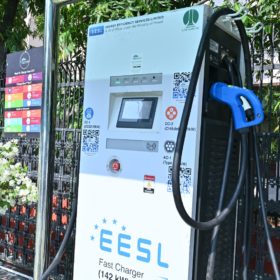
Tata Power to install EV charging infrastructure for TVS Motor
TVS Motor has signed a memorandum of understanding with Tata Power to create a regular AC charging and a DC fast-charging network for its electric two-wheelers. The two companies will also explore opportunities to use solar energy to power select TVS Motor locations.
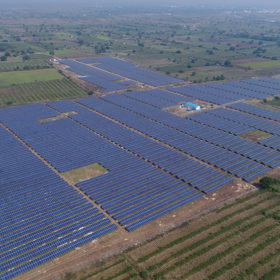
Maharashtra tenders 25 MW grid-connected solar
The Maharashtra State Power Generation Co. Ltd (MAHAGENCO) has invited bids to set up a 25 MW grid-connected solar plant in the Dhule district on a revenue share basis.
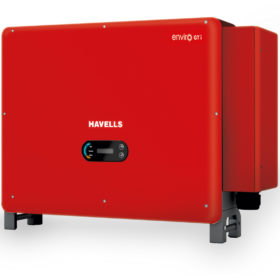
Commercial and industrial solar inverter from Havells
Noida-based electrical equipment company Havells has unveiled a 100 kW string inverter for commercial and industrial-scale solar installation. The inverter has an efficiency of 98.7%. It features ten maximum power point tracking (MPPT) inputs, with MPPT voltage ranging from 500-850 V.

Large-scale solar can cool nearby areas
An international team of scientists observed a cooling effect in a large radius around solar arrays. The cooling may have implications for local ecosystem management.
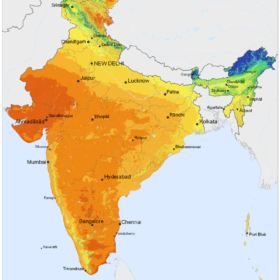
Emerging trends in the Indian solar power sector
The Indian solar power sector is undergoing a technology-backed transformation at every stage from manufacturing to installation to improve cost and performance efficiency.

IPO-bound Waaree Energies appoints CEO
The Indian solar manufacturer, which has 2 GW of module production capacity, has appointed Vivek Srivastava as chief executive officer. Vivek joins from Reliance BP Mobility Limited, where he served as the senior vice president.
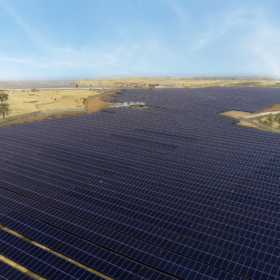
Cleantech Solar secures INR 2 billion from NIIF
The Singapore-headquartered corporate solar provider, which has over 600 MWp of solar portfolio across India and Southeast Asia, shall utilize the debt funding to finance its open access solar projects in India.