Enfinity Global secures $135 million for 1.2 GW of solar, wind power plants in India
US-based Enfinity Global has secured $135 million in long-term financing to advance the development of its 1.2 GW of solar and wind projects in India. The financing is being provided by Canada Pension Plan Investment Board
IEX reports 26.4% rise in renewable energy certificate trading
The Indian Energy Exchange (IEX) traded 75.39 lac renewable energy certificates (RECs) in FY 2024, equivalent to 7.54 billion units, registering a 26.4% increase year-on-year.
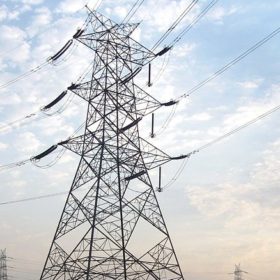
Adani Energy Solutions completes acquisition of Essar’s operational Mahan-Sipat transmission assets
Adani Energy Solutions Ltd (AESL) has acquired Essar’s operational Mahan-Sipat transmission assets for an enterprise value of INR 1,900 crore. This acquisition will add 673 ckt km, 400 kV inter-state transmission line, taking AESL’s cumulative network to more than 21,000 ckt km.

Climate-tech investment: Sustainable growth or looming bubble?
While the first quarter of 2024 has shown a significant and potentially transformative rise in climate-tech funding, the sustainability of this growth remains uncertain.
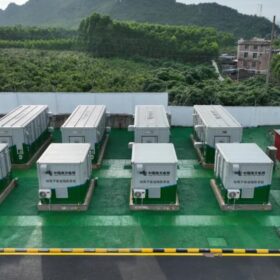
China switches on first large-scale sodium-ion battery
China Southern Power Grid has deployed a 10 MWh sodium-ion battery in China’s Guangxi Zhuang region. It is the first phase of a 100 MWh project.
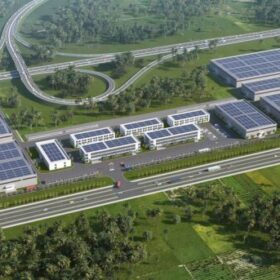
SEG Solar signs land deal to make solar cells, wafers, modules in Indonesia
SEG Solar has secured a land-use agreement for a solar-focused manufacturing site in an industrial zone on the Indonesian island of Java. The $500 million plan will involve the production of 5 GW of silicon wafers, 5 GW of solar cells, and 5 GW of PV modules.

ReNew secures $1 billion from European bank Societe Generale
Societe Generale will provide up to $1 billion of debt finance and advisory solutions, over the next three years, to support the development of ReNew’s energy transition projects.
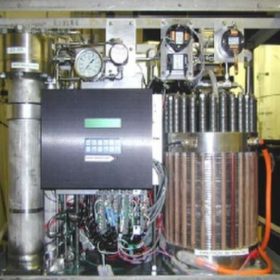
The Hydrogen Stream: India extends bidding for second round of electrolyzer incentives
Manufacturers now have until May 31 to submit bids for setting up electrolyzer manufacturing capacities in India under the second round of the government’s Strategic Interventions for Green Hydrogen Transition (SIGHT) program.
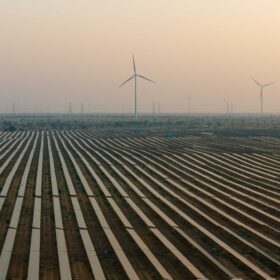
India to add more than 15 GW of renewable energy capacity annually in FY 2025 and FY 2026: India Ratings
India Ratings and Research expects India to maintain pace of renewables capacity addition owing to a significant drop in equipment prices, continued policy support, availability of liquidity, and investment plans of some of the large corporate players.
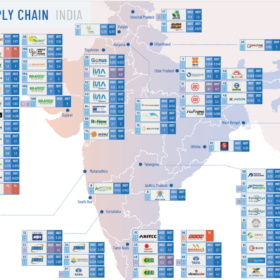
Sinovoltaics charts growth of PV manufacturing in India
The latest supply chain report from the Hong Kong-based technical compliance and quality assurance company covers India, providing information about current and planned capacity at 116 manufacturing plants.