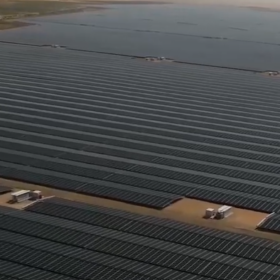
Perovskites thrive under pressure
Scientists in the U.S. and Nigeria have studied the effects of pressure on perovskite solar cell production and found the correct application could improve cell efficiency by as much as 40% (relative). Push them too hard though, and they crack.
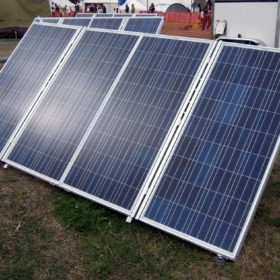
A new technique for cooling solar panels
Scientists in Egypt have investigated the effectiveness of using water and a mixture of aluminum oxide and calcium chloride hexahydrate to cool PV modules. Optimal performance was observed with a solution of 75% water, according to the research findings.
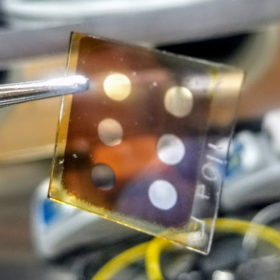
A flexible perovskite solar cell with 11.8% efficiency
U.S. researchers have created an inorganic mixed halide perovskite solar cell which they claim shows no thermal degradation even at 200 degrees Celsius for three days. The device can be used in tandem junction cells and is designed for use in real-life environments with high solar irradiation.
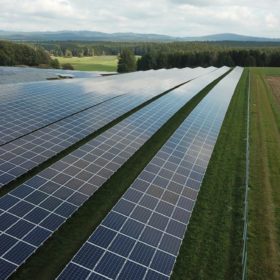
LCOE from large scale PV fell 4% to $50 per megawatt-hour in six months
Analysts at Bloomberg New Energy Finance say the lowest-cost projects financed in Australia, China, Chile and the UAE in the last six months hit a levelized cost of energy of just $23-29/MWh and the best solar and wind projects will produce electricity for less than $20/MWh by 2030.
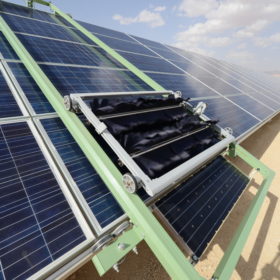
CEL seeks technology partner for waterless solar module cleaning systems
The state-owned Central Electronics Limited seeks to empanel startups having the technology patent for waterless solar module cleaning system without any moving parts as its intends to manufacture such systems at its facilities.

Single‐walled carbon nanotubes for more efficient III‐V solar cells
Russian researchers have improved the efficiency of a thin-fim GaAs‐based solar cell by 0.9% by applying single‐walled carbon nanotubes as the topmost layer. The cell also showed a slight increase in the short circuit current density, from 16.9 to 17.9 mA/cm2.

‘Free-form’ organic PV
French organic PV module manufacturer Armor said it began manufacturing free-form PV modules in early April. The new technology will allow the company’s ASCA PV film to be produced in a range of different shapes.
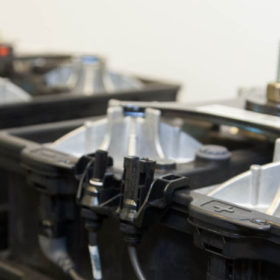
Low-cost bio-inspired electrocatalyst for rechargeable metal-air battery
Indian scientists have developed a low-cost electrocatalyst based on iron, manganese and N-doped carbon derived from fish gills (Fe/Mn/N-FGC) that increased the performance of a homemade rechargeable zinc-air battery when used as the air cathode. The Fe/Mn/N-FGC cathode based battery achieved open-circuit voltage of 1.41 V and a large power density of 220 mW/cm2 at 260 mA/cm2 current density—compared to commercial platinum/carbon based battery’s 1.40 V and 158 mW/cm2—with almost stable charge-discharge voltage plateaus at high current density.

Solar inverters vs. cyberattacks
A U.S. research group is now developing new inverters to protect solar installations from cyberattacks. The researchers also aim to create new cybersecurity standards. Professor Alan Mantooth, the group’s research coordinator, said that inverters can be shut down if they are hacked, or contribute to grid instability and result in the overcharging of batteries, while potentially creating problems that we still don’t know how to address.
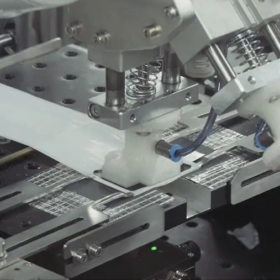
A non-flammable lithium metal battery
Researchers from Deakin University in Australia claim their battery chemistry is based on a new class of electrolyte material which carries no risk of uncontrolled thermal events and represents a viable alternative to rechargeable lithium-ion batteries.