Ola to open battery cell R&D center next month
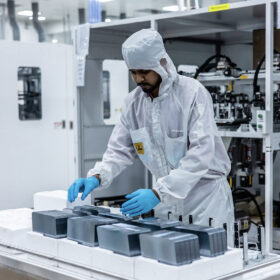
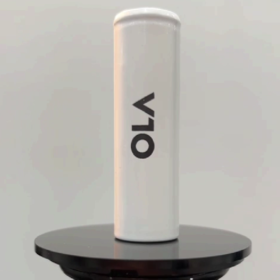
The electric mobility company will open its battery innovation center (BIC) in Bengaluru next month as it looks to build indigenous cell technology and manufacture Li-ion cells in India at scale.
Study confirms rule of thumb that PV inverters should run without faults for around 15 years
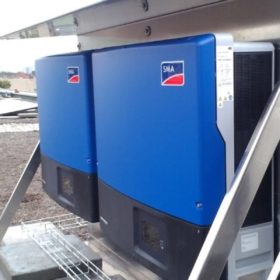
A new study by Bern University of Applied Sciences shows that the performance of most PV inverters and power optimizers remains optimal for up to 15 years. The inverters considered came mainly from the manufacturers Fronius, Sputnik, and SMA and most of the power optimizers examined came from Solaredge.

Israel, USA, UAE to support 300 MW wind-solar-storage project in Gujarat
The United States and Israel have the opportunity to provide clean energy solutions for the 300 MW wind-solar project complemented by a battery energy storage system. United Arab Emirates-based companies will explore participation as knowledge and investment partner.
Fluence opens new tech center in India
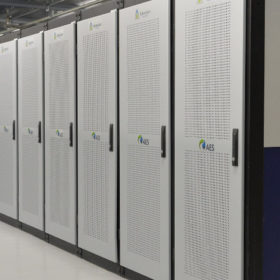
Energy storage specialist Fluence has opened a technology center in Bengaluru, as part of its plans to localize production in India in the future.
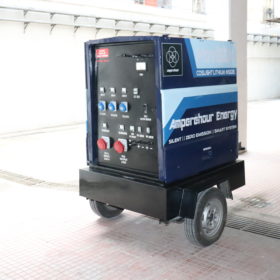
Plug-and-play mobile energy storage system
India’s AmpereHour Energy has released MoviGEN, a new lithium-ion-based, mobile energy storage system. The system is scalable and can provide clean energy for applications such as on-demand EV charging, remote construction sites, and large-scale outdoor events.
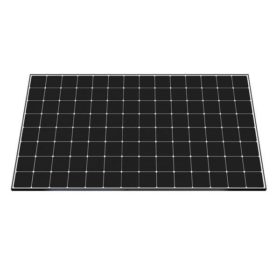
Energy output is over 100 times the input needed to manufacture solar panels
According to a third-party study, the projected output over the 40-year warranty period of Maxeon solar panels exceeds the energy demand of manufacturing them by over 100-fold. Plus, more details from the Maxeon 2021 sustainability report.
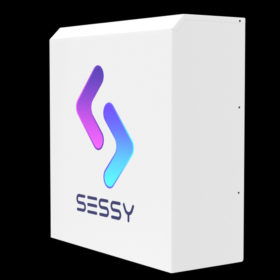
New residential battery from the Netherlands
Dutch startup Charged has developed a lithium-ion battery with a storage capacity of 5 kWh. It can be stacked in a six-unit configuration to reach 30 kWh. It measures 400 mm x 500 mm x 200 mm and weighs 45 kg.
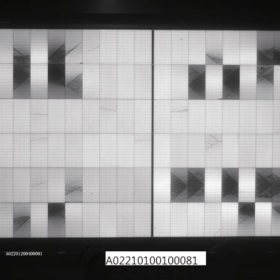
The long read: Structural solar matters
While it comes with clear performance advantages, the move to larger module formats has created plenty of confusion since it began in 2019. As the dust settles and standards emerge, pv magazine caught up with Hongbin Fang, director of product marketing at Longi Solar, to discuss the latest on wafer and cell dimensions.

Perovskite: The disruptive element
Perovskite solar cells have the potential to produce more energy at significantly lower costs than conventional silicon PV cells. Efforts are underway to speed up their commercialization by addressing issues such as limited stability.
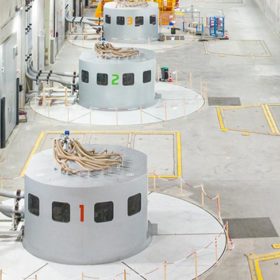
Massive pumped-hydro storage facility comes online in Switzerland
The Nant de Drance facility began commercial operations on July 1 and is currently one of Europe’s largest pumped-hydro storage stations.