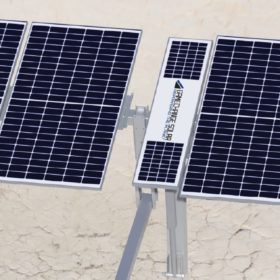
GameChange releases new solar tracker
US tracker manufacturer GameChange Solar’s latest product launch follows its recently announced decision to increase its annual domestic manufacturing capacity to 24 GW.
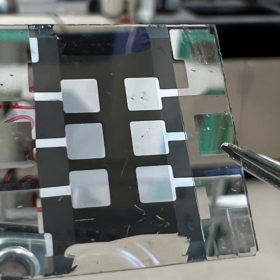
All-perovskite tandem solar cell with 27.1% efficiency via gas quenching
The US National Renewable Energy Laboratory (NREL) has achieved remarkable efficiency and stability for a wide-bandgap all-perovskite tandem solar cell. The scientist developed the device with an inverted architecture and used gas quenching instead of an antisolvent in the manufacturing process.
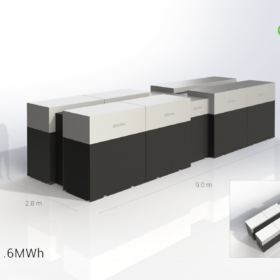
Lithium sulfur flow battery with 250 Wh/L energy density
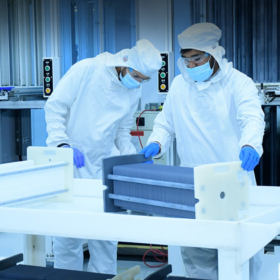
Edinburgh-based energy storage solutions specialist StorTera has developed a long-duration, energy-dense, lithium-sulfur-based single liquid flow battery (SLIQ). The tech is said to last for 30 years with minimal degradation.
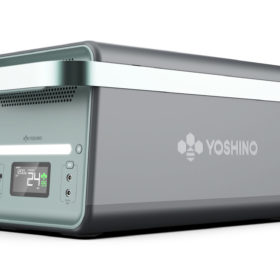
US startup unveils portable solid-state lithium-ion battery for residential use
California-based Yoshino Technology has developed portable batteries using solid-state Li-NCM cell technology. The four variants come with power outputs of 330 W, 660 W, 2,000 W, and 4,000 W.
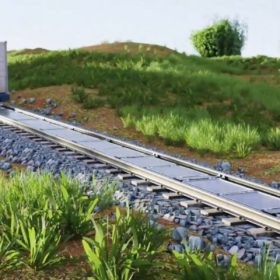
Swiss startup makes first attempt to deploy solar on railways
Swiss startup Sun-Ways has developed a patented solution under which it directly rolls out solar modules between railway tracks like a carpet. The panels can be removed at any time for maintenance work.
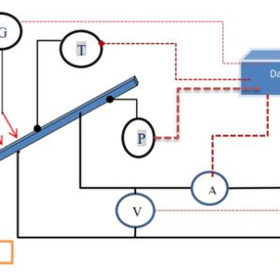
Cooling solar modules with vacuum pressure
Scientists in Indonesia have developed a vacuum technique to lower the temperature of PV modules below the ambient air temperature. They applied it to a solar module in a casing that is resistant to negative pressure.
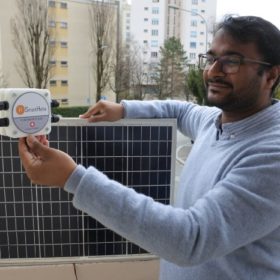
SmartHelio raises $5 million
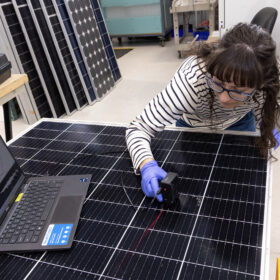
The Swiss PV diagnostics and predictive solutions provider said it would use the amount to scale its software for solar performance management.
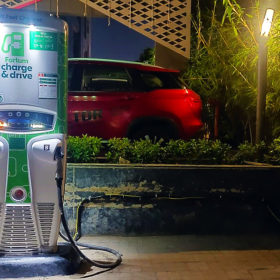
IESA launching India Electric Mobility Council
India Electric Mobility Council will work with the government and various stakeholders to address the barriers to EV adoption. Focus areas also include safety & standards, charging infrastructure development, battery swapping, and V2G mechanism for India.
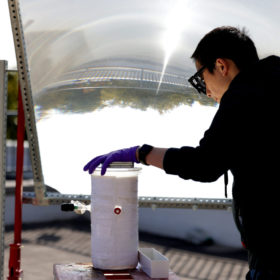
Photocatalytic water splitting with 9.2% solar-to-hydrogen efficiency
A US research team has developed a new technique to produce hydrogen from sunlight and water. It works in an indoor environment and uses pure water, concentrated solar light, and an indium gallium nitride photocatalyst.
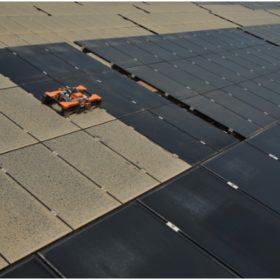
Impact of dust, heat, soiling on solar project performance
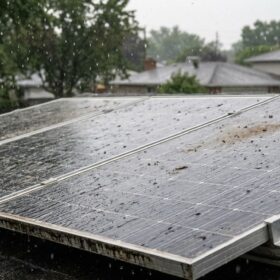
Scientists in Morocco recently conducted a year-long study on the impacts of soiling on PV modules in arid, dusty conditions. They found that soiling could contribute to daily performance losses of as much as 15%.