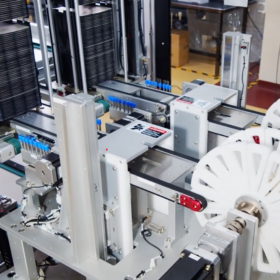
Solex Energy partners with Malaysia’s TT Vision on solar manufacturing automation and talent development
Solex Energy Ltd has signed a non-binding Memorandum of Understanding (MoU) with Malaysia-based automation technology company TT Vision Holdings Berhad to collaborate on advancing solar manufacturing automation, engineering excellence, and talent development in India.
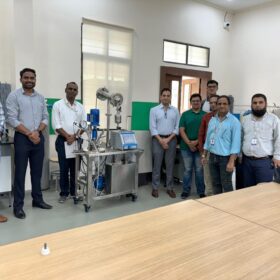
MIT-WPU researchers develop safer liquid hydrogen transport system
Researchers at India’s MIT World Peace University (MIT-WPU) have developed a Liquid Organic Hydrogen Carrier (LOHC) system capable of transporting hydrogen in a stable liquid form that is non-flammable, non-explosive, and manageable at normal temperatures and pressures. This breakthrough removes one of the biggest barriers slowing the widespread adoption of hydrogen in India.

Smart Joules raises $10 million in Series B funding from Neev II Fund, Waaree Renewable Technologies, and Spectrum Impact
Smart Joules will use the proceeds to expand its energy-efficiency and cooling operations into newer sectors and larger-scale projects, including manufacturing, building automation, and district cooling, while further strengthening the company’s technology, analytics, and on-ground execution capabilities.

From waste to wealth: Circular strategies driving a sustainable India
The promise of India’s circular economy lies in its ability to turn environmental challenges into engines of growth. Achieving it will take investment, innovation, and clear ways to measure progress.

Keeping the smart grid cyber secure
As smart grid tech is rolled out around the world to modernize legacy assets and integrate renewable energy generation, it is also making the electricity network more prone to cyber attacks. IEC Standards provide protection but they also are challenged to keep up with the latest threats.
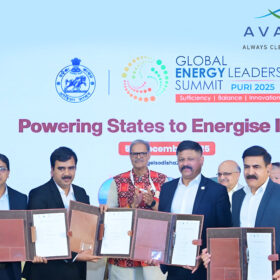
Avaada Group partners with GRIDCO, IIT-Bhubaneswar to set up green hydrogen Centre of Excellence in Odisha
Avaada Group has signed a Memorandum of Understanding (MoU) with GRIDCO and IIT-Bhubaneswar to establish a state-of-the-art Centre of Excellence (CoE) in Odisha focused on integrated research, innovation, and technology development in green hydrogen.

India’s green hydrogen future needs demand to keep pace with ambition
If India solves demand creation intelligently, it can become a global price-setter, not just another participant in the hydrogen economy.
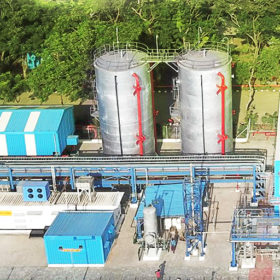
India must fast-track green hydrogen based steelmaking amid metallurgical coal supply risks: IEEFA
Indian steelmakers have begun adopting green hydrogen, but this option should become an even greater priority for the country as metallurgical coal supply risks intensify.

Fraunhofer ISE achieves 30.6% efficiency for perovskite-silicon tandem based on industry-standard bottom TOPCon cell
Researchers at Fraunhofer ISE have developed a perovskite-silicon tandem solar cell using a TOPCon bottom cell with standard textured front surfaces. Their results show that TOPCon bottom cells can perform comparably to heterojunction cells in tandem devices in terms of shunt resistivity, supporting scalable, cost-effective industrial production.

Are solar PV developers in India prepared for increasingly severe monsoons?
India witnessed above-average precipitation and prolonged cloud cover through July and August, limiting the potential of PV generation across many states. Several regions, including Punjab, Haryana, and the Himalayan foothills, were hit hardest by flooding and thunderstorms. The increase in atmospheric moisture and aerosol scattering led to reduced Global Horizontal Irradiation (GHI) and reduced energy output.