Avaada Group to invest INR 5,000 crore in 1 GW of renewable energy projects in Bihar
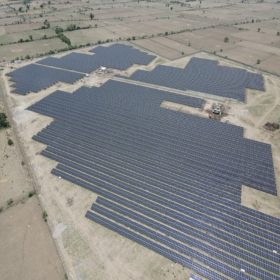
Avaada Group has signed a memorandum of understanding with the government of Bihar to invest INR 5,000 crore for developing 1 GW of solar and battery energy storage projects in Bihar.
India could cut electricity costs to $50/MWh by 2050 with a fully wind and solar-based power system, says ETC report
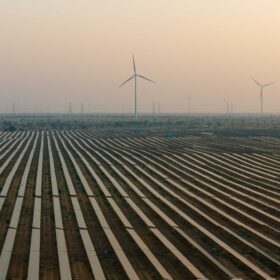
India could achieve clean power system at a cost (including generation, balancing, and grid infrastructure) of around $50/MWh by 2050—significantly below current fossil fuel-driven wholesale prices—by shifting to a fully wind and solar-based electricity system requiring primarily day-night balancing.

US lifts duties on certain small solar devices imported from China
The US Department of Commerce will lift trade duties on certain low-power solar devices from China, citing limited domestic interest in maintaining the tariffs. The decision affects small modules typically used in lighting and other control applications.
Solar power for smarter, greener cities
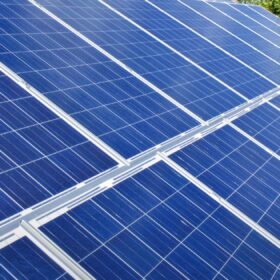
India’s solar journey is not just about energy generation, it’s about transforming how cities are built and lived in. A multidisciplinary approach involving policy, technology, and civic engagement will be crucial to accelerate this transition. With the right push, India can lead the global shift toward climate-resilient, smart, and sustainable urban ecosystems.

Waaree Energies records INR 4,597.18 crore revenue in Q1 FY 2026
Waaree Energies Ltd has reached an order book of 25 GW—comprising 58.7% overseas and 41.3% domestic orders—valued at approximately INR 49,000 crore.

Surplus solar panels offer timely solution for industry under pressure
Supply chain challenges, subsidies and tariff uncertainties are forcing the solar energy industry to find significant cost efficiencies. As older models of installed solar panels become harder to source, the growing second-life solar market helps industry find replacement panels and other equipment.

UK parliament calls for solar supply chain law, forced labor import ban
Cross-party human rights committee says legislation needed to combat forced labor in solar supply chains, in report urging the UK government to introduce mandatory due diligence measures. Solar Energy UK expresses disappointment in committee’s portrayal of the UK solar industry.

Acme Solar posts INR 131 crore profit for Q1 FY2026
Acme Solar has reported a net profit of INR 131 crore for the first quarter of FY2025-26, a stellar increase of 9,319% YoY.
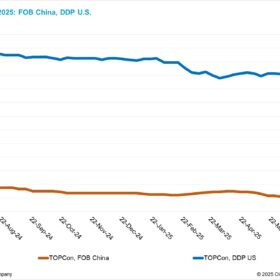
FOB China solar panel prices climb amid concerns about delinking with market fundamentals
In a new weekly update for pv magazine, OPIS, a Dow Jones company, provides a quick look at the main price trends in the global PV industry.

MNRE to launch utility-led solar program for houses without suitable rooftop space: Minister Pralhad Joshi
The Indian government will soon launch a utility-led solar program under the PM Surya Ghar: Muft Bijli Yojana to benefit households without suitable rooftop space, Union Minister for New and Renewable Energy Pralhad Joshi said during his speech at the Mercom India Renewables Summit 2025.