Covid-19 and dependence on China’s PV supply chain
The Asian Development Bank says developing countries in Asia and the Pacific should consider developing their own solar industry supply chains as the Covid-19 pandemic has exposed their over-reliance on China to carry through the energy transition.
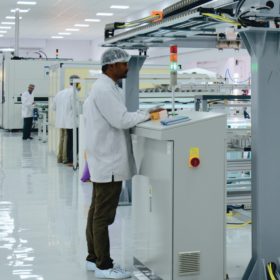
Covid-19: The going gets tough for solar manufacturers
Solar season had already started in the month of March. The demand for solar consumption is the highest during April-June quarter as summer picks up. This is the time when factory runs with full efficiency. India was estimated to install nearly 8 GW of solar panels in 2020, in which 90% consumption happens in utility-scale […]
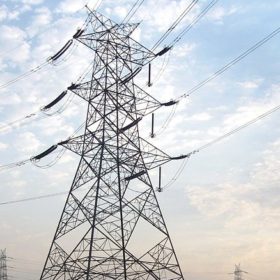
Sterlite Power gets GE, Tata onboard Green Energy Corridor project in Gujarat
The project involves laying over 300 km of 765 kV double-circuit transmission lines connecting 765/400 kV Lakadia substation to Vadodara substation in Gujarat.

Can solar industry tide over the Covid-19 crisis?
Planning ahead is crucial to ensure the Indian solar industry bounces back quickly and the slowdown is not carried forward to 2021-22, say BloombergNEF analysts even as they estimate 75% fall in PV imports in the first quarter of year 2020 over the previous quarter and revise annual capacity addition forecasts.
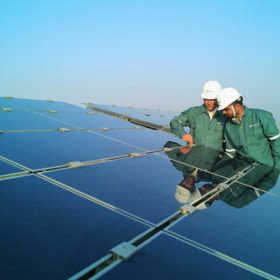
Covid-19: MNRE terms utility-scale solar power generation ‘essential service,’ allows related material and personnel movement
The ministry further announced waiver from section 144, Nationwide Lockdown, Curfew, or any other limitation on the number of people required for operation and maintenance of solar power plants. The directive came a day after lobby group National Solar Energy Federation wrote to the ministry asking for waivers.

Europe’s Wamtechnik, ION Energy partner to enable electric excavator
The European Li-ion battery manufacturer has partnered with the Mumbai based battery management system provider on the design and deployment of an electric excavator that would operate in subzero temperatures (below -20°C).
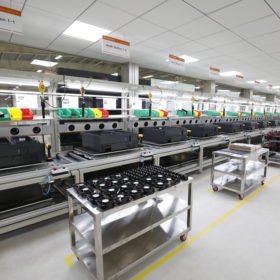
Sungrow signs 650 MW PV inverter supply deal with Avaada Energy
The Chinese inverter manufacturer will supply its 1500V 3.125 MW central inverter solution for Indian developer Avaada Energy’s upcoming PV projects in India.
Covid-19: Discom revenue dip could spell trouble for PV producers
Sliding electricity demand and declining commercial and industrial activity could prompt distribution companies to block or delay payments to solar power producers.

Prospects of India-UK partnerships in creating digitalized energy systems
India’s energy system immediately needs a shift from centralized commands to dynamic interactive structures. While the UK is already spearheading digitalization of its energy systems, India has ample areas demanding interventions, such as integration of decentralized energy systems using digital innovation and analytical tools.
IndiGrid acquires Sterlite Power’s transmission project worth US$134 million
The project—East North Interconnection Company Limited (ENICL)—provides critical inter-state connectivity for evacuation of power from generation plants in the north-eastern region. It also aims to end power shortfall in Assam during non-monsoon months.