GameChange BOS opens high-volume transformer factory in Maharashtra
The factory, spread across 180,000 sq. ft., is capable of producing over 1,800 transformers annually, significantly expanding the company’s ability to serve key markets in India, Europe, and the United States.
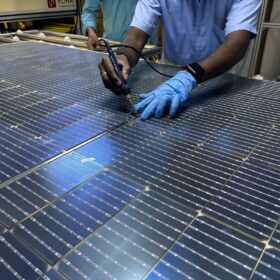
Shrinking export opportunities raise solar module oversupply concerns in India: SBICAPS
India’s solar module manufacturing capacity has reached around 100 GW, enough to meet domestic demand. However, with total module capacity rising to 190 GW by March 2027 and export opportunities narrowing, the market faces oversupply crisis, states a new report by SBICAPS.
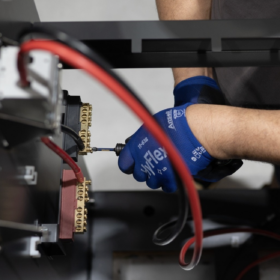
Australia launches fund to expand battery manufacturing
The Australian Renewable Energy Agency has launched a AUD 500 million ($324 million) initiative aimed at supercharging Australia’s battery manufacturing industry and seizing opportunities associated with the global renewable energy transition.
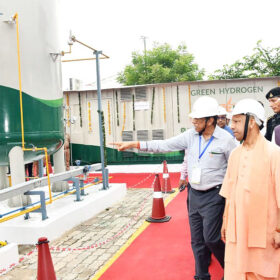
Torrent Group’s 72 tpa green hydrogen plant in Gorakhpur inaugurated by Uttar Pradesh chief minister Yogi Adityanath
Torrent Gas will blend green hydrogen up to 2% with natural gas in its city gas distribution (CGD) network and supply the blend to domestic households, CNG stations, and industries in the region.
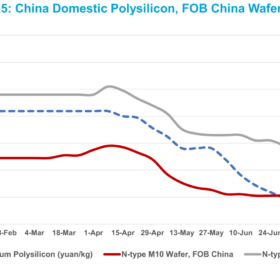
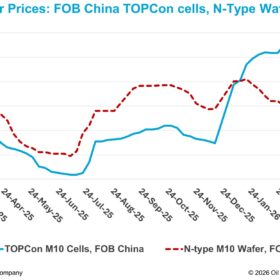
China solar cell rally stalls amid worsening margin squeeze
In a new weekly update for pv magazine, OPIS, a Dow Jones company, provides a quick look at the main price trends in the global PV industry.

ReNew reports 13-fold jump in Q1 net profit
ReNew Energy Global has reported a net profit of INR 5,131 million for the first quarter of fiscal year 2026 (Q1 FY26), marking a 13-fold increase from INR 394 million in Q1 FY25. A significant portion of the profit—INR 3,562 million—was contributed by external sales from the company’s solar module and cell manufacturing business.

How the India-UK FTA can turbocharge clean energy cooperation and investment between the two nations
Trade is only half the story, the bigger opportunity lies in green finance. Indian renewable energy projects require an estimated $250 billion in capital by 2030. The UK, home to one of the world’s most mature green finance ecosystems, including institutions like the Green Investment Bank and large ESG-focused funds, is ideally positioned to bridge this gap.

US opens next round of solar import probes targeting India, Indonesia, Laos
The US Department of Commerce has initiated full investigations into anti-dumping and anti-subsidy cases against solar imports from India, Indonesia, and Laos filed in July. These investigations, conducted alongside the US International Trade Commission (ITC), are expected to continue into next spring.

Qcells confirms US customs detained solar cell imports from South Korea
Qcells has confirmed that US Customs and Border Protection (CBP) has detained an unspecified volume of its solar cell imports from South Korea. The company claims the cells do not contain components from Xinjiang, China and says it is working with CBP to resolve the issue.

The future of decarbonization is digital: Leveraging SaaS and automation for real-time emissions tracking
As global investors, consumers, and regulators demand deeper climate accountability, India’s position as a manufacturing and export hub will increasingly hinge on how credibly its businesses can measure and manage emissions. That credibility will come not from declarations, but from data.