Renewables 2.0: Preparing for the new complexity of renewable energy in a post-subsidy world
As the deployment of renewable energy continues to expand around the world, driven by various inputs, such as capital allocation and investment, falling capital costs, competitive LCOE and various policy mechanisms, we are now moving towards a new era for renewable energy. ‘Renewables 2.0’ will have significant, wide-ranging consequences for all market players, as regulators reduce their support and power producers seek new revenue models. In this article, Duncan Ritchie, partner at Apricum – The Cleantech Advisory, will look at the key market developments for renewables, explode the myth of grid parity, highlight the need for flexibility and explain the importance of new financing solutions that are capable of meeting the new complexities brought about by ‘Renewables 2.0’.
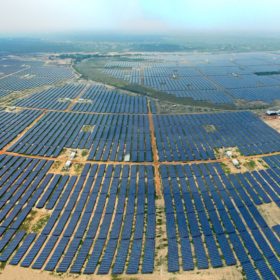
Tamil Nadu targets 400% jump in solar capacity by 2022
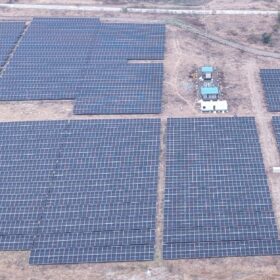
The state government is proposing a range of incentives and mandates to drive PV and solar thermal installations to almost 9 GW within four years. Under the proposed policy, 10% of the public fleet would be replaced by electric vehicles.
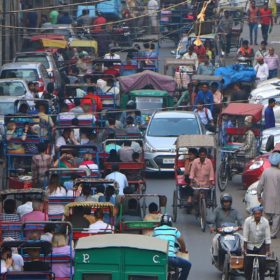
Saft buys out JV partner and announces lith-ion investment
The historic French brand says it will focus on rail, telecom and infrastructure, but environmentalists hoping the move finally heralds a breakthrough for electric vehicles in one of the world’s biggest transport markets appear set to be disappointed.
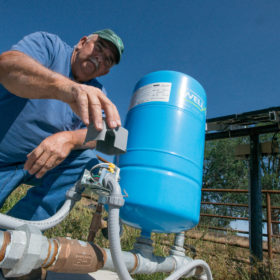
EESL chosen to manage 5 lakh solar water pump program
The International Solar Alliance has selected India’s Super Energy Service Company to roll out its agricultural solar initiative across 13 nations. Almost a third of India’s three crore of agricultural pumps are currently powered by diesel.
Maharashtra discom to purchase 1.4 GW of solar power
The 71% of capacity which was not taken up in the previous tendering exercise has been rolled over into the new one by the state’s electric distribution company.
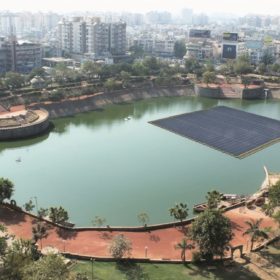
Testing the water
If India covers just one third of its major water reservoirs with floating solar installations, it could generate as much as 700 GW of solar power. However, it’s still early days for floating solar in the country, given the lack of technical experience and higher implementation costs.
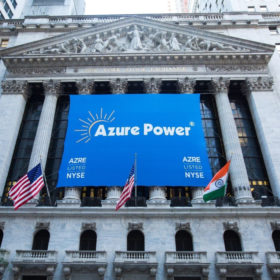
Rs2.44 solar bid equalled in Gujarat – but is it viable?
The state’s second attempt to tender for 500 MW of capacity has made a mockery of predictions of rising PV electricity prices and exonerated utility for cancelling previous procurement round. But the absence of India’s cheapest solar energy generator from the latest exercise could be telling.
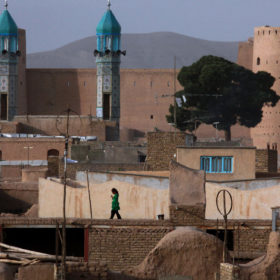
World Bank to help Afghanistan tender 40 MW solar project
The International Financial Corporation will help the country’s government competitively tender the project, which is expected to be developed through a public-private partnership.
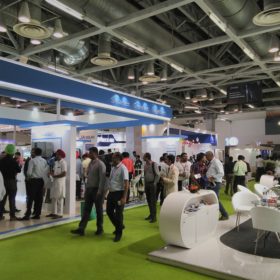
Memo to the EU: ‘India is the largest clean energy market in the world that will operate on market-friendly principles’
The second day of REI in Greater Noida continues to attract large numbers of delegates, with the exhibition halls crowded, and conferences well attended. During an EU-Indian session this morning, India’s CEEW boldly stated that India is the largest clean energy market in the world, which will operate on market-friendly principles. Overall, CEO, Arunabha Ghosh outlined four basic vows needed for the Indian renewables market to grow; and said decarbonzation of the industrial sector should be the next big focus for renewables.
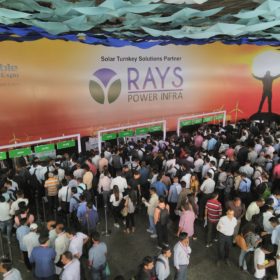
REI 2018 opens its doors with a bang
The 12th Renewable Energy India (REI) Expo opened its doors today; the booming music and bright sunshine mirroring India’s ambitious goals to become the biggest RE market in the world. In the opening conference, the government’s commitment to renewables was underlined, while BNEF said the country will have one of the highest penetrations of solar and wind, globally, by 2050. Companies are also starting to look to India for manufacturing opportunities, although the landscape is still filled with uncertainty.