BII, CIP launch $300 million platform to support renewables project development in India
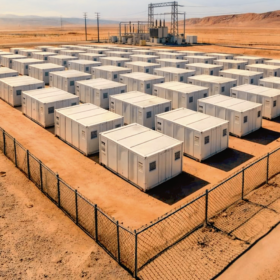
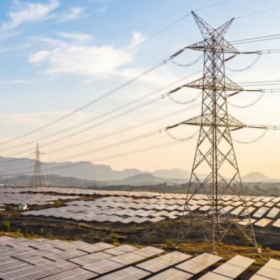
British International Investment (BII) has launched a $300 million platform to accelerate renewable power projects in India, with $150 million each from BII and Danish fund manager Copenhagen Infrastructure Partners (CIP).

Siemens Energy India Q2 FY2026 revenue up 27.4% YoY
Siemens Energy India Ltd has reported a revenue from operations of INR 2,394 crore for the quarter ended March 2026, marking a 27.4% year-on-year increase from INR 1,880 crore in the corresponding quarter of FY 2025. Profit after tax increased 52.4% YoY to INR 375 crore.

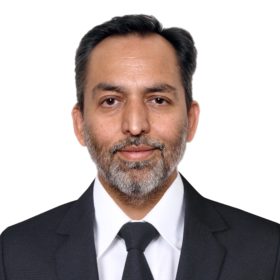
“India’s battery energy storage market is transitioning from aggressive tendering to execution-led scale” — Ratul Puri, Chairman, Hindustan Power
Ratul Puri, Chairman of Hindustan Power, speaks to pv magazine about the key challenges in scaling renewable energy deployment, the growing role of battery storage and carbon markets, and Hindustan Power’s strategy in supporting India’s clean energy transition.

India’s critical minerals sector faces financing challenges: IEEFA
While the National Critical Mineral Mission (NCMM) aims to create regulatory and institutional enablers to develop the critical minerals supply chain, focused capital expenditure is needed to accelerate large-scale mining, refining, and processing. The NCMM creates intent and incentives, but outcomes will depend on institutional execution.

India, EU launch €15.2 million programme for advanced EV battery recycling
India and the European Union (EU) have launched a €15.2 million (INR 169 crore) joint funding programme to advance recycling technologies for electric vehicle (EV) batteries, under the India–EU Trade and Technology Council (TTC) Working Group 2 on Green and Clean Energy Technologies.
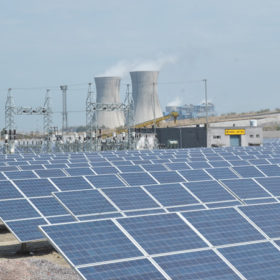
India’s top state-run energy firms invest INR 2.33 trillion in fossil fuels vs INR 0.30 trillion in clean energy in FY 2025
While a significant share of state-run energy firms’ current fossil fuel capital expenditure is tied to ongoing projects, new and incremental investments can be progressively rebalanced toward clean energy, says Deepak Sharma, a consultant at the International Institute for Sustainable Development.
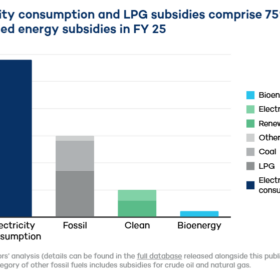
Electricity and fossil fuel subsidies tightening clean energy support: IISD
Clean energy subsidies for renewable energy and electric vehicles (EVs) represent only 10% of India’s total energy subsidies. Though gradually expanding, these remain vulnerable to global oil price shocks due to structural fiscal dependence on oil and gas revenues.

Chief Minister N. Chandrababu Naidu to lay foundation stone for ReNew’s 6 GW solar ingot and wafer facility in Andhra Pradesh
ReNew, a Nasdaq-listed renewable energy company, will break ground today on its 6 GW solar ingot and wafer manufacturing facility in Andhra Pradesh. Chief Minister N. Chandrababu Naidu will lay the foundation stone at the project site in Anakapalli district.
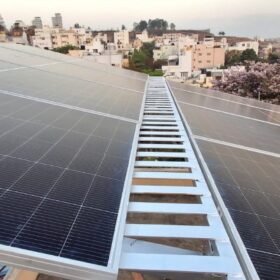
The rise of innovative financing models is powering India’s solar expansion
The growing availability of financing options has had a visible impact on solar adoption. States with well-developed financing ecosystems and supportive policies have recorded significantly higher growth in rooftop installations. In some regions, adoption rates have increased multiple times within a short period.
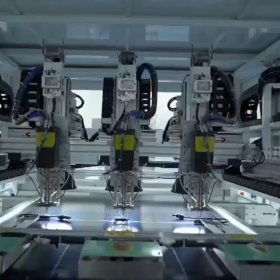
IPO-bound SAEL Industries assigned ‘A-/Stable/A2+’ Ratings by Crisil
CRISIL Ratings has assigned ‘A-/Stable’ long-term and ‘A2+’ short-term ratings to the bank facilities of SAEL Industries Ltd (SIL), a vertically integrated renewable energy company.