Integrating higher share of renewable energy in India’s power system
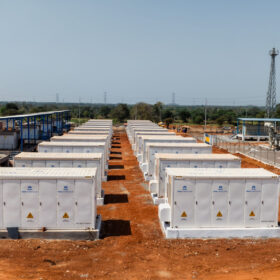
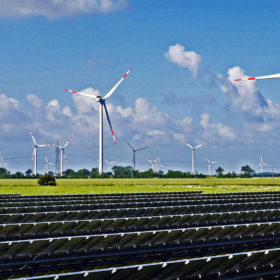
To increase the share of renewable energy, India needs to introduce demand-side measures like time-of-use tariffs, develop a well-connected national grid, deploy various energy storage options for grid balancing services, and convert its fossil-fuel-powered fleet to operate flexibly.
Tata Power secures smart metering project worth INR 1,744 crore
Tata Power will install and maintain 1.86 million meters in the Raipur area (Raipur city and Raipur rural areas) of Chhattisgarh, served by Chhattisgarh State Power Distribution Co. Ltd.
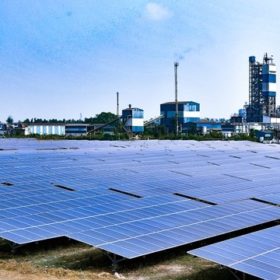
SafEarth raises INR 3.5 crore for its C&I solar online platform
The online solutions provider for commercial and industrial solar has raised INR 3.5 crore to fuel its product development initiatives and expand into new industrial belts across the country.

Solarizing the telecom tower sites in India
Delta Electronics India is a leading power and energy management solutions provider for the telecommunications industry. Rajesh Kaushal, vice president at Delta Electronics India, speaks to pv magazine about solarization of telecom tower sites in India, Delta’s role in driving this transition with its energy management solutions, challenges, and the way forward.
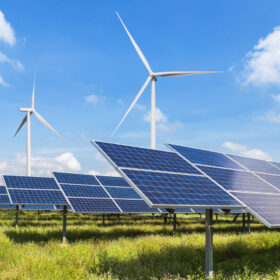
NLC seeks QCA services for 1.4 GW of solar and wind plants
NLC India Ltd is looking to engage a qualified coordinating agency (QCA) for its 1.4 GW of solar and wind power plants at various places in Tamil Nadu. The QCA will maintain the transmission of plant-level data and other required data to the state load dispatch center (SLDC), besides providing other services.
Govt panel outlines electricity market roadmap
A power ministry-constituted panel on electricity market development in India has proposed a market-based mechanism for secondary reserves, power purchase agreements (PPAs) of 12-15 years duration, and 5-minute metering, scheduling, dispatch, and settlement.

Schneider Electric launches construction of a new factory in India
Schneider Electric is investing around INR 140 crore ($17 million) for setting up a new facility in Kolkata, West Bengal. The new facility will grow its vacuum interrupter production capacity and strengthen the power systems vertical.
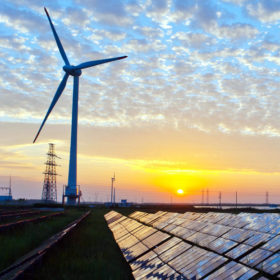
PTC India partners Belgium’s N-Side on predictive solution for power market
PTC India Ltd will work with N-Side, Belgium, to develop a predictive solution for the Indian power markets.
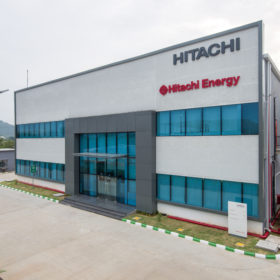
Hitachi Energy opens advanced power system factory in Chennai
The HVDC and power quality product factory will cater to the rising number of high-voltage transmission projects in India and export to support global HVDC installations.

From diesel to DC
For a long while, it looked as if hydrogen fuel cells would be the technology of choice for emissions-free road transport. However, truck manufacturers and freight forwarders recently turned their attention to battery-electric vehicles. This will require special charging technology and PV looks set to play an important role.