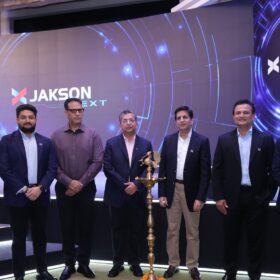
Jakson Group launches rooftop solar kit, battery storage systems
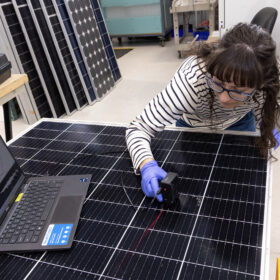
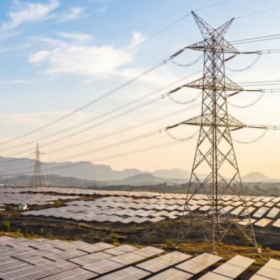
Jakson Group has expanded its energy solutions portfolio with the launch of rooftop solar kit and battery energy storage systems (BESS).
EV Financing 2.0: Building the Financial Backbone of India’s Green Mobility Ecosystem
As the country accelerates towards a greener future, the focus is rapidly shifting to financing the entire electric vehicle (EV) ecosystem, spanning charging infrastructure, batteries, fleet operations, and clean energy integration. This transition marks the emergence of EV Financing 2.0: a more holistic approach that goes beyond point-of-sale lending to enable sustainable, scalable, and economically viable green mobility.
What Delhi’s pollution crisis means for renewable adoption.
India’s renewable capacity target represents necessary but sufficient progress toward climate stabilization. Delhi’s pollution demonstrates that energy supply-side transformation alone cannot deliver intended outcomes. Transport emissions, industrial activity, and residential heating must undergo equal transformation.
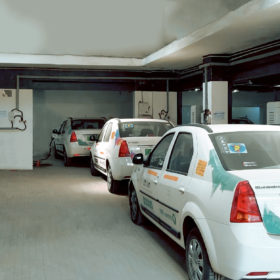
How homegrown players are leading the charge in green mobility
India’s journey toward electric mobility is not just about reconnecting with a global trend, it’s a movement rooted in the spirit of Aatmanirbhar Bharat and Make in India. What makes our transition extraordinary isn’t just the scale, but the fact that we’re building this transformation from the ground up.
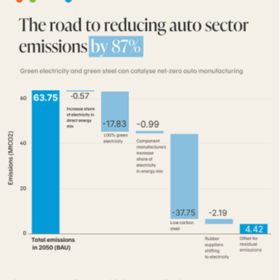
India’s auto industry can cut emissions by 87% through green electricity, low-carbon steel: CEEW
India’s automobile industry can cut its manufacturing emissions by up to 87% by 2050 with a shift to 100% renewable energy, green steel, and partnerships with suppliers to cut emissions, finds a new study by the Council on Energy, Environment and Water (CEEW).
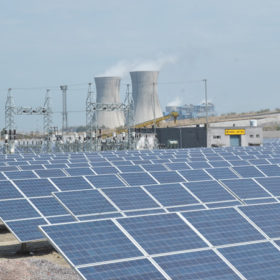
India on track to surpass 2030 emission reduction target
India’s energy sector emission intensity could decrease by 48–57% by 2030 compared to 2005 levels—according to a new emissions modelling analysis by the Council on Energy, Environment and Water (CEEW) and the Alliance for an Energy Efficient Economy (AEEE).
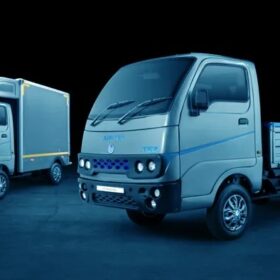
Middle-mile logistics: Why commercial EVs are the missing link in sustainable supply chains
As dark stores move closer to consumers to reduce turnaround times, the demand for frequent, efficient restocking has surged. This shift has brought the middle mile into focus as a space ripe for innovation, particularly through the integration of commercial electric vehicles (EVs).
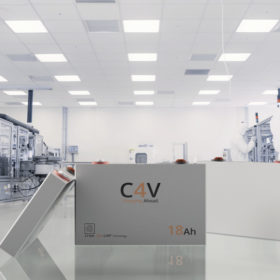
Wardwizard Innovations partners C4V on battery cell development for its electric vehicles
Wardwizard Innovations & Mobility has partnered with New York-based lithium battery technology company C4V to develop battery cells for its electric vehicle portfolio.
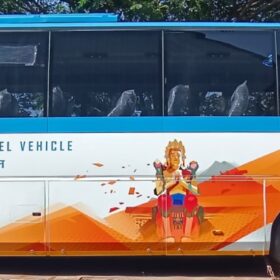
NTPC signs MoU for green hydrogen mobility in Bhubaneswar
NTPC will set up a green hydrogen fuelling station in Bhubaneswar and provide hydrogen buses for short-haul and long-haul operation.
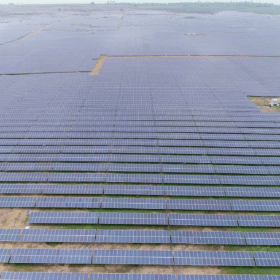
India’s climate policies to reduce 4 billion tonnes of CO2 emissions between 2020 and 2030: CEEW Study
India’s climate policies on power, transport and residential sectors, such as scaling renewables to advancing energy efficiency and electric mobility, have already mitigated 440 million tonnes of carbon dioxide (MtCO2) between 2015 and 2020, and are on track to save 3,950 MtCO2 emissions between 2020 and 2030. However, achieving net-zero by 2070 needs bolder action.