Design-led innovation: Enabling widespread and reliable solar PV adoption
Energy requirements evolve over time, and solar systems must be designed with adaptability in mind. Design-led innovation supports scalability through modular architectures that allow systems to expand or integrate complementary technologies such as energy storage.
GREW Solar secures INR 500-crore TOPCon module order
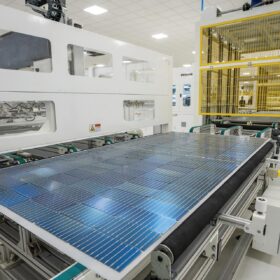
GREW Solar has secured a repeat order worth approximately INR 500 crore from a domestic independent power producer (IPP) for the supply of its high-efficiency M10R TOPCon PV modules. The modules will be deployed at the developer’s upcoming utility-scale solar projects across multiple locations in India.

Longi launches fire-resistant solar module for rooftop PV
The Chinese manufacturer has launched a fire-resistant version of its Hi-MO X10 module for distributed PV applications, featuring back-contact technology and up to 24.8% efficiency. The company says the module adds enhanced fire-safety design to address rooftop PV risks such as hot spots and DC arcing.
Waaree Solar Americas signs share subscription agreement with polysilicon supplier United Solar Holdings
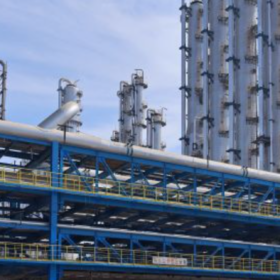
Waaree Solar Americas Inc. has entered into a share subscription agreement with United Solar Holdings Inc., a Cayman Islands-based polysilicon producer, to subscribe to around 5.37 million Series B preferred shares for about $30 million.
NavPrakriti partners with NASH Energy for battery recycling
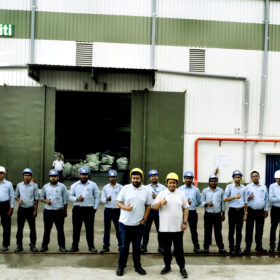
NavPrakriti, a Kolkata-headquartered lithium-ion battery recycler, has entered into a strategic partnership with NASH Energy, a NASH Group company focused on advanced battery manufacturing and energy storage solutions, to ensure responsible end-of-life management of all batteries produced by NASH Energy, including production scrap.
Chemical incidents halt Silfab Solar factory as US probe begins
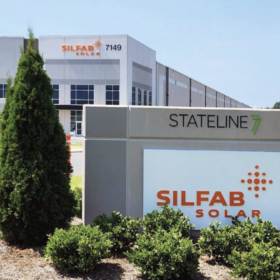
South Carolina regulators and the US Environmental Protection Agency (EPA) are investigating Silfab Solar’s Fort Mill manufacturing plant after releases of potassium hydroxide and hydrofluoric acid within the same week.
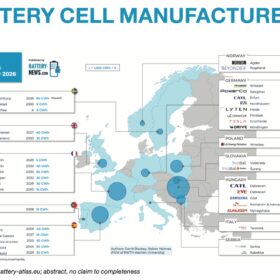
‘Battery Atlas 2026’ maps Europe’s cell, pack and battery manufacturers
The “Battery Atlas 2026” report shows consolidation in Europe’s battery market. More than 2,000 GWh of cell production capacity was announced in 2023, but the realistic forecast for early 2026 is around 1,190 GWh, including approximately 673 GWh led by Asian companies.
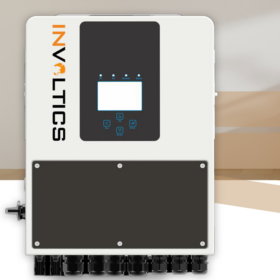
Involtics launches single-phase hybrid inverter for residential solar
Noida-based Involtics has launched the GTSI series of single-phase hybrid inverters (3 kW/3.6 kW/5 kW/6 kW) for residential solar applications. The inverters work seamlessly with solar panels, batteries (lead-acid and lithium-ion), and the grid to deliver continuous power for household loads.
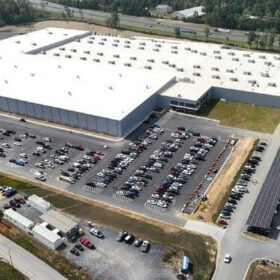
Qcells resumes US solar panel production after customs furlough
Qcells says it has resumed solar panel production at its Georgia manufacturing facilities after US Customs and Border Protection released seven solar cell shipments from South Korea that had been held under the Uyghur Forced Labor Prevention Act (UFLPA), forcing a furlough of 1,000 workers and temporarily halting output at the second-largest module factory in the United States.

“Multi-dimensional renewable energy growth key to India’s long-term development and energy security”
India’s renewable energy expansion will extend beyond utility-scale projects to distributed renewable energy, green open access and emerging prosumer models enabled by digital platforms and the India Energy Stack as the nation advances toward its vision of becoming a developed nation by 2047.