OCI Holdings acquires 65% stake in 2.7 GW Vietnamese solar wafer factory
South Korea’s OCI Holdings is entering the solar wafer business with a majority stake in a wafer plant in Vietnam valued at $120 million. The facility will produce solar wafers for the U.S. market.
China imposes new export controls on lithium ion battery tech
The Chinese government has introduced new export controls on key dual-use items, citing national security concerns. The move opened a new chapter in the ongoing trade confrontations with the US.

Kosol Energie signs INR 52,000 crore MOU for solar manufacturing expansion, R&D and RE parks in Gujarat
Kosol Energie, led by chairman & managing director, Kalpesh Kalathia, has committed an investment of INR 52,000 crore for solar manufacturing expansion and setting up R&D facilities and integrated renewable energy parks in the Indian state of Gujarat.
The Hydrogen Stream: TKIL Industries brings hydrogen-ready CHP solutions to India in partnership with Germany’s 2G Energy International
TKIL Industries (formerly thyssenkrupp Industries India) has entered into a strategic partnership with German company 2G Energy International to introduce combined heat and power (CHP) plant and gas engine solutions in India.
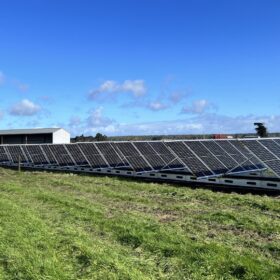
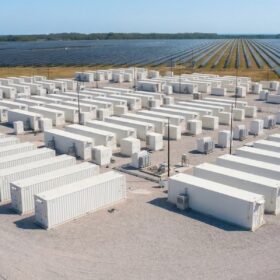
‘Grid in a box’ combines storage and solar PV modules for a microgrid in a 20 ft. container
Paired Power’s modular microgrid targets is assembly-free remote industrial and agricultural applications and rural electrification for Indigenous communities.
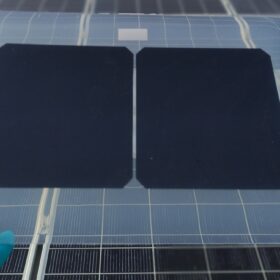
KAUST explores polymer alternatives to glass for solar panel covers
Researchers at King Abdullah University of Science and Technology (KAUST) have published a review that looks at polycarbonate sheets as an alternative to solar cover glass. Their findings indicate that this new materials have a combination of low weight, mechanical strength, optical transparency, and thermal resistance that is worthy of further investigation.

Advait Greenergy commits INR 1,400 crore for electrolyser, fuel cell, ERS, and EPC projects in Gujarat
Advait Greenergy has signed a Memorandum of Understanding (MoU) with the Government of Gujarat to invest INR 1,400 crore across electrolyser and fuel cell manufacturing, emergency restoration system (ERS), and engineering, procurement & construction (EPC) projects.
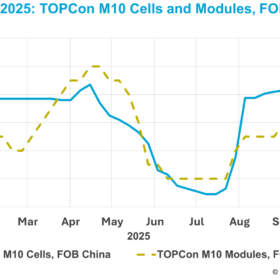
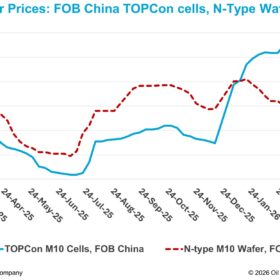
Market eyes Indian buying surge ahead of anti-dumping duty on Chinese solar cells
In a new weekly update for pv magazine, OPIS, a Dow Jones company, provides a quick look at the main price trends in the global PV industry.

EV battery safety risks and manufacturing challenges
As most imported battery cells are not designed for India’s conditions, localization of battery design and strict adherence to AIS-156 and BIS safety standards is absolutely critical.

Silver prices surge, yet ‘thrifting’ poses little threat to solar cell, module quality
With silver prices nearing $50 per ounce, researchers from the University of New South Wales (UNSW) and the Fraunhofer Institute for Solar Energy Systems (Fraunhofer ISE) tell pv magazine that efforts to reduce silver use in solar cells will not compromise module quality if properly engineered.