Maxeon to offer warranty support for bankrupt SunPower
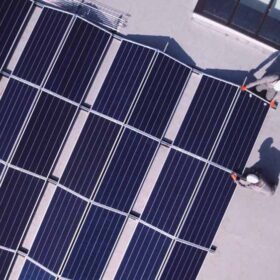
After closing its business, eligible SunPower customers will have their warranty supported by Maxeon.
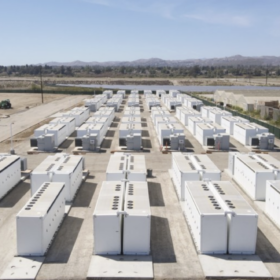
QatarEnergy to build 2 GW solar plant
QatarEnergy has unveiled plans for a 2 GW solar project in western Qatar, which will more than double the country’s cumulative installed solar capacity.
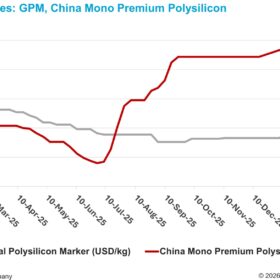
Price range for US-delivered modules widens
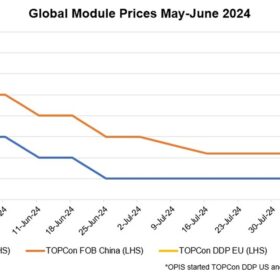
In a new weekly update for pv magazine, OPIS, a Dow Jones company, provides a quick look at the main price trends in the global PV industry.

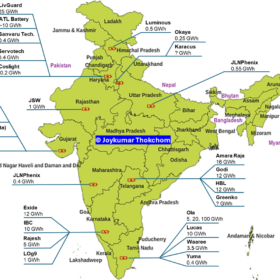
Reliance to commercialize perovskite, back-contact HJT-IBC solar by 2026
Reliance Industries’ new energy business is currently developing first-generation bifacial solar panels using indigenized HJT technology with 26% cell efficiency. It is also working on perovskites and back-contact HJT-IBC, which it expects to commercialise within the next two years.
All-perovskite tandem solar cell based on tin-lead perovskite achieves 28.8% efficiency
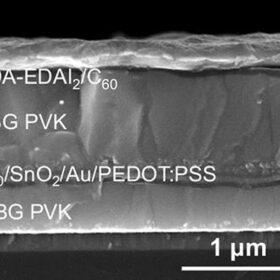
Conceived by Chinese scientists, the cell was built with new surface reconstruction strategy based on the use of 1,4-butanediamine (BDA) and ethylenediammonium diiodide (EDAI2) as surface modifiers. The device was able to retain 79.7% of its initial efficiency after 550 h.

Solar industry faces collapse amid surplus and plunging prices
The solar industry is at a crossroads. While demand for PV installations is higher than ever, systemic overcapacity, falling prices, and financial losses across the supply chain threaten to undermine the industry’s long-term sustainability.
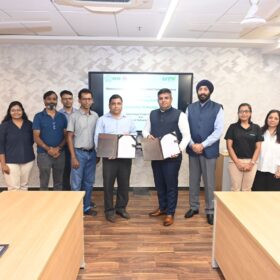
Grew Energy, IIT Bombay to collaborate for solar PV R&D
Grew Energy and IIT Bombay will take up joint consultancy and research projects that address critical industry challenges and foster innovation. The collaboration will also support internships, intellectual property licensing, and research initiatives.

New coating prevents plant growth on underwater solar cells
The US Navy has funded Danish research on preventing biofouling while maintaining visible light transmission on underwater solar cells. The top solution uses ultra-low concentrations of nano-sized, seawater-soluble pigments. Power generation stayed close to 100% after 13 weeks underwater.

Meyer Burger cancels US solar cell plant, announces restructuring
Colorado Springs solar cell plant halted as Swiss-German PV manufacturer announces company restructuring plans. Planned capacity expansion at Arizona module production plant also put on hold. Existing cell production site in Thalheim, Germany, to remain part of Meyer Burger operations.
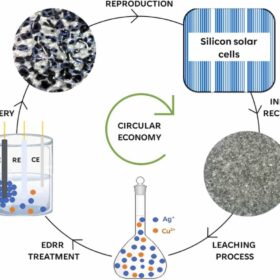
New process to recover silver from end-of-life solar cells achieves 98% efficiency
Scientists have used hydrometallurgical and electrochemical processes to recover pure silver from solar cells. The proposed technique also utilizes a method known as electrodeposition-redox replacement, which reportedly increases the silver recovery rate.