The prospects for solar after the Assembly elections
Narendra Modi’s BJP party is seeking re-election with the aim of ensuring the electrification of all railways by 2022 and turning renewable energy into a popular movement with steps including an emphasis on solar farming. Even if the elections spring a surprise, however, the renewable momentum is unlikely to slow as no government can afford to roll back the clean power tide.
India’s solar sector will outperform globally despite near-term challenges, says Fitch Solutions
With Narendra Modi being tipped to triumph again in the current Indian elections, Indian solar capacity is expected to grow robustly, at 15.3% per year, on the back of continued strong government support.
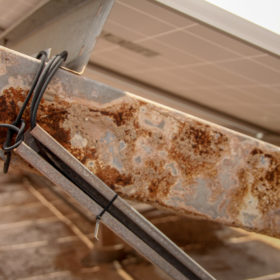
India urgently requires policy on PV waste management: Bridge to India
The nation is trailing behind peers such as the EU when it comes to policy guidelines for materials and recycling and the lack of a viable business case for reusing materials doesn’t help matters.

DGTR investigates claim of dumped coated steel products from China, Korea and Vietnam
In the latest tariff spat to afflict the solar world, the Directorate General of Trade Remedies will investigate a claim steel products coated with aluminum and zinc are being dumped by Far Eastern manufacturers.

Imec, Jolywood announce 23.2% front-side conversion efficiency for n-PERT bifacial cell
The result was certified by the solar cells laboratory at the calibration and test center of Germany’s Institute for Solar Energy Research. Imec’s measurements showed cell bifaciality surpassed 80%.
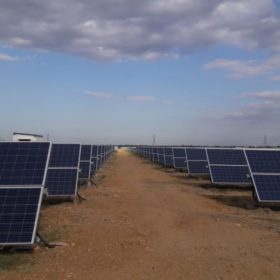
The long read: Implementing standards
While Bureau of India Standards (BIS) certification is an honest attempt by the Indian government to mitigate risks associated with poor quality of modules, there are several reasons why this particular objective is currently not being met. pv magazine India’s Uma Gupta investigates India’s efforts to ensure quality in its booming PV industry.
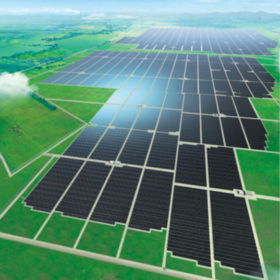
Sharp launches three new mono-PERC modules with 19.1% efficiency
Sharp has released three new high-efficiency mono-PERC solar panels. Ranging from 300 W to 370 W, the five-busbar modules are designed for use in a range of applications, from residential PV projects to large commercial installations.
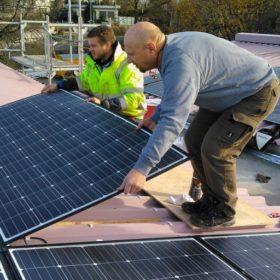
Sunman brings glass-free PV modules to the market
Power provider Stadtwerke Waldkirch has built a 264 kW PV system in Germany with Sunman’s glass-free modules, as a titanium rooftop at the project site made it impossible to use conventional modules.

Interview: Rajaram Pai, DuPont Photovoltaics and Advanced Materials
Not many people know it, but DuPont’s India connection goes back to 1802, when the company started importing raw materials from the country for its first product: black powder for explosives for its plant in the United States. In 1974, it opened its first liaison office in India, while its first wholly owned subsidiary in the country was set up 20 years later. Today, DuPont India has a significant local footprint across a range of market segments in India, including solar PV.
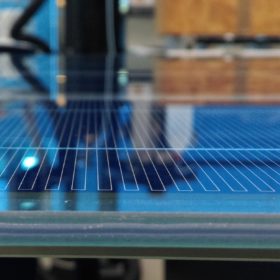
India slaps anti-dumping duty on solar EVA sheets
The Directorate General of Foreign Trade (DGTR) has concluded that the imposition of a duty, in the range of $537-1,559/metric ton, is required to offset the injury caused by imports of solar ethylene vinyl acetate (EVA) sheets from China, Malaysia, Saudi Arabia and Thailand. The harshest penalty—$1,559/metric ton (MT)—has been imposed on sheets supplied from any Saudi manufacturer other than Saudi Specialized Products.