BVG to set up 2 GW solar module fab
The facility management company plans a 500 MW fully automated module line initially and expand it to 2 GW. The facility will be located in North India.
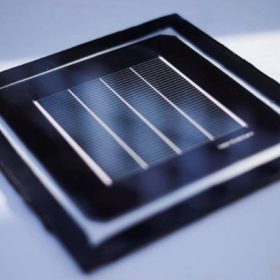
Meyer Burger to commercialize 29.6%-efficient perovskite tandem solar cells
Meyer Burger is working with several research institutes in Switzerland and Germany to integrate perovskite tandem technology into its manufacturing processes.

Cooling down photovoltaic panels with concrete
Scientists in Italy have proposed the use of radiative coolers made of cementitious materials to reduce the operating temperature of solar panels. The novel system configuration consists of a stack made by a reflector, a cement-based radiative cooler, and a bifacial solar cell.

Adani appoints EIL as owner’s engineer for polysilicon project
Engineers India Ltd (EIL) has been appointed as owner’s engineer for Adani Group’s 30,000 MTPA polysilicon and 500 MTPA monosilane project in Gujarat.

Roadblocks to rooftop solar
India is long way behind its rooftop solar target of 40 GW by 2022 with just 10.4 GW installed till September (Source: Bridge To India). Amplus Solar team speaks to pv magazine about factors holding back rooftop solar development in India.
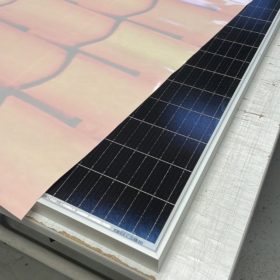
Customizable sticker to turn solar panels into advertising billboards
An Italian startup has created a fully recyclable sticker that can be used to cover solar panels on rooftops or facades. It replicates high-definition images that can help to improve the aesthetics of solar arrays or turn PV facades into advertising billboards.

New foldable solar system for rooftop applications
German manufacturer Kopp has developed an easy-to-install, four-module foldable PV array. The system uses n-type TOPCon solar modules with outputs of 430 W and efficiency ratings of 22.02%
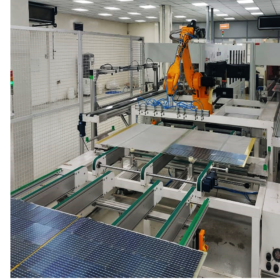
Saatvik appoints solar panel distributor for Rajasthan
Haryana-based Saatvik Solar has appointed Etrica Power as the distributor of its solar panels in the Rajasthan region.
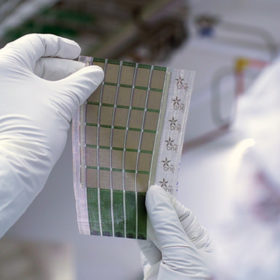
MIT scientists produce new organic photovoltaic fabrics
US researchers have developed a thin-film organic solar module on a vapor-deposited releasable substrate made of parylene. The device could be used as a wearable fabric, or to bring solar generation to remote locations.
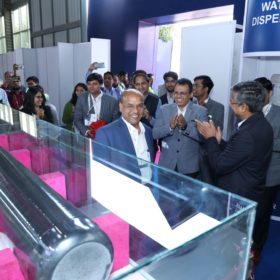
Adani unveils India’s first silicon ingot
At Intersolar India 2022 expo, Adani Solar unveiled a monocrystalline silicon ingot produced at its Mundra facility in Gujarat.