Reflective membrane to increase albedo, power yield in bifacial PV projects
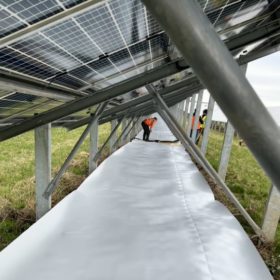
Germany-based Solmax has developed a reflective membrane made of polyethylene resins and coated with a thin white polyethylene layer that reflects ultraviolet (UV) rays. The company claims the membrane can increase the energy yield of a bifacial PV project by between 5% and 20%, depending on the plant configuration.

Budget 2023-24 reaffirms government’s focus on domestic solar and battery manufacturing, green hydrogen
The budget signifies the government’s intent to drive domestic manufacturing of lithium battery cells as it waives customs duty on the import of machinery required for manufacturing these cells. It also continues with nil customs duty on critical inputs for solar manufacturing. The budget also aims to support large-scale battery storage projects through viability gap funding.

Borosil expands solar glass capacity in India to 1,000 tpd
Gujarat-based Borosil Renewables has started trial production from its third solar glass furnace, raising its capacity in India to 1,000 tons per day (tpd). Its cumulative solar glass capacity has reached 1,300 tpd, which includes 300 tpd in Germany added through the acquisition of Interfloat Group.
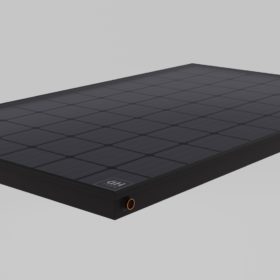
New photovoltaic-thermal solar panel from Spain
Spanish PVT specialist Abora Solar has developed aH72SK modules, which combine solar panels with power conversion efficiencies of 17.8% and a thermal efficiency rating of around 70%. Its total area is 1.96 square meters.

China mulling restrictions on polysilicon, wafer exports
The Chinese government is considering the introduction of export restrictions on solar wafers, black silicon, and silicon casting equipment. It has launched a public consultation process on the proposed measures.

Eggplants grow 50% more under solar panels
French specialist Sun’Agri unveiled the agronomic results on a crop of eggplant grown in a greenhouse commissioned in the Lot-et-Garonne in September, 2020.

Greek manufacturer to open organic solar cell factory
Organic Electronics Technologies (OET) has announced the start of a European-funded project that will develop and build an automated manufacturing production line for integrated printed organic photovoltaics in Thessaloniki, Greece.
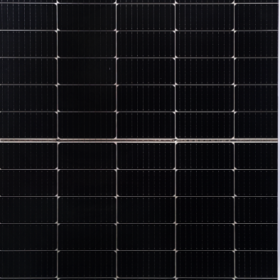
Gautam Solar’s 545 Wp 10BB mono PV panels are now ALMM approved
The latest update to the Approved List of Models and Manufacturers (ALMM) includes Gautam Solar’s mono PERC ten-busbar half-cut and mono PERC five-busbar full-cell panels.

US startup begins producing 40%-efficient thermophotovoltaic cells
Antora Energy says its new 2 MW factory will make thermophotovoltaic cells for thermal storage applications. The cells are based on III-V semiconductors and reportedly have a heat-to-electricity conversion efficiency of more than 40%.

Rajasthan signs MoUs worth $14.85 billion for renewable energy, storage, and hydrogen projects
The State government has signed agreements for various giga-scale projects across renewable energy generation, solar manufacturing, pumped hydro storage, and green hydrogen.