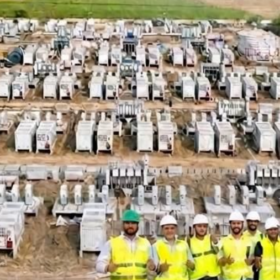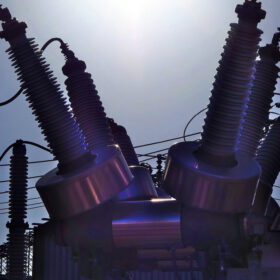
U.S. transformer market faces severe supply constraints
Severe shortages of power transformers are stalling grid expansion as developers face skyrocketing prices and four year wait times for critical equipment.
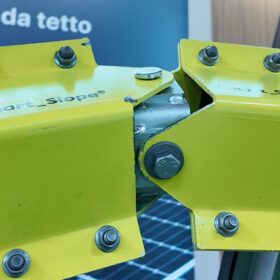
AlphaTracker launches hydraulic mechanism that locks trackers during strong wind gusts
The Portuguese manufacturer unveiled Maxi-Lock, an autonomous hydraulic mechanism that locks solar trackers during strong wind gusts or high-amplitude vibrations, and Smart-Slope, a universal joint-style system designed for uneven terrain. The company claims the technologies can reduce supply and maintenance costs, lower component counts, improve plant availability, and enable higher PV module integration in both conventional and agrivoltaic projects.

Resisting rust in solar
Over a 30-year asset life, corrosion can evolve into a structural, electrical, and fire safety issue. Corrosion drives up operations and maintenance (O&M) costs, reduces resilience to extreme events, and in some cases, can force premature decommissioning or complete structural replacement Intertek CEA’s Nicholas Hudson and Ankil Sanghvi advise on best practices.

Transmission is the backbone of India’s Electrification 2.0
India’s renewable energy push is inherently decentralized. Solar parks in Rajasthan, wind farms in Gujarat and Tamil Nadu, and hybrid projects across states are often located far from consumption centers. Bridging these geographical gaps requires robust, resilient, and future ready transmission network. Without it, even the most ambitious generation targets risk underutilization.
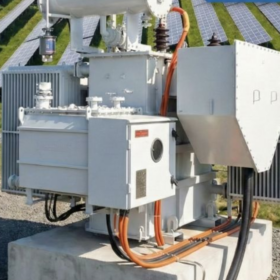
Saatvik Green Energy acquires 80% stake in Melcon Transformers
Indian solar manufacturer Saatvik Green Energy has acquired an 80% equity stake in Melcon Transformers and Electricals, a Jaipur-based transformer manufacturer. The acquisition gives Saatvik a manufacturing footprint in power transmission equipment, a segment linked to India’s renewable energy expansion.
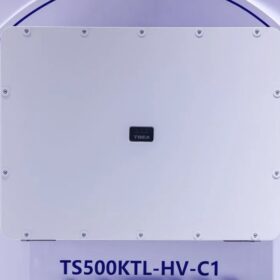
TBEA launches 500 kW string inverter
The new inverter is designed around standardised 5 MW and 5.5 MW PV sub-arrays with the aim to reduce balance-of-system costs. It features a maximum efficiency of 99.0% and a high-voltage architecture of up to 1,600 Vdc and 1,000 Vac.

Decarbonising the power value chain: From source to system
Achieving a true net-zero future requires decarbonising every link in the power value chain, from raw materials to the grid.
Can India become a global hub for high-voltage equipment manufacturing
For years, India has depended on imports of transformer bushings particularly at higher voltage levels. For India to become a global manufacturing hub, the gaps in product design, manufacturing technology must be addressed with a sense of urgency.
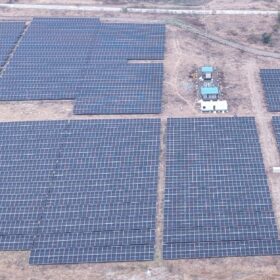
How relaxed FDI norms could transform India’s renewable energy sector
The amended FDI policy for investments from countries sharing land borders with India aims to attract capital and technology for critical solar components—such as cells, wafers, and polysilicon—while retaining strategic control of assets with domestic entities. Industry experts say it could accelerate renewable energy infrastructure and manufacturing, but it also carries risks, including pricing pressure, making careful regulatory oversight essential.

Siemens Energy India Q1 profit rises 34.9% to INR 313 crore
Siemens Energy India Ltd has reported a 26% year-on-year increase in revenue to INR 1,911 crore and a 34.9% rise in profit after tax to INR 313 crore for the quarter ended December 2025 (Q1 FY2026). The company’s order backlog expanded 37.6% to INR 17,599 crore.