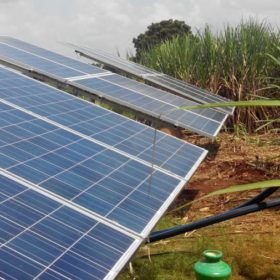
Andhra Pradesh set for 10 GW of agricultural solar
The state—which commissioned an aggregate 3530.74 MW solar capacity as of May 31, 2020—will set up the new plants to ensure nine hours of free power supply to the agriculture sector.
Bringing back India’s solar sector to the front foot in 2021
The ‘175 GW by 2022’ renewable energy target seems unachievable, necessitating the benchmark be moved to ‘450 GW by 2030’ instead. But even that will require the sector to move back to the front foot from 2021.

Agrivoltaics works better with leafy greens, root crops
U.S. researchers have created a new model to assess the overlap between solar potential and underlying land use. The areas with the largest potential are the western United States, southern Africa, and the Middle East. The researchers concluded that croplands, grasslands, and wetlands are the top three land classes for PV projects linked to agricultural activities, while barren terrain, traditionally prioritized for solar PV system installation, ranked fifth.
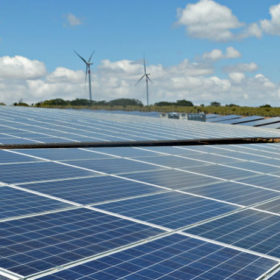
India to add 15 GW of wind-solar hybrid capacity in five years
Almost 10 GW of hybrid generation capacity is already under implementation despite India having only 100 MW of combined wind and PV projects at present, according to analyst Crisil.
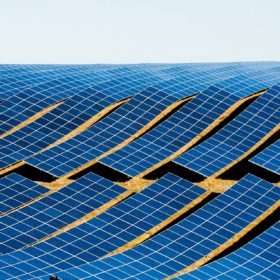
Historic-low interest rates will power ahead astonishing solar cost reductions
An Ieefa report has suggested the cost of generating electricity from solar will be near zero in the world’s sunniest regions by 2030-40 – despite what the naysayers at the International Energy Agency might think.
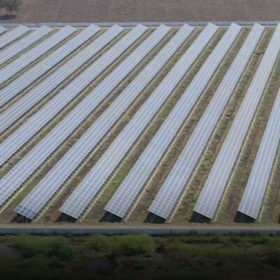
NHDC seeks to empanel solar EPC installers and module manufacturers
The hydropower producer—which recently diversified into solar power projects—has invited global applications as it seeks to empanel EPC agencies and module manufacturers for its solar projects. June 22 is the last date to lodge the interest.
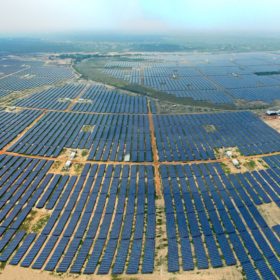
Adani Green Energy wins world’s largest solar award
The developer is reported to have exercised an option to double the 4 GW of solar generation capacity and 1 GW of cell and module production facilities it secured in the manufacturing-linked solar tender carried out by the Solar Energy Corporation of India in November.
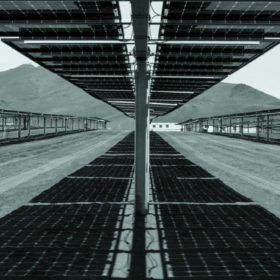
Single-axis bifacial PV offers lowest LCOE in 93.1% of world’s land area
Researchers from the Solar Energy Research Institute of Singapore have concluded that utility-scale PV projects relying on bifacial panels and single-axis trackers deliver the lowest levelized cost of energy in most of the world. They found that the combination of bifacial products with dual-axis trackers is still too expensive, despite the higher yield. The second-lowest LCOE is offered by monofacial single-axis tracker plants.
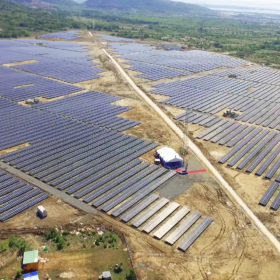
Solar costs have fallen 82% since 2010
The levelized cost of energy generated by large scale solar plants is around $0.068/kWh, compared to $0.378 ten years ago and the price fell 13.1% between 2018 and last year alone, according to figures released by the International Renewable Energy Agency.
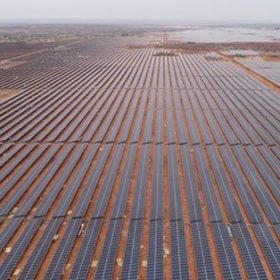
Bridge To India lowers renewable outlook for 2020-24
The Indian renewable energy market is poised for a significant contraction during the five-year period due to weakening power demand growth, deteriorating financial condition of Discoms and further constraints in debt financing.