Brookfield-backed Evren commits $5 billion investment in Andhra Pradesh
Evren, a clean energy JV of Axis Energy and Brookfield, has committed $5 billion investment to develop 3.5 GW of solar and 5.5 GW of wind assets in Andhra Pradesh.
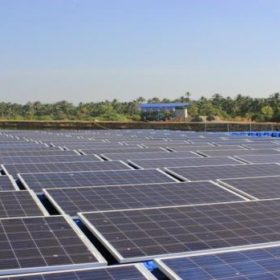
JSW Energy secures 300 MW wind-solar hybrid project, signs PPA for 300 MW solar
JSW Energy has been awarded a 300 MW interstate transmission system (ISTS)-connected wind-solar hybrid power project by NTPC Ltd. It has also secured a power purchase agreement (PPA) with Bangalore Electricity Supply Co. Ltd for 300 MW solar capacity in Karnataka.
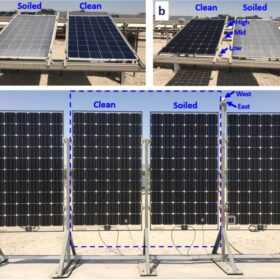
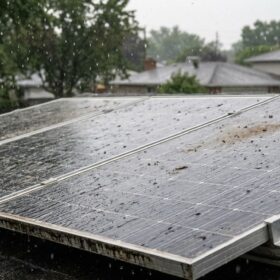
East-west vertical PV as antidote for soiling in desert regions
New research shows that east-west-oriented vertical PV installations can significantly help reduce soiling in desert environments. The scientists found that PV power generation can be up to 9% higher in vertical systems compared to conventional arrays.
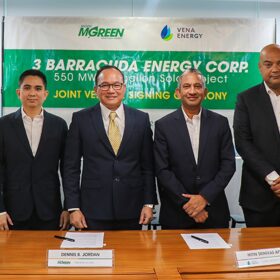
Vena Energy moves ahead with 550 MW of solar in the Philippines
Singapore’s Vena Energy and MGen Renewable Energy, the renewables unit of Manila-based Meralco PowerGen Corp., have signed an investment agreement for 550 MW of solar in the Philippines. Construction is due to start later this year.
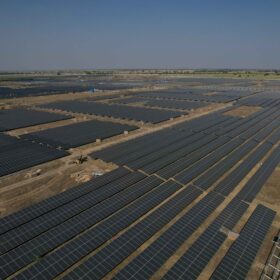
India installed 15 GW of solar in first half of 2024
India added 14.9 GW of new solar capacity in the six months ending June, breaking all previous half-yearly and annual PV installation records.

BC Jindal Group enters renewable power generation, solar manufacturing
BC Jindal Group, a flexible packaging film and downstream steel product manufacturer, has formed a dedicated entity, Jindal India Renewable Energy (JIRE), with an aim to generate 5 GW of power from solar, wind, hybrid and FDRE modes. JIRE will also manufacture solar PV cells and modules.
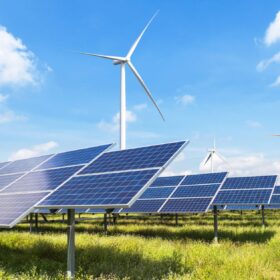
ABB surpasses 10GW milestone in delivering automation solutions for renewable energy plant in India
ABB’s programmable logic controller-based automation solutions are now catering to more than 10 GW of renewable energy plants, including solar, wind and battery energy storage systems.
Zelestra secures PPA with NTPC for 450 MW solar project in Rajasthan
Spanish developer Zelestra (earlier known as Solarpack) has secured a 25-year power purchase agreement for its 450 MWp solar project in the Indian state of Rajasthan.

Battery storage costs must fall by 15% per year to avoid new coal capacity additions after 2030 in India
If battery energy storage costs fall 15% every year on an average, it would enable India to potentially limit its coal capacity to the 14th National Electricity Plan projection of 260 GW by 2032, says a new report by global think tank Ember and TERI.
PV systems can now support grid as fossil fuels decline, says IEA-PVPS
A new report by the International Energy Agency’s Photovoltaics Power Systems Programme (IEA-PVPS) says that existing PV systems have the technical capabilities to provide various frequency-related grid services.