Tata Power’s renewables business PAT up 95% YoY in Q1
Tata Power’s net profit from renewables business soared 95% YoY to INR 531 crore. Segment-wise, INR 226 crore came from renewable energy generation, INR 198 crore from solar EPC, INR 100 crore from solar manufacturing, and INR 7 crore from other income.

Navigating the ripple effects of renewable energy variability on grid stability
integrating variable renewable energy sources into conventional power systems requires a delicate balance of technology, operational excellence, and regulatory compliance. While AI and ML have become indispensable tools in the modern energy toolkit, they are most effective when paired with on-ground human insight and proactive asset management.
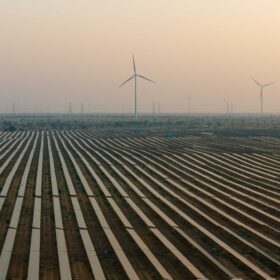
India could cut electricity costs to $50/MWh by 2050 with a fully wind and solar-based power system, says ETC report
India could achieve clean power system at a cost (including generation, balancing, and grid infrastructure) of around $50/MWh by 2050—significantly below current fossil fuel-driven wholesale prices—by shifting to a fully wind and solar-based electricity system requiring primarily day-night balancing.

How is India’s power infrastructure evolving amid global supply chain shifts?
With renewable capacity expanding, grid upgrades underway, and policies fostering local supply chains, India is navigating a complex but promising energy transition.

The role of advanced transformers in India’s green transition
Without resilient, responsive, and renewable-ready transformer networks, India’s decarbonization goals risk being destabilized by the very variability they aim to harness.
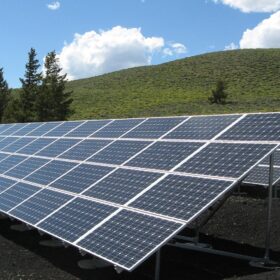
Solar energy firms face over 2,700 compliance obligations: TeamLease Regtech
A new report by TeamLease Regtech states that a standalone solar energy producing plant in Maharashtra, with a corporate office in Haryana, must comply with 799 unique regulatory obligations and 2,735 total compliance instances in a year.

Why renewable project execution needs speed and policy synergy
Renewable energy projects that should take 12-18 months to complete often take twice that. More often than not, land acquisition challenges, regulatory overreach and delayed transmission planning are the reasons behind this.

Sugs Lloyd aims to raise INR 85.4 crore through IPO
Sugs Lloyd Ltd, a Delhi-based renewable EPC company, aims to raise INR 85.4 crore by going public. It will use INR 64 crore from the total proceeds to support working capital requirements for business expansion, while the remaining amount will be used for general corporate purposes.

From downtime to downgrade: The real economic impact of energy disruptions
Energy is not merely a utility for lighting and basic operations; it also functions as a critical instrument of geopolitical influence. When access to power is disrupted or strategically weaponized during times of conflict, the economic consequences can be severe and far-reaching.

JSW Energy posts its highest-ever annual profit of INR 1,951 crore
JSW Energy has reported a total revenue of INR 12,639 crore and profit after tax (PAT) of INR 1,951 crore.for the financial year ended March 31, 2025.