Mitigating solar supply chain challenges
Large-scale solar projects in India are facing delays of at least two-three months. The primary reason is Indian companies’ dependency on Chinese products and equipment, which may result in shipping delays and cost fluctuations. But, many companies in India have their solar module stocks already ready and can provide their products at the same price as Chinese brands, Tanmoy Duari, CEO, AXITEC Energy India, tells pv magazine.
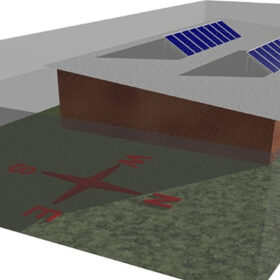
Bifacial PV on rooftops can provide energy yield gains of up to 22.6%
Scientists in Australia have combined Monte Carlo Ray Trace (MCRT) techniques and electrical modeling to assess the potential energy gains of bifacial rooftop PV systems compared to monofacial arrays. They found that rooftop reflectivity is a key factor in increasing a bifacial PV system performance, and that system and module design should also be carefully considered.
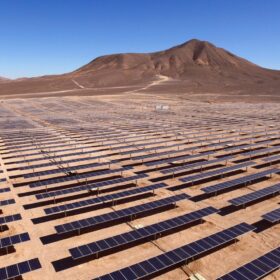
Solar LCOE now 29% lower than any fossil fuel option, says EY
A report from Ernst & Young (EY) shows that despite inflationary pressures, solar remains the cheapest source of new-build electricity. The global weighted average levelized cost of electricity (LCOE) for PV is now 29% lower than the cheapest fossil fuel alternative.
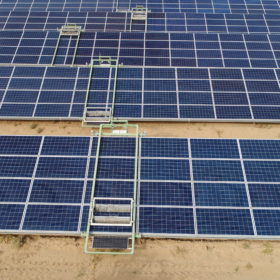
Lenders choose renewables over coal for second year in a row
In year 2022, solar, wind and hybrid project finance lending amounted to INR 18,577 crore ($2.36 billion). On the other hand, like in 2021, not a single coal power plant received such funding.
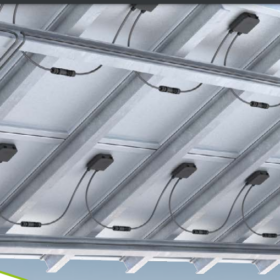
Wires and cables in the solar industry
The solar industry growth has accelerated the demand for wires and cables in India. Since solar cables are key in transmitting power from the PV panels to the system, it is essential to invest in the best-suited type of solar cable that meets stability and safety norms.
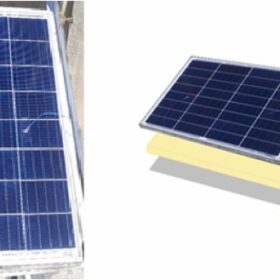
Reducing PV module temperature with beeswax, paraffin wax
Scientists in Iraq have applied two different kinds of phase-change materials to lower the operating temperatures of PV panels. Their experiment showed that beeswax and paraffin wax are particularly effective in achieving this goal, even when they are combined together.

France’s Profils Systèmes unveils new solar veranda
Profils Systèmes, a French aluminum carpentry specialist, has developed Wallis&Energy, a new solar veranda that is designed to integrate seamlessly into existing buildings and new structures.
India’s installed solar power capacity expected to hit 104 GW by March 2025
ICRA expects India’s installed solar power capacity to grow to 104 GW by March 2025 from 72 GW as of October 2023, led by strong policy support and moderation in solar module prices.

Solitek launches solar carport for residential, commercial applications
Lithuania-based Solitek has launched a carport product line featuring 370 W glass-glass frameless modules. It is designed to withstand a snow load of up to 2.5 kN/m2 and 27m/s of wind loads.
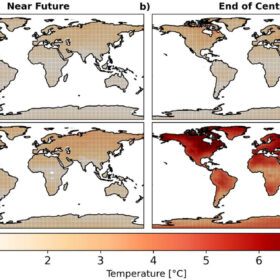
Solar productivity negatively impacted by emissions and aerosols, study finds
A study by engineers at UNSW, published in the Renewable Energy journal, shows that aerosols and greenhouse gas emissions reduce the productivity of photovoltaic installations and that this differs according to the global region.