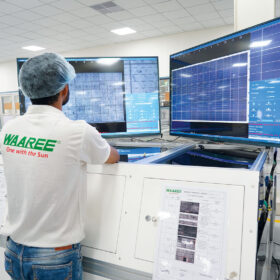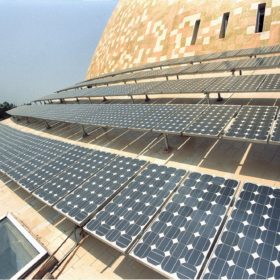
Extent of India’s new utility-scale solar has almost halved in six months
India added 1.2 GW of large-scale projects in the third quarter of 2018-19, taking new capacity in the first half to 1.9 GW. The numbers are down 43% and 44%, respectively, on the same periods of the previous year, according to Bridge to India’s quarterly India Solar Compass.
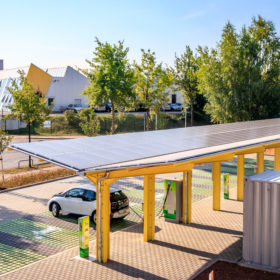
The weekend read: Getting rolling
The first companies are demonstrating that today it can be worthwhile commercially to back electric vehicles in combination with solar generation and storage. Particularly in the case of public charging stations, solar power used for electric vehicle charging could become the basis for a profitable operator model in the future.

Solar City Initiative phase two launched in Delhi
The programme allows the installation of solar roof atop apartment blocks, which otherwise could not install such systems. Potential in the area is around 15 MW, of which 6 MW have been signed up for already. Another 5 MW should be developed in this second phase of the project.

India powers ahead as Asia set for 355 GW of PV by 2023
Despite political hurdles in key markets including China and Japan, Asia remains highly active. This year, 59 GW of solar is expected to be installed and due to further system price declines, a phase-out of subsidy schemes can be offset.
Hitting 76% of its solar ambition would still be some achievement for India
Analysts are weighing into the debate over the MNRE’s big solar plans, but pointing out that even a partial victory would set the foundation for future solar triumphs.

Mauritius installs the first wave of 10,000 solar rooftops
The Indian Ocean state has received $10m in concessional loan funding from the development agency of Abu Dhabi, in a program co-financed by the International Renewable Energy Agency.
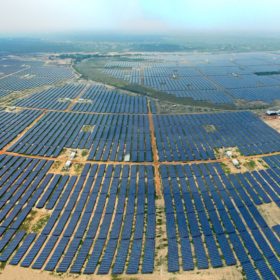
India to add up to 8.5 GW of RE in FY19
India is likely to add between 8-8.5 GW of renewable energy generation capacity in the current financial year ending March 2019, according to ICRA Limited.
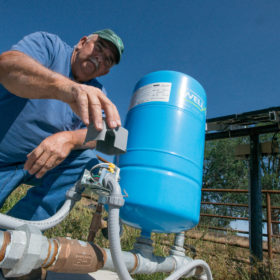
Rural India a $50 billion market for clean energy innovations
The farming sector offers the largest green energy innovation opportunity, with rice transplanting, pesticide spraying and grain harvesting together having a market potential worth $40 billion – says the Council on Energy, Environment and Water.
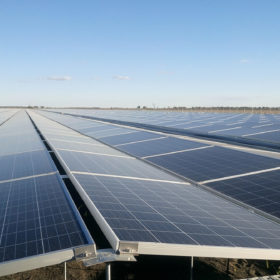
India added world’s second largest PV capacity in first half of 2018
The nation installed 4.9 GW of solar, surpassing the USA – which installed 4.7 GW – to become the second largest solar market in the first half of the year, second only to China’s 24.3 GW.
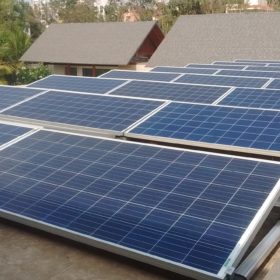
India’s 40 GW rooftop solar aim hit by high costs, net metering caps
Factors including the ability to reach less credit worthy clients, standardised regulatory support and a rating mechanism for developers could promote rooftop solar uptake in India.