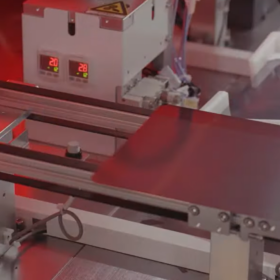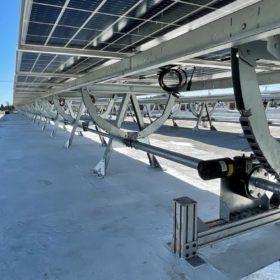
Single-axis trackers on commercial rooftops increase generation by 37%
Alion Energy trackers thread the return-on-investment needle with productivity gains from white roofs and bifacial modules, while design aggressively maximizes module count.
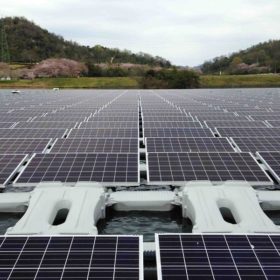
Letters of Award given for Omkareshwar floating solar project
Rewa Ultra Mega Solar Limited (RUMSL) has issued letters of award to NHDC, AMP Energy, and SJVN to build 278 MW of the 600 MW Omkareshwar floating solar project. This first-phase capacity development is expected to complete by September next year.
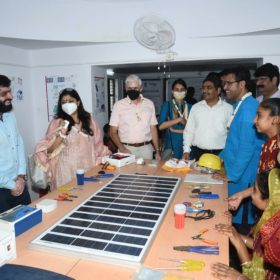
Women salt pan workers in Gujarat to be trained as solar technicians
ReNew Power, United Nations Environment Programme, and Self-Employed Women’s Association of India (SEWA) have launched a program to train women salt pan workers in Gujarat as solar technicians. Under the initiative, 1,000 women salt pan workers will be trained as solar panel and solar pump technicians.
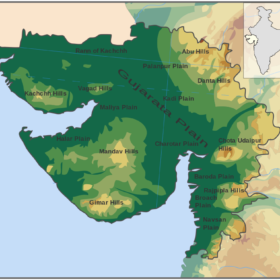
Prozeal Infra wins 131 MW solar EPC contract in Gujarat
Prozeal Infra has secured an engineering, procurement and construction contract for 131 MW (AC) of solar from Gujarat State Electricity Corp. Ltd. (GSECL).
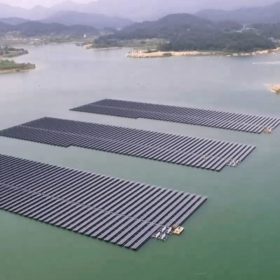
Skyfri secures asset operations for 31 MW floating solar project in Kerala
Norway’s Skyfri, which oversees almost 2 GW of solar assets throughout the world, has secured comprehensive asset operations for a 31 MWdc floating solar plant in Kerala.
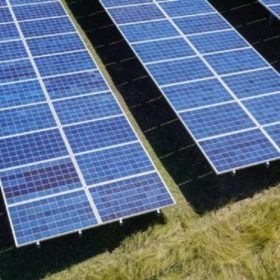
India’s first fractionally owned, ground-mount solar plant
A 5 MW open-access solar project in Karnataka is India’s first fractionally owned, ground-mount PV plant. Bengaluru-based Pyse is financing the INR 26 crore ($3.3 million) project through its investment platform, which allows retail investors to own a stake for as little as INR 10,000.
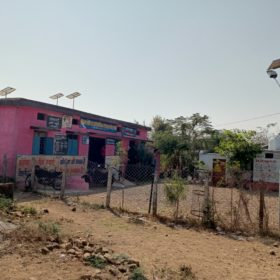
Apraava Energy completes solar electrification project in Madhya Pradesh
Diversified power company Apraava Energy has partnered with SELCO Foundation to deploy solar solutions in 14 villages. The systems will generate approximately 13.9 MWh of electricity per year.
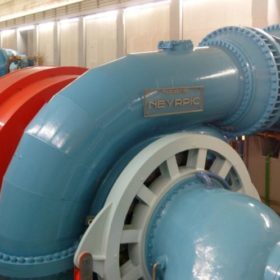
New pricing mechanism for pumped-hydro storage in India
A new report recommends a differential pricing mechanism for pumped-hydro energy storage (PHES) projects in pumping (off-peak operation) and generating mode (peak operation). The pricing mechanism for PHES should be based on specific use cases like peak load shaving and the smoothing of renewable energy generation.
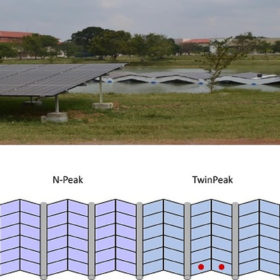
Novel floating PV system design from Norway
Norwegian scientists have tested a new floating PV system concept at a water reservoir in Sri Lanka. The system is made of composite beams to support the solar panels and high-density polyethylene (HDPE) pipes to provide buoyancy.
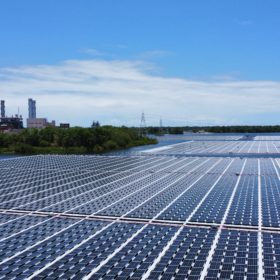
Tata Power switches on India’s largest floating solar project
Tata Power’s solar manufacturing and EPC arm has commissioned a 101.6 MWp floating solar project on a waterbody in the backwaters of Kerala. The execution team completed the massive installation within the stipulated time.