Second-life batteries might beat new ones on solar LCOE in remote locations
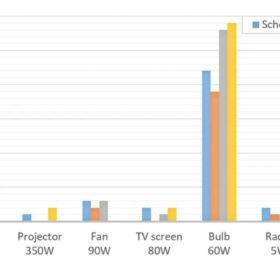
UK scientists have discovered that second-life batteries could provide a lower levelized cost of electricity (LCOE) than conventional batteries in school buildings equipped with PV in East African schools. They said the cheapest system configuration uses either 7.5 kW or 10 kW of solar with 20 kWh of storage.

Rays Power Infra to build 1.8 GW solar park in Rajasthan
Rays Power Infra has signed an agreement with the Rajasthan government to build a 1.8 GW solar park in the state with an estimated investment of INR 9,140 crore.
THDC, RRECL form JV to build 10 GW of renewable energy projects in Rajasthan
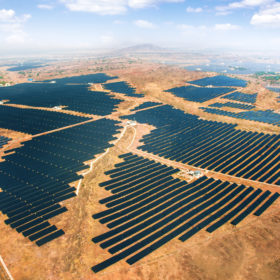
State-run hydropower producer THDC has formed a 74:26 joint venture with Rajasthan Renewable Energy Corp. Ltd to develop 10 GW of renewable energy projects in Rajasthan. The JV partners also plan floating solar and pumped hydro storage projects in the state.

Abu Dhabi’s International Holding Company to invest $400 million in Adani Enterprises FPO
Abu Dhabi-based International Holding Company (IHC) has subscribed to 16% of Adani Enterprises $2.5 billion Further Public Offering. This is IHC’s second investment deal completed with Adani Group after last year’s $2 billion investment in Adani Green Energy, Adani Transmission, and Adani Enterprises.
US-based renewable power producer announces 100 MW hybrid wind-solar project in India
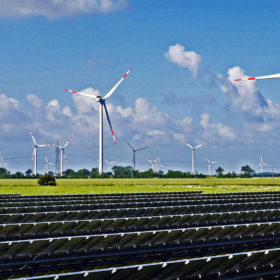
The 100 MW co-located, wind-solar hybrid renewable power project in Maharashtra will supply clean power to commercial and industrial (C&I) customers in the state.
Union Budget 2023: Mainstreaming flexible and resilient grids
While the current policy regime supports the adoption of flexible resources like batteries, grid flexibility and resilience require more focus and a range of calibrated efforts, including due acknowledgment as a sector priority and robust planning at the central and state level. The upcoming union budget provides an opportunity for the government to develop flexible and resilient grids.
Coal miner SCCL commissions its first floating solar plant
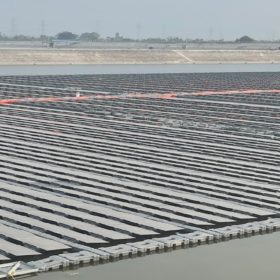
State-owned Singareni Collieries Co. Ltd (SCCL) has commissioned 5 MW of its planned 15 MW floating solar plant at the Singareni Thermal Power Station reservoir in Telangana. The plant was built by Hyderabad-headquartered Novus Green Energy Systems using glass-to-glass PV modules.
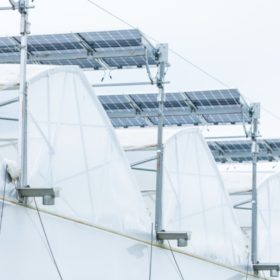
Eggplants grow 50% more under solar panels
French specialist Sun’Agri unveiled the agronomic results on a crop of eggplant grown in a greenhouse commissioned in the Lot-et-Garonne in September, 2020.
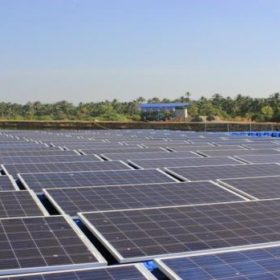
NTPC tenders up to 1.5 GW of solar projects
NTPC Renewable Energy Ltd has tendered the balance-of-system (BoS) package with land for 1 GW of solar projects with green shoe option for additional 500 MW. Bidding is open until January 21.
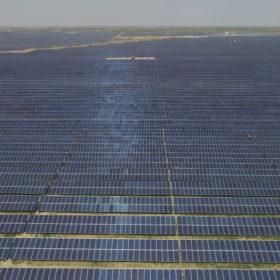
Acme partners Norfund to invest in renewable energy projects in India
Indian developer Acme and the Norwegian investment fund have signed the framework agreement to co-invest in developing potential renewable energy projects in India.