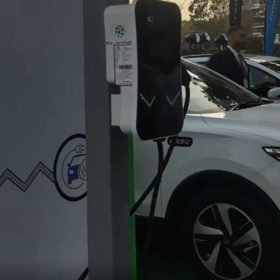
Sodium-ion vs lithium-ion batteries
Lithium-ion batteries remain the preferred choice for electric mobility applications in India due to their higher energy density, well-established infrastructure, and safety record. However, the development of sodium-ion batteries continues, and they may have potential advantages in terms of cost and environmental impact, making them a promising alternative in the future.

Serentica signs deals for 1.25 GW of round-the-clock green energy
The developer will install 4 GW of renewable energy projects comprising wind and solar capacities, supplemented with balancing solutions like energy storage. The power generated will allows its industrial customers to offset 8.5 million tonnes of CO2 emissions annually.

Metallic-alloy coating improves hydrogen production
Oxford nanoSystems (OnS) has started working with electrolyzer manufacturers to test and scale up hydrogen production.

World Bank approves $1.5 billion to support India’s low-carbon transition
The World Bank has approved $1.5 billion in financing to accelerate India’s development of low-carbon energy. The financing will help India scale up renewable energy, develop green hydrogen, and stimulate climate finance for low-carbon energy investments.
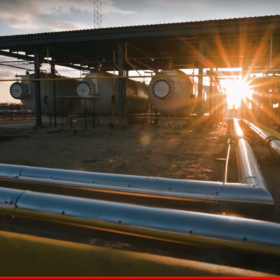
Govt releases incentive guidelines for green hydrogen, electrolyzer production
The Ministry of New and Renewable Energy (MNRE) has notified the guidelines for its incentive schemes to promote the domestic production of green hydrogen and electrolyzers.
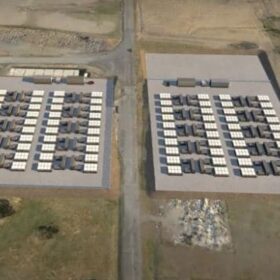
‘Renewables will eat itself,’ says Australian analyst
Over the next five to 15 years, batteries will undercut the business case for major transmission and interconnector projects. These assets will nonetheless likely be built, decreasing price spreads and eating into the revenues of batteries, predicts analyst Warwick Johnston.
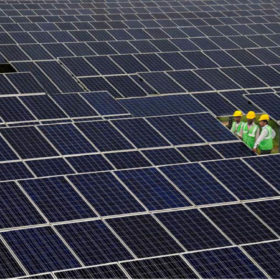
Avaada Group closes $1.3 billion funding round
The integrated energy company has closed $1.3 billion in financing for its green hydrogen, green methanol, green ammonia, solar manufacturing, and renewable power generation ventures.
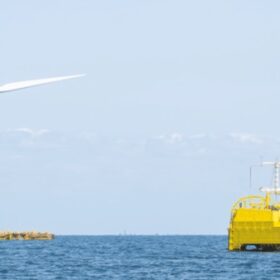
Lhyfe launches world’s first offshore hydrogen project
Lhyfe has started producing offshore hydrogen via a pilot project in France, and Toyota and its partners have agreed to invest in hydrogen in Thailand. The Australian authorities, meanwhile, have approved a hydrogen project in Victoria.

Solar-driven photoreactors to generate hydrogen on rooftops
Scientists led by the Karlsruhe Institute of Technology have designed panel-like photoreactors relying on a water-splitting photocatalyst that could produce hydrogen on rooftops or dedicated solar farms. They claim the photoreactors have high economic potential because of their ‘extremely’ low costs.
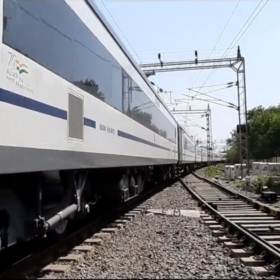
India’s first hydrogen train to run on Jind-Sonipat route
Indian Railways plans to run 35 hydrogen trains on various heritage and hill routes in India.